By Jade Schram, Havighurst Center Student Intern
On Monday, September 15, 2025, Neringa Klumbytė, Professor of Anthropology and Faculty Associate at the Havighurst Center for East European, Russian, and Eurasian Studies at Miami University, presented research findings from her summer spent in Ukraine. The room was filled with students and faculty, all eager to hear the stories Klumbytė brought back. Her research project, entitled “Oral Histories of Occupation in Ukraine,” provides firsthand accounts of the daily lives of Ukrainians living under Russian occupation.
Klumbytė has been able to collect more than 100 accounts, including 30 this summer, from Ukrainians still living in their home country as well as from Ukrainians now living in Lithuania and the United States. The idea for the project came from Ukrainian people who spoke to Klumbytė, who want their voices to be heard and saved for future generations to hear. This archive will be held at Miami University’s Havighurst Center.
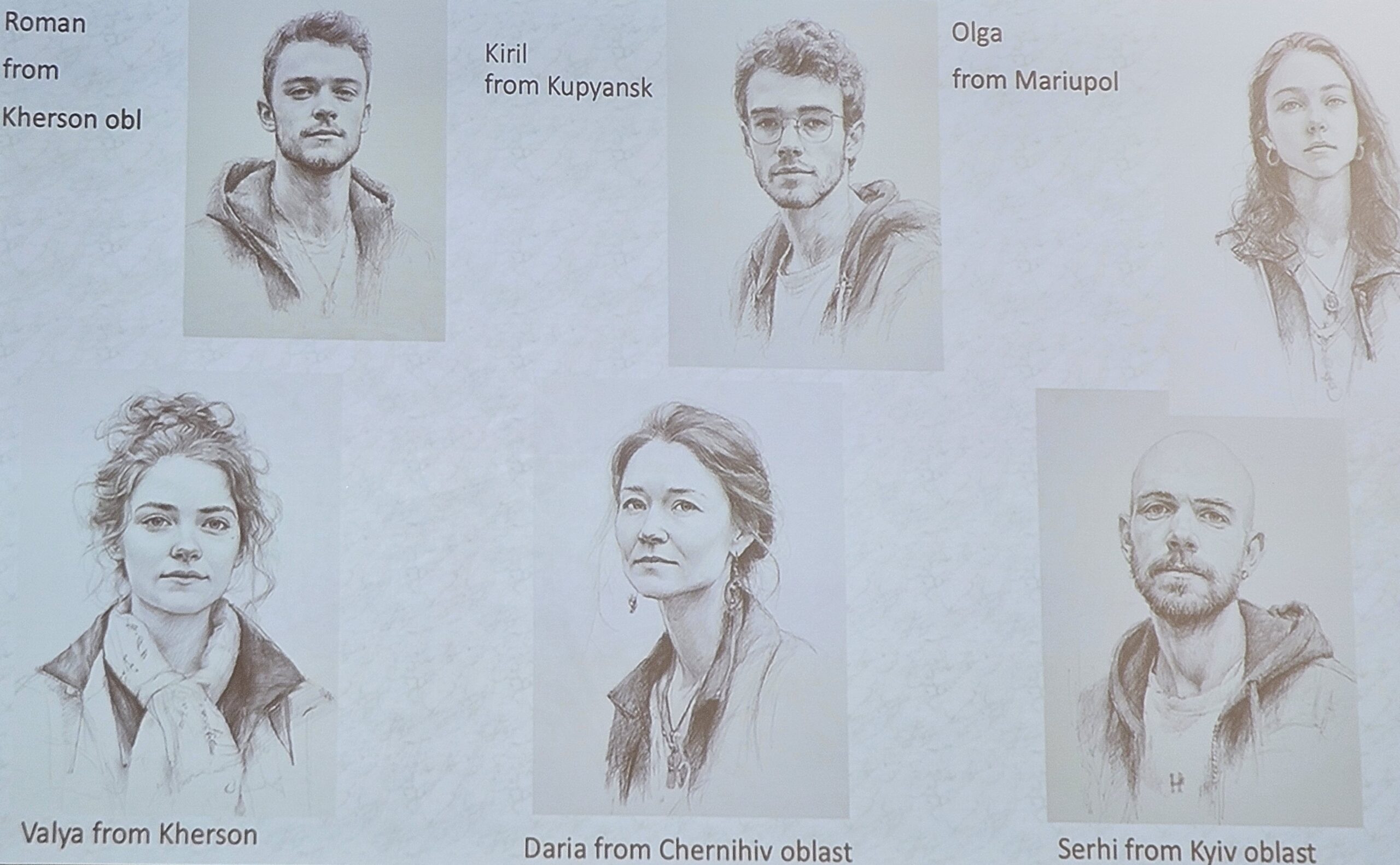
Klumbytė began by asking interviewees, How did the war start for you? Many, she recounted to the audience, have “strong, emotional recollections of the first day.” They were able to provide specific details about what they ate, who they called, what was said, and even more. The overwhelming feeling from the beginning was disbelief. Disbelief that Russia had invaded and an inability to fully grasp that their lives were changing forever. This disbelief resulted in many staying home as they did not feel like the Russians would actually invade Ukraine.
Klumbytė helped to paint a picture of what it felt like to live through occupation for those of us who have never experienced it. She asked the audience to recall a dream that made you feel anxious, afraid, or stressed. When your dream became too much to handle, you woke up. This nightmare-like feeling is one Klumbytė likened to the experience of living under occupation. However, as she noted, Ukrainians do not have the luxury of waking up from the bad dream: they continue to live and fight through it every day.
The stories Klumbytė shared reveal that there is much more to the invasion than what is seen on the surface. Stories from Borodyanka in the Kyiv Oblast from the first days under occupation, for example, provide insight into what ordinary Ukrainians endured. The Russian Army subjected the city to heavy bombing, including residential buildings. Residents recall hearing people stuck under the rubble of fallen structures call for help, but were unable to rescue them because the Russian Army would not allow it. One elderly man provided stories of how people died from indirect effects of the invasion. His wife died due to an illness for which they could not receive any medication or treatment because the Russian occupiers would not allow it. Stories like this one, Klumbytė recounted, are all too common across occupied territories.
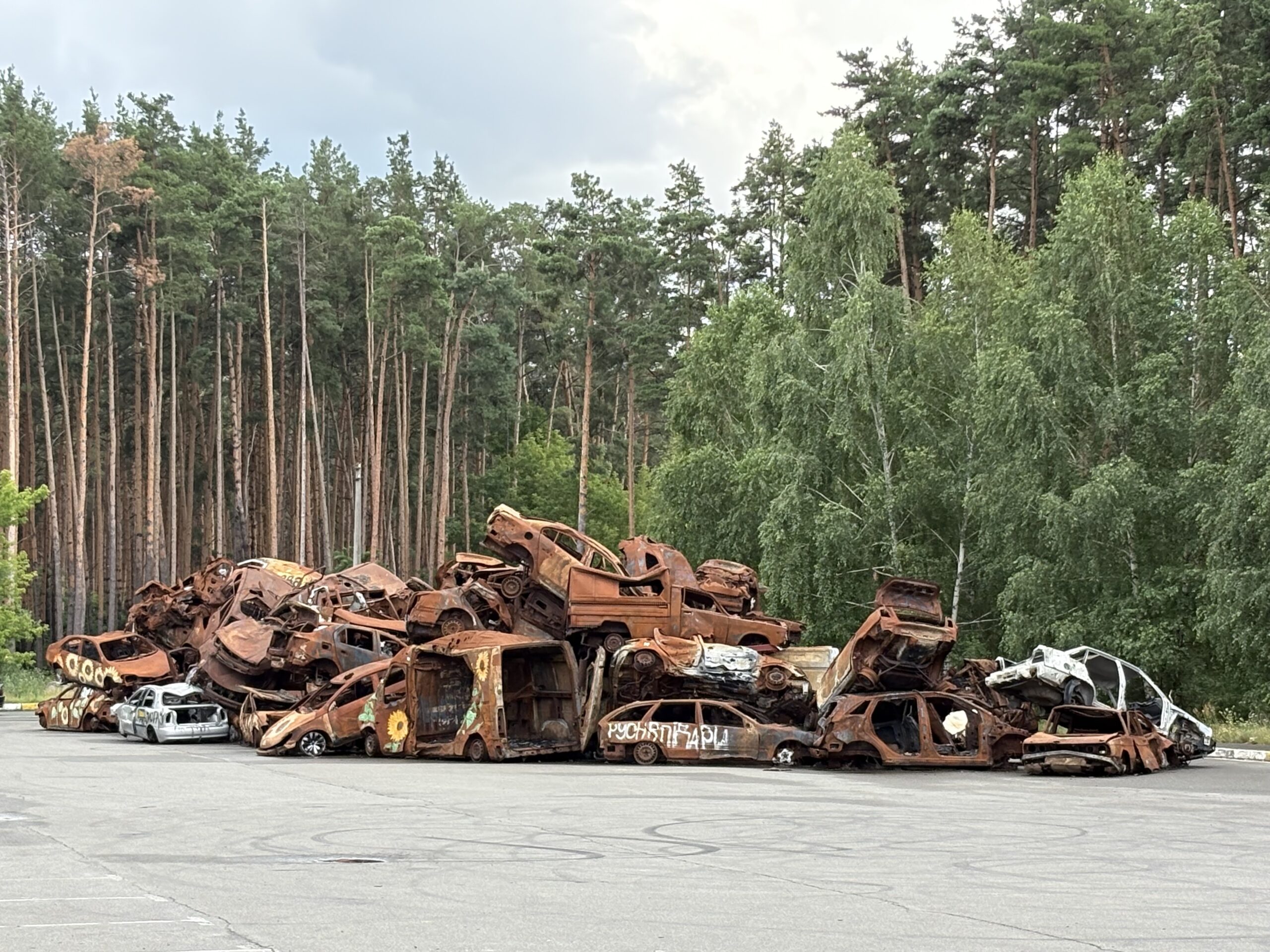
One informant told Klumbytė: “Only death is worse than occupation.” Klumbytė explained this quote by delving into how the people who confided in her understood the importance of home. Their physical houses took on new significance to Ukrainians. Homes, as they told Klumbytė, are filled with memories, family, and a sense of safety. Many did not have the resources necessary to leave, so the idea of letting Russian soldiers take over their home was worse than leaving. This dilemma was particularly heightened in Eastern Ukraine, which has been under Russian occupation since 2014. Escaping was a long and dangerous process full of checkpoints and soldiers one had to get past. Klumbytė shared a photo of stacked burned-out cars that now serves as a monument. It commemorates the large number of people trying to escape the occupation to save their families who were killed when Russian forces attacked their cars.
Another Ukrainian, when recounting their experience under Russian occupation, told Klumbytė : “Life is like in a prison.” Fear and terror became the prominent emotions felt amongst the Ukrainians living under occupation. Words took on new meanings. As Klumbytė explained, a common phrase of life under occupation — “With Russians come підвали (pidvaly) [basements]” – altered the meaning of the word “basement.” When the war began, “basement” changed from a storage place to a place of shelter for residents to shelter from bombs. When Russian soldiers occupied towns, however, the basement became torture chambers. Basements, one connected to home and then to safety, became associated with horrific violence meted out by occupying forces.
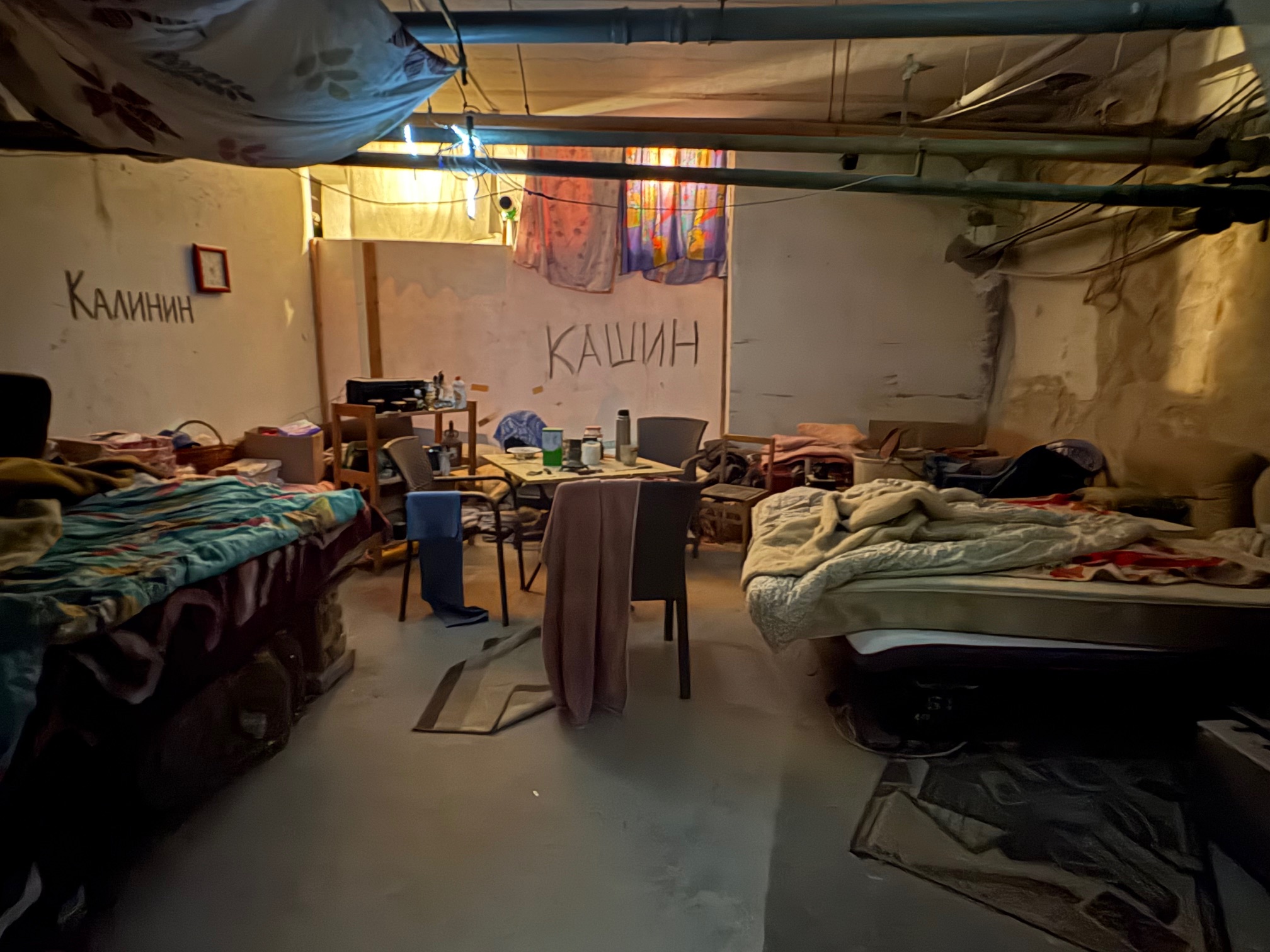
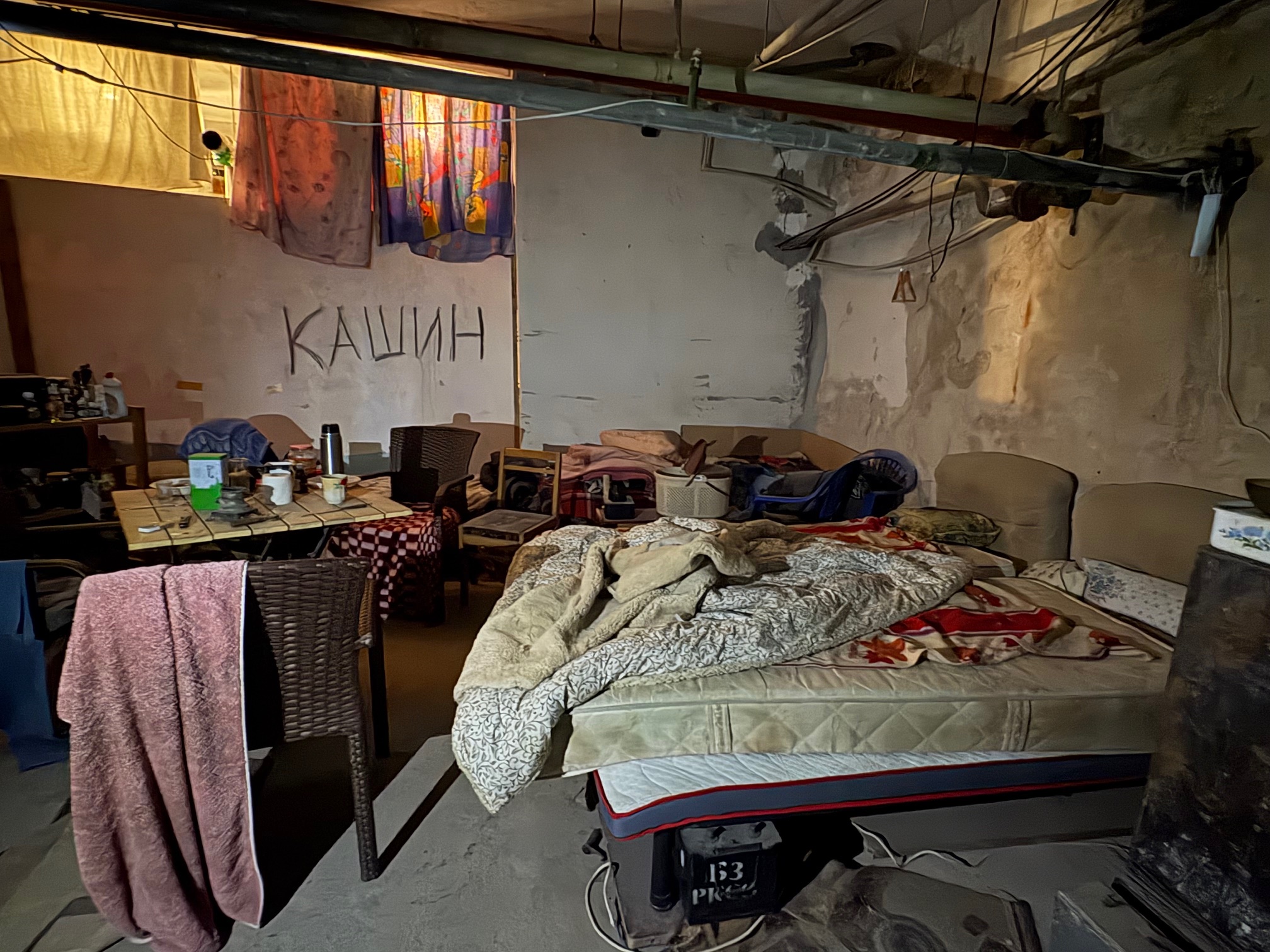
The individual life stories that Klumbytė collected reveal a deeper picture of what everyday people went through. One person, “Daria,” is from Chernihiv. When the war started, she left to live with her parents in a nearby village because she believed it would be safer. Russian troops did not take Chernihiv but did occupy her parents’ village. Daria ended up living under occupation for an entire month. She survived for five days in a basement then went another basement located in a factory because she thought it would be safer. Her father, however, had to stay behind in his home basement. Daria told Klumbytė about the pain of having to make choices such as staying and leaving, choices that led her to live under Russian occupation and leave her father behind. She was eventually able to escape and met up with her husband in Kyiv. Daria gave birth to their son, but her husband died on the front lines, defending his country and his people. She told Klumbytė that she lives with constant feelings of loss and worries that she may never fully heal from what the war has brought to her.
Klumbytė concluded her lecture by recounting the strategies for survival employed by Ukrainians. Her informants spoke of religion, belief, family, friends, neighbors, love, music, resistance, hope, and even humor as sources for resilience. During some of the worst experiences a human can go through, Ukrainians demonstrated their humanity by supporting, helping, and protecting each other. Ukrainians proved strong not because they chose so, but because it was needed.
The stories Ukrainians told also changed Klumbytė’s view of humanity. She ended by stating she now understands better than ever what it means not to take things for granted, especially basics such as food, family, and friendships. “Freedom is not abstract to me anymore,” she stated. “I know how it feels from these Ukrainian stories.”