
Anastasija Mladenovska
When Russia launched its full-scale invasion of Ukraine in February 2022, the world watched tanks cross borders and missiles strike Kyiv. But another, quieter movement began almost immediately: the exodus of Russians who refused to live under a government waging imperial war in their name. They packed up apartments, said goodbye to families, and crossed into Georgia, Armenia, Estonia, Serbia, and dozens of other destinations. Alongside their luggage, they carried a heavy question: what does it mean to be Russian in exile during this war?
The debates that have since unfolded inside the diaspora are not minor disagreements. They are existential battles over identity, legitimacy, and survival. And recent research shows just how deeply these arguments cut.
Violence or Nonviolence?
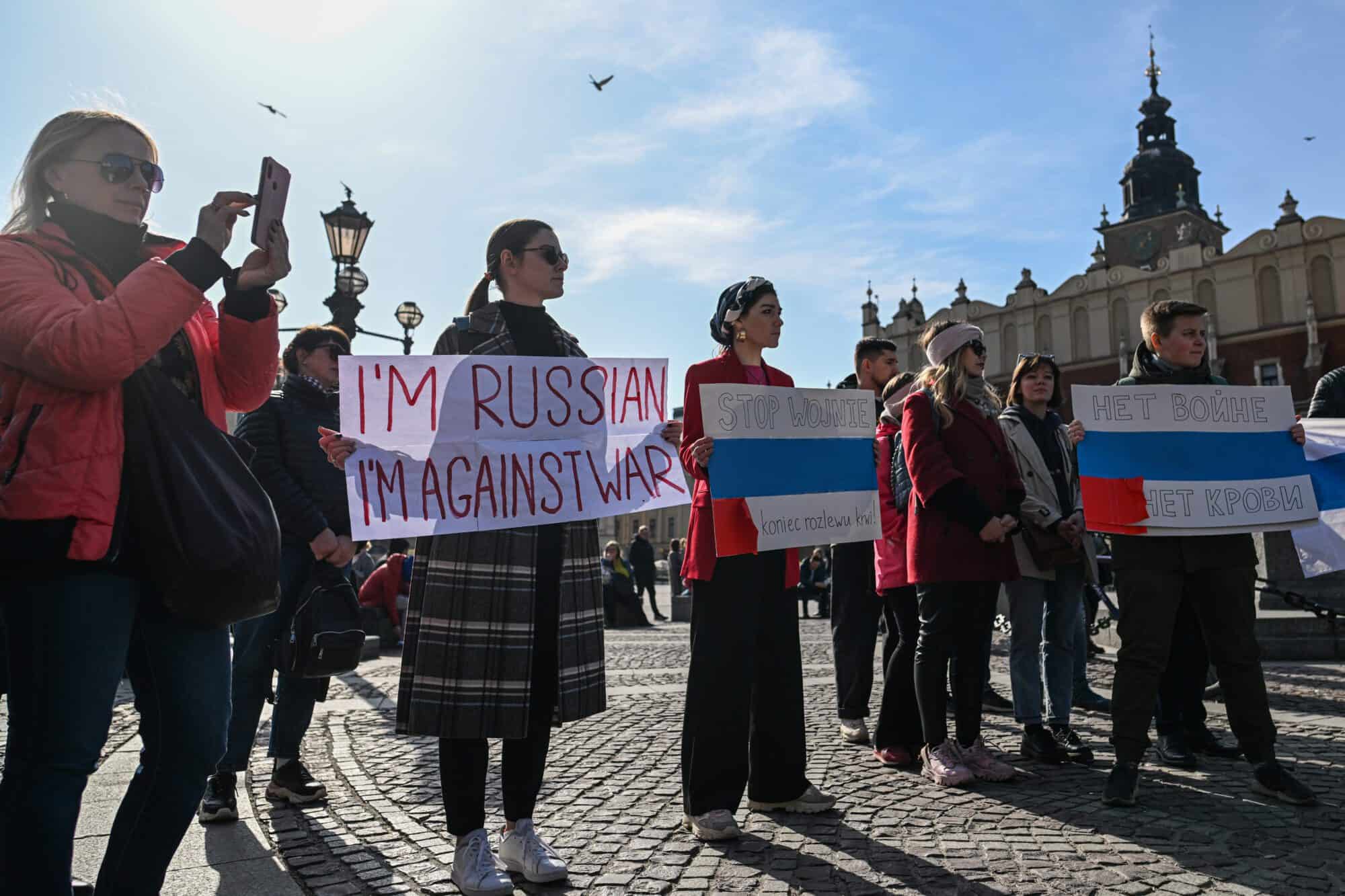
The sharpest and most unsettling fault line within the Russian diaspora concerns tactics. The sociologist Joanna Fomina has studied how this debate crystallized around the Civic Council of the Russian Diaspora, which was originally founded to serve as a coordinating umbrella for exiles. Instead of remaining a purely civic or advocacy platform, the Council has, in recent years, taken on a much more militant dimension. Fomina documents how it has begun training and even recruiting Russians abroad to join Ukrainian units at the front. This shift is not symbolic—it reflects a belief among some exiles that peaceful protest has been exhausted, that petitions, vigils, and marches are wholly inadequate against the machinery of Russian aggression. For this minority, active combat is framed not as betrayal but as the only authentic way to contribute to the defeat of Putin’s regime.
The Council’s involvement in recruitment gives a concrete edge to the violence–nonviolence divide. No longer is the question merely about rhetoric or the morality of sabotage. It is about whether Russian diaspora organizations should become logistical pipelines for war. For the militants, the answer is yes: exile should not mean passivity but rather repositioning, using the freedoms of liberal democracies to channel resources, volunteers, and skills into Ukraine’s defense. Fomina notes that this position has gained traction particularly among younger exiles and those who feel that symbolic resistance is indistinguishable from complicity.
But this development horrifies others in the diaspora. Many Council members and allied organizations reject the militarization of exile politics. They insist that any association with combat risks confirming the worst stereotypes of Russians as dangerous and duplicitous, jeopardizing not only their legal standing in host countries but also their fragile coalitions with Ukrainian and European activists. From their perspective, the only viable path is nonviolent resistance: sustained campaigning, testimony, and symbolic protest that demonstrates moral clarity. In their words, “the moral high ground is the only ground we have left”.
The split is therefore not just philosophical but deeply strategic. Exiles in Berlin, Oslo, or Paris are acutely aware that their right to protest depends on being perceived as “good Russians.” Coalition politics with Ukrainians requires not only solidarity but credibility, and to embrace militancy openly—even in the name of Ukraine—risks collapsing these coalitions altogether. Fomina’s focus on the Civic Council makes this dynamic vivid: within a single organization, one faction quietly supports recruitment and training for the battlefield, while another doubles down on pacifist messaging, hoping to insulate the diaspora from suspicion and repression.
In this sense, the Civic Council becomes both a symbol and a site of struggle. Its willingness to cross the threshold into direct involvement in war exposes the profound dilemma of exile politics: whether to define resistance in terms of action, even violent action, or in terms of legitimacy, restraint, and coalition-building. What emerges is not simply a debate about means and ends but a larger question about the very identity of the diaspora—whether it is a civic movement, a militant auxiliary, or, increasingly, something uncomfortably caught in between.
Speaking for Whom?
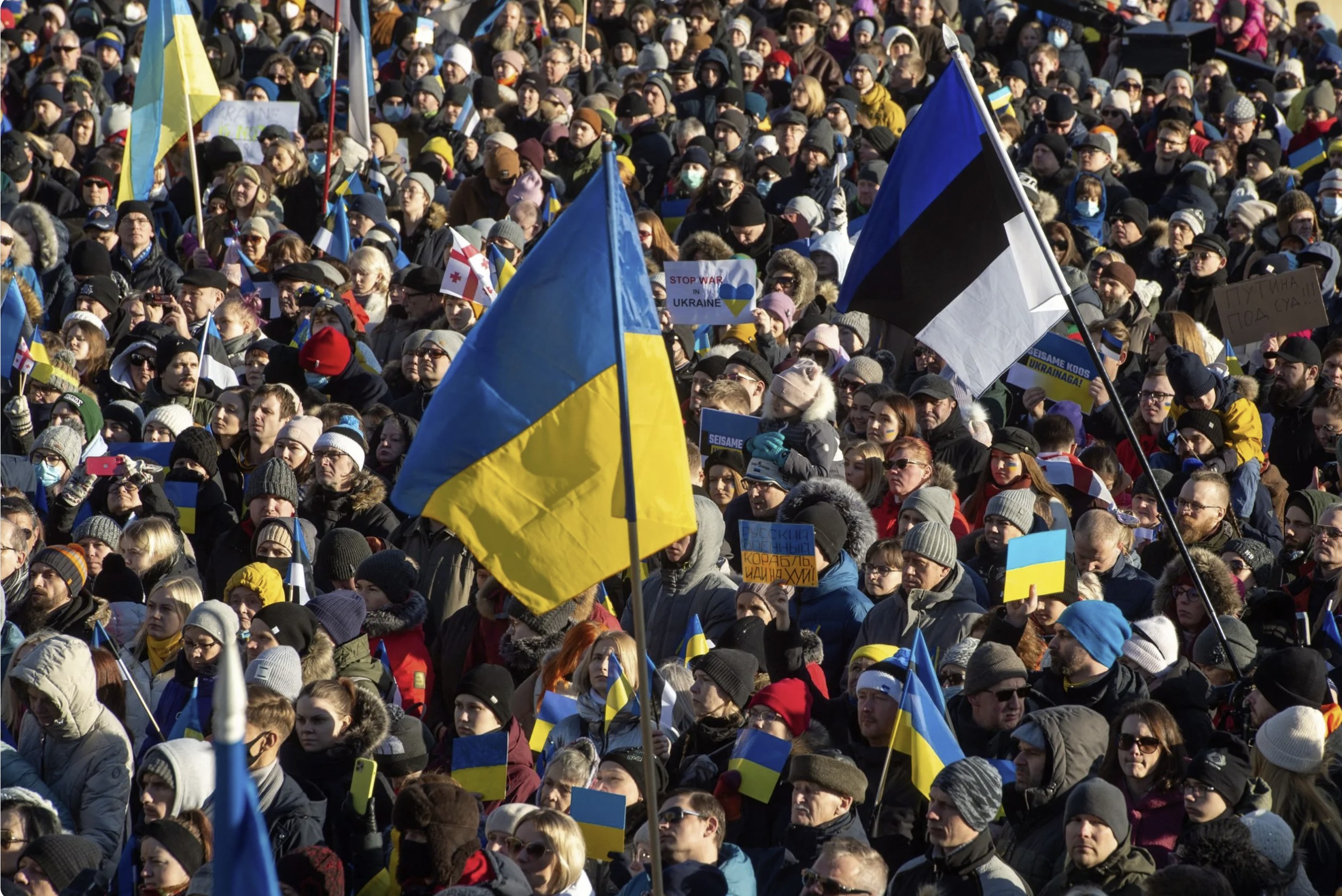
If one axis of debate among Russian exiles is about methods, another is about audiences. Susanne Bygnes, a sociologist at the University of Bergen (Norway), has documented this tension through her study of Russians Against the War (RAW), a sprawling network of grassroots chapters that have sprung up across European cities since 2022. On any given weekend, RAW activists can be found occupying public squares in Berlin, Bergen, or Vilnius, holding banners that read “Not in Our Name.” Their presence is deliberately theatrical: a collective performance meant to puncture the Kremlin’s narrative of national unanimity. By staging themselves as Russians against Russia’s war, these protesters hope to demonstrate that Putin does not speak for everyone, and that the global community should not equate Russian passports with complicity in aggression.
Beneath the surface of this solidarity work lies another fault line. The question is not only how to protest, but who the protest is for. Should exiles center their own Russian identity—making themselves visible as living proof of dissent? Or should they decenter Russianness entirely, foregrounding Ukrainian suffering and avoiding the charge of turning the war back toward themselves?
Bygnes shows how these choices are not incidental but deeply fraught. For one faction, chanting in Russian, waving signs denouncing Putin, or carrying the old white-blue-white anti-war flag is itself an act of solidarity. Their logic is that true allyship requires showing the world that Russians are not monolithic—that even within the aggressor nation there are voices of resistance. “If we hide who we are,” one activist told her, “we confirm the stereotype that Russians are silent, passive, obedient.” In this reading, to appear as Russians against the war is to reclaim both moral and political agency.
Yet for others within RAW, this very strategy risks recentering the aggressor. Protests that emphasize Russian identity can inadvertently shift attention away from Ukraine, producing what critics describe as a subtle reoccupation of narrative space. Instead of highlighting Ukrainian suffering, the slogans risk suggesting that the real story is about good Russians versus bad Russians. For these activists, solidarity requires restraint: no Russian flags, no chants in Russian, no spotlight on personal identity. Instead, the protests should be conducted in the local language or in Ukrainian, with the emphasis placed squarely on the victims of the invasion. To them, the ethical imperative is clear—do not make the war about the perpetrators, even indirectly.
Bygnes captures how this disagreement plays out in the granular details of protest choreography. The choice of language for chants, the wording of placards, even the order of speakers at rallies all become matters of ethics as much as strategy. A banner reading “Not in Our Name” can be seen either as a courageous act of dissent or as an act of displacement that sidelines Ukrainian voices. The argument is less about whether to protest, and more about how to inhabit the space of protest without taking it over.
What emerges is a paradox familiar to many exiled communities: the need to speak while knowing that speaking risks misrepresentation. For Russian exiles, the dilemma is sharper still. To erase themselves entirely risks invisibility, reinforcing the idea that Russians abroad have nothing to say. To foreground themselves risks accusations of self-centeredness and appropriation. In Bygnes’s account, RAW chapters are laboratories where this tension is negotiated week by week, protest by protest—making exile politics as much about managing representation as about confronting Moscow.
Home or Host?
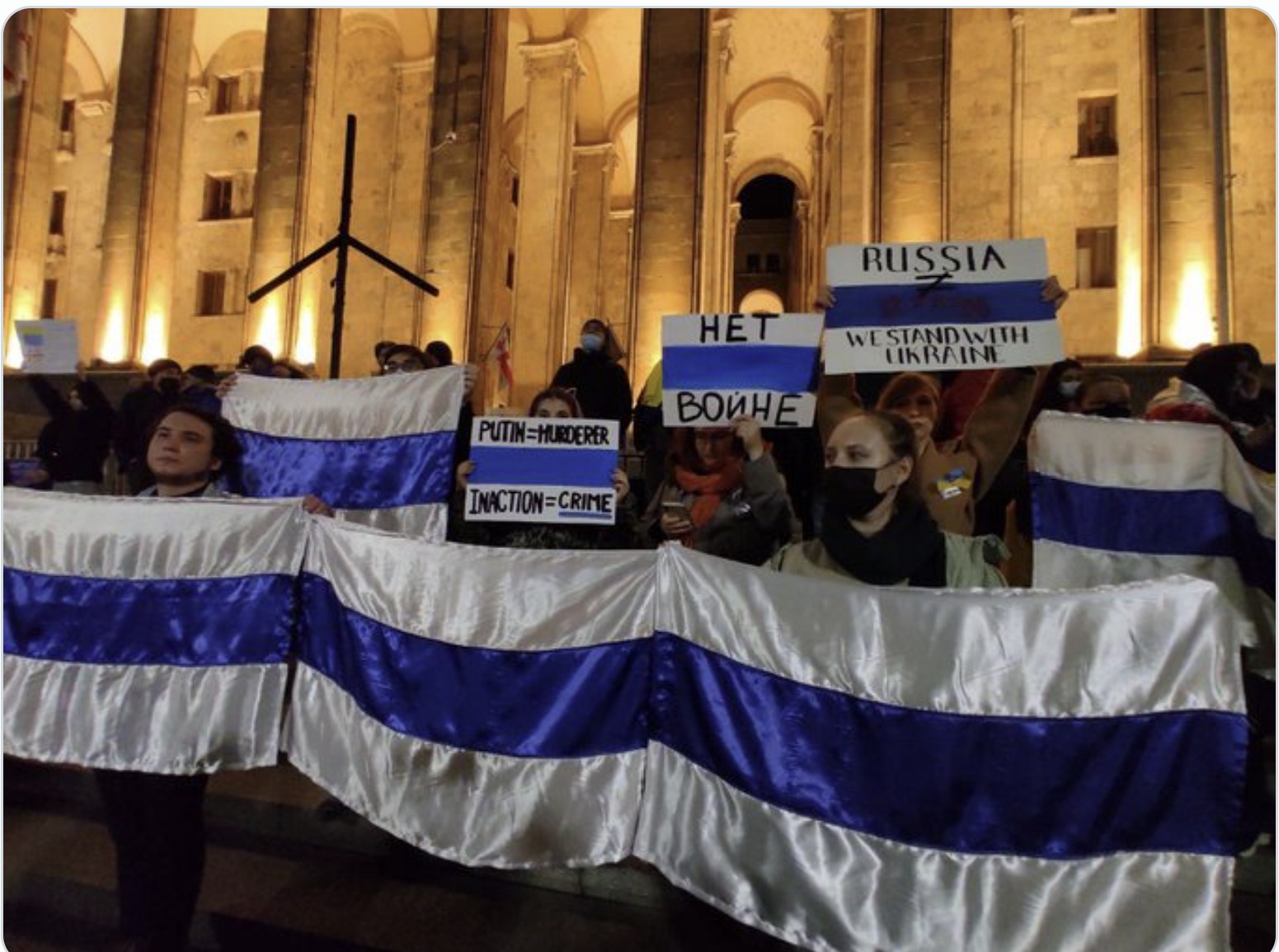
The third axis of division cuts even deeper: is the diaspora’s responsibility to Russians back home, or to the countries that now host them? Andrey Makarychev, a Professor of Politics at the University of Tartu (Estonia), has studied this tension vividly among Russians living in Estonia. Some activists see their mission as speaking directly to audiences inside Russia, keeping alive the possibility of a future “European Russia.” They livestream in Russian, translate Western analyses into Telegram channels, and frame their protests as messages not for Tallinn or Brussels but for Moscow and Novosibirsk. Their politics is anchored in the conviction that exile is temporary and that their ultimate responsibility is to nurture a democratic counter-public for the day when change becomes possible.
Others take a very different view. For them, the point of exile is not to keep one foot in Russia but to plant both firmly in the host society. They align themselves fully with Estonia’s—and by extension the EU’s—pro-Ukraine stance, accepting that their role is less about reforming Russia than about strengthening Europe’s political resolve against it. These activists participate in local debates, lobby Estonian politicians, and forge ties with Ukrainian and Baltic NGOs. To them, the most urgent task is not to dream of a distant “other Russia” but to contribute here and now to Europe’s defense, both moral and material.
The divergence produces not just disagreement but distrust. Russia-focused activists are often accused of being nostalgic, too hesitant to sever ties with their homeland, or worse, of harboring ambiguities that Baltic security services view with suspicion. In a region where memories of Soviet occupation remain vivid, to insist on addressing Russia directly can sound like equivocation. At the same time, those who throw themselves into host-country politics risk charges of opportunism: of abandoning Russians inside Russia in order to curry favor with local elites, of becoming Estonian or European activists first and only Russian second.
What Makarychev’s case study shows is that this divide is not easily bridged. It reflects two fundamentally different temporal orientations: whether exile is a backward-looking project—sustaining hope for a Russia yet to come—or a forward-looking one, in which migrants build new lives and identities no longer centered on their homeland.
Beyond the March: What Counts as Politics?
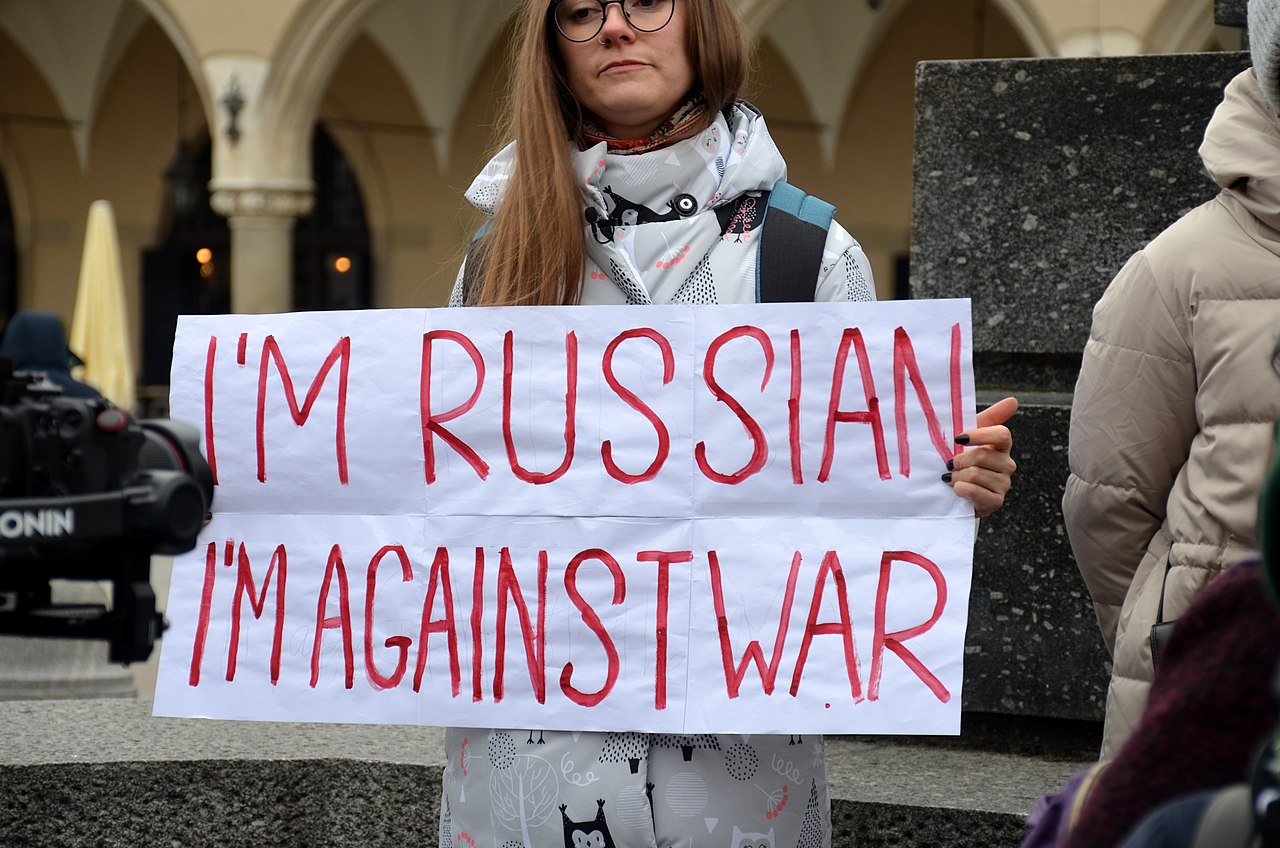
Layered onto these debates is another, quieter question: what even counts as “politics” in exile? Not all engagement takes the form of marches, manifestos, or lobbying. Across Europe, many Russians have shifted toward humanitarian and civic work—organizing aid for Ukrainian refugees, fundraising for medical supplies, tutoring displaced children, or volunteering in local NGOs. To some, these efforts are more political than waving banners. They argue that filling a truck with generators or medicine for Kharkiv directly weakens Russia’s war effort and strengthens Ukraine’s capacity to endure. This is politics in its most tangible form: changing material conditions on the ground.
But others see in this turn a worrying drift toward depoliticization. If protest becomes charity work, what happens to the urgency of confronting the Russian state directly? For critics, a diaspora that defines its resistance in terms of soup kitchens and donation drives risks dissolving into apolitical “expat life”—gradually becoming comfortable, integrated, and forgetful of why they left in the first place. The fear is not simply fragmentation but dilution: that what began as a political movement might fade into scattered humanitarian projects without coherence or strategy.
This is why the debate over what counts as politics is, at bottom, a debate over the diaspora’s survival. Can the opposition in exile sustain itself if its energy is dispersed into a thousand small initiatives, none of which directly confront Moscow? Or does the multiplication of grassroots efforts represent a new, decentralized model of resistance—less theatrical than the march, but more resilient and harder to suppress?
The answers to these questions remain unsettled. What is clear, however, is that exile politics is being redefined not only on the streets and in press conferences, but in food drives, aid warehouses, and volunteer networks. In the same way that debates over violence, nonviolence, and representation reveal the exile community’s inner fractures, so too does this debate about political form reveal its existential stakes: whether Russians abroad will cohere as a political diaspora or dissipate into the routines of migrant life.
Why These Debates Matter
It is tempting to dismiss these quarrels as the luxury of émigrés far from the frontlines. But that would be a mistake. The internal debates of the Russian diaspora shape how host societies perceive Russians abroad—whether as allies to be embraced or liabilities to be managed. They affect whether Ukrainian activists accept Russian solidarity as genuine or view it with suspicion. And they determine whether the very idea of an alternative Russia survives beyond Putin’s reach.
Diasporas are always fractured. They are bound not by consensus but by the shared condition of displacement. Yet the stakes in this case are unusually high. For Ukrainians, the difference between Russian protesters who are credible partners and those who are distractions is measured in lives. For host countries, the line between “exiles” and “expats” determines whether Russians are treated as political actors or simply economic migrants.
And for Russia itself—whatever its future may be—the voices of its exiled citizens will either keep alive a counter-memory of resistance or dissolve into the noise of assimilation.
The Hard Truth of Exile
Perhaps the hardest truth for Russians abroad is this: there may be no “right” way to resist. To insist on one strategy, one repertoire, one framing of identity, is to misunderstand the nature of exile. Exile fragments. It produces not unity but cacophony, not harmony but discord.
And yet, within that discord lies possibility. A diaspora that cannot agree on its mission may still serve as proof that another Russia exists—messy, divided, argumentative, but not silent. If the Kremlin’s power rests on the fiction of unanimity, then the very fact of debate among exiled Russians is already a form of resistance.
Fierce battles in this war are fought not only on the frontlines of Donbas or the streets of Kharkiv. They are also unfolding in kitchens in Berlin, in Telegram chats in Belgrade, in protest marches in Tallinn. And though these battles may lack the drama of explosions, they carry their own quiet significance: the struggle to define what it means to be Russian, after Russia has chosen war.
Works cited:
Fomina, Joanna. “Warring for Peace and Democracy: Russian Migrant Dissidents Resorting to Violent Means of Contestation.” Post‑Soviet Affairs, vol. 2025, pp. 1–24.
Makarychev, Andrey. “The Popular Geopolitics of the Russian Diaspora in Estonia: Gaps, Cleavages, Disconnections.” Russian Analytical Digest no. 316, Sept. 2024, pp. 5. DOI: 10.3929/ethz‑b‑000692533.
Bygnes, Susanne. “Russians Against the War (RAW): Diaspora Protest Against the Full‑Scale Invasion of Ukraine.” Post‑Soviet Affairs, vol. 2025, pp. 1–15.