
Anastasija Mladenovska, Havighurst Junior Fellow
On Monday, October 28, 2024, the Havighurst Center for East European, Russian, and Eurasian Studies’s Fall 2024 Colloquium Series, “Humanity and the Arctic,” welcomed Dr. Svein Vigeland Rottem, an expert on Arctic governance, who shared his insights on the role and impact of the Arctic Council (AC). His talk shed light on the AC’s unique role as a cooperative body among Arctic states and Indigenous organizations, addressing pressing issues of sustainability, environmental protection, and regional collaboration in a time of rapid change. As one of the students in this class, I was fortunate to hear Dr. Rottem’s perspectives which later allowed me to reexamine the critical role of the AC in an increasingly shifting political dynamic.
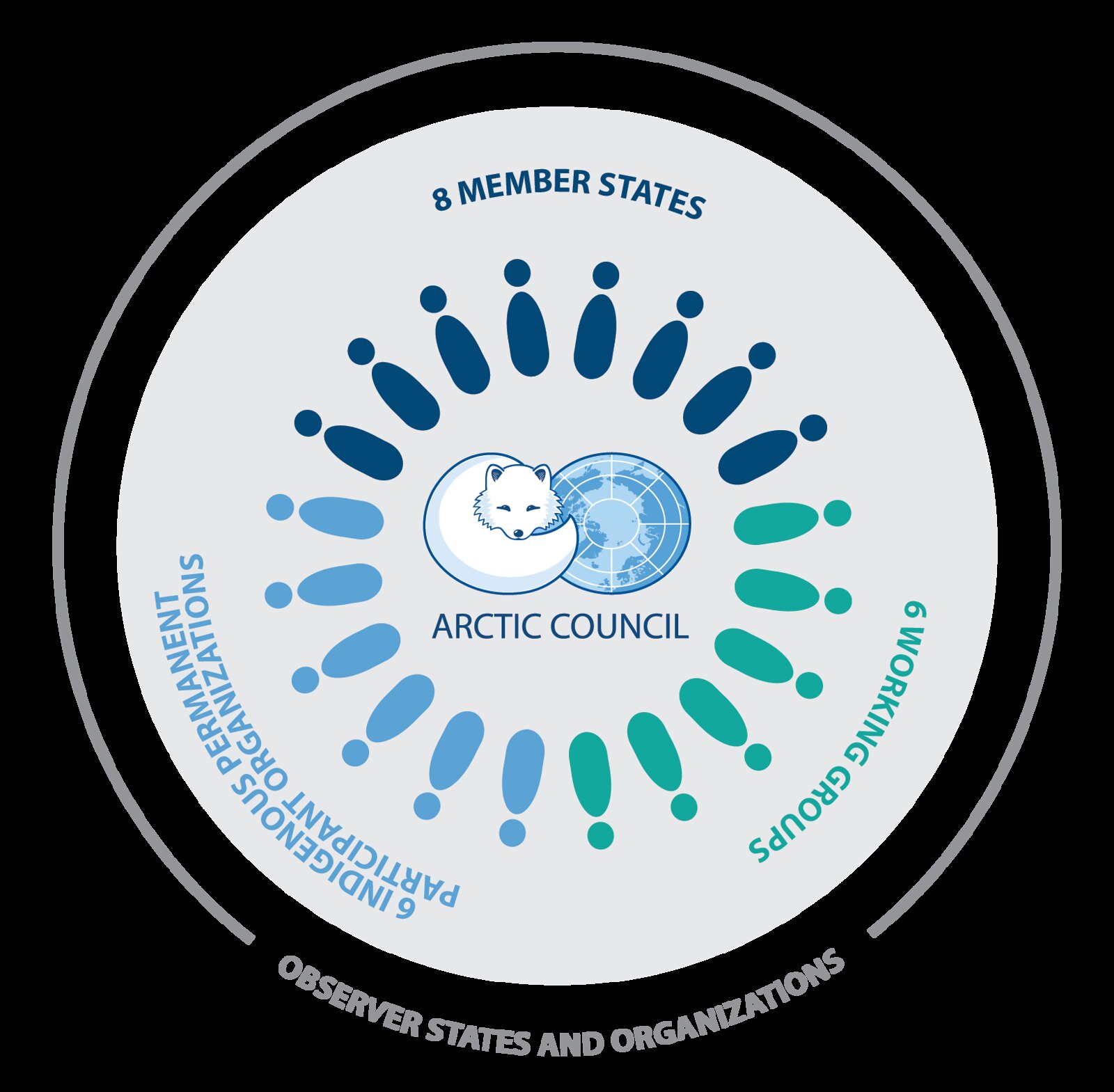
The AC, as Rottem emphasized, is distinct in its role as a forum dedicated to addressing non-military issues in the Arctic, with a longstanding focus on fostering international cooperation. This commitment to peaceful collaboration was recognized through Nobel Peace Prize nominations in 2018, 2019, and 2022. Although the AC successfully avoided entanglement in political conflicts for much of its history, recent geopolitical tensions, especially the Russo-Ukrainian war, have begun to challenge this status quo.
In recent years, the AC has faced unprecedented challenges in fulfilling its mandate due to the geopolitical fallout from Russia’s invasion of Ukraine. The war has effectively put many of the AC’s operations on hold, as cooperation with Russia—one of the eight Arctic states and a crucial player in Arctic governance—has become increasingly strained. As Rottem highlighted, the AC now finds itself in a state of “life support,” with many of its initiatives paused or limited. This disruption has severe implications for the Council’s effectiveness, particularly in monitoring and advising on activities along the Northern Sea Route (NSR), which falls primarily within Russian territory. The Council’s ability to act as a cohesive body addressing shared Arctic concerns is compromised, as its usual channels for diplomatic and scientific collaboration are curtailed by the ongoing conflict.
This breakdown raises important questions about the future of Arctic governance. Can the AC continue its role as a platform for cooperative management of the region’s resources and environmental concerns under such conditions? Or will the lack of Russian engagement weaken the AC’s influence, allowing individual states or private entities to pursue their interests unchecked? As the AC navigates this new geopolitical reality, its capacity to operate as a unified body and to advocate for sustainable development, especially concerning Arctic shipping routes, remains uncertain. This situation highlights the urgent need for adaptive strategies within the AC framework to address emerging conflicts, ensure environmental protection, and uphold Indigenous rights amid shifting alliances and priorities.
Nevertheless, the AC has established itself as the premier intergovernmental body in the Arctic, creating robust networks for knowledge-sharing and solidifying its legitimacy among the eight Arctic states and six Indigenous organizations. These Indigenous organizations, known as Permanent Participants, have a unique structural role in the AC that differentiates them from Observers. Unlike Observers, Permanent Participants can actively shape discussions, co-produce knowledge, and represent the interests of Indigenous communities who depend on Arctic ecosystems. This inclusive framework, which incorporates the Aleut International Association, Arctic Athabaskan Council, Gwich’in Council International, Inuit Circumpolar Council, Russian Association of Indigenous Peoples of the North, and Saami Council, underscores the AC’s commitment to cooperative, community-centered decision-making and reflects its dedication to ensuring that Arctic policies are guided by those who directly experience and understand the region’s challenges.
This consensus-building and diplomacy has led to significant agreements despite their non-binding nature in terms of international law, such as the Agreement on Cooperation on Aeronautical and Maritime Search and Rescue in the Arctic (2011), Agreement on Cooperation on Marine Oil Pollution Preparedness and Response in the Arctic (2013) and the Agreement on Enhancing International Arctic Scientific Cooperation (2017). These international agreements, in Rottem’s view, have contributed to reinforcing the legitimacy of the AC as a critical body in Arctic Governance and simultaneously have politically bound Arctic states to embrace this legitimacy in their own Arctic Strategic documents that more often than not prioritize differing objectives—sustainable economic development ranking quite high for all Arctic states as the common denominator.
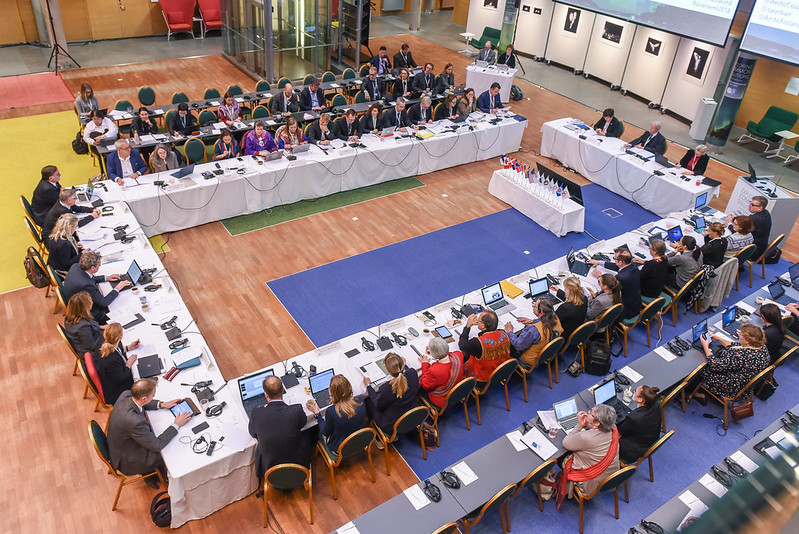
Furthermore, Rottem underscored that in recent years, the AC has developed a focus on environmental and climate resilience, especially through projects that draw on scientific research and Indigenous knowledge. Two examples through which the AC has prioritized the former have been AC’s Sustainable Development Working Group and the Arctic Monitoring and Assessment Programme. These programs aim to address pressing issues, from climate-induced habitat loss to the well-being of Arctic communities, which face disproportionate impacts from environmental change.
However, as economic interests increasingly clash with environmental priorities, the AC’s role in facilitating, enabling, and positioning itself on sustainable development—particularly concerning the Northern Sea Route and other shipping lanes—heightens the complexity of Arctic governance and raises critical questions about its responsibility as a governing body of cooperation. This complexity of the AC follows the observation that its role is both vital and constantly tested, balancing the need to protect vulnerable ecosystems, respecting Indigenous peoples, and navigating the power and security dynamics of Arctic and non-Arctic states and actors alike.
There are several shipping routes in the Arctic including the Northwest and Northeast passages, the Transpolar Sea Route, the Northern Sea Route (NSR) and the Arctic Bridge. Out of these, the NSR has gained increasing prominence and media attention in recent years due to its economic potential, Russian and Chinese interests vested in its development, and resource extraction among other things. The NSR begins at the boundary between the Barents and Kara seas and ends in the Bering Strait and is currently considered the shortest shipping route between the western part of Eurasia and the Asia-Pacific region. The route was not considered a reliable transit passage for many decades due to ice coverage but recent ice melting has created an environment where access to NSR is available for extensive periods of time, from July to October. What this means in practice is that the NSR is now open to commercial shipping and resource transport for longer windows each year, allowing for more predictable and economically feasible operations. Companies are increasingly able to plan shipping schedules along this route, significantly reducing travel times and fuel costs compared to the traditional Suez Canal route, although some scholars have challenged this perspective.
This accessibility has attracted the attention of global shipping giants and energy companies eager to capitalize on the route’s shorter distances, lower costs, and proximity to natural resources in the Arctic region.
Furthermore, the increase in NSR activity has led Russia to enhance its infrastructure along the route, including the construction of new ports, search and rescue facilities, and the development of a fleet of icebreakers capable of navigating even in partially frozen conditions. China and India too, have shown a strong interest in the NSR as part of its Polar Silk Road initiative, viewing it as a critical link in expanding its trade network and energy security.
The role of the AC in this arena has largely been an advisory and monitoring one. Its Working Group on the Protection of Arctic and Marine Environment (PAME) has been monitoring shipping trends in the Arctic and releasing reports on the subject, which show that the number of ships entering the Arctic generally has been increasing and the total distance sailed by those ships has been growing. PAME is able to provide the AC with these reports through the Arctic Ship Traffic Data (ASTD) System, which alongside providing reports also studies how to reduce the impact of shipping on marine mammals and air quality.
Moreover, the AC has consistently called for more data on Arctic shipping to be collected through monitoring. The kind of field, on-site, immediate data that the AC is advocating for in many instances cannot be provided by independent researchers and must be based on the active economic cooperation between Arctic states and willingness of companies to be transparent.
Particularly, the most notable companies in the region such as COSCO (Chinese State Shipbuilding Corporation), Russian Rosatom, and Danish Maersk remain ambiguous about their role in NSR utilization.
Sustainable economic development is defined as “development that meets the needs of the present without compromising the ability of future generations to meet their own needs.” Under this definition, it is difficult to come to an understanding and agreement about how this goal will be achieved in practice, especially in the context of NSR and other shipping routes.
With this in mind, the role and legitimacy of the Arctic Council (AC) regarding Arctic shipping is a challenging balance: on one hand, its function as a platform for knowledge transmission facilitates diplomacy and international cooperation, but only as long as it respects the national and territorial rights of Arctic states. On the other hand, this loose international framework is often the only mechanism through which local communities can gain the attention of governments and set the agenda for cooperation. This system enables Indigenous and local voices to be heard on a global stage, ensuring that their concerns around sustainability and cultural preservation are considered alongside the economic interests of powerful states. The AC’s success, then, depends on carefully navigating these tensions to remain a credible and inclusive body in Arctic governance.
In conclusion, the AC stands at a crossroads. The profound complexities and contradictions inherent in Arctic governance are both fascinating and daunting, where AC’s mission to promote sustainable development often conflicts with the rapid push for economic gain from Arctic resources and routes like the NSR.
Rottem’s lecture mapped out the challenges the AC will have to navigate. As climate change opens new opportunities for commerce and resource extraction, the AC’s role becomes even more vital yet precarious—a testament to the need for adaptive governance models capable of navigating not only the harsh physical climate of the Arctic but also the turbulent political waters.
This dynamic underscores the critical question: Can the AC maintain its commitment to cooperation, sustainability, and inclusivity, or will it be forced to yield to the intensifying forces of geopolitical and economic competition?
Anastasija Mladenovska is a junior majoring in Political Science and Russian, East European, and Eurasian Studies