
By Venelin Ganev
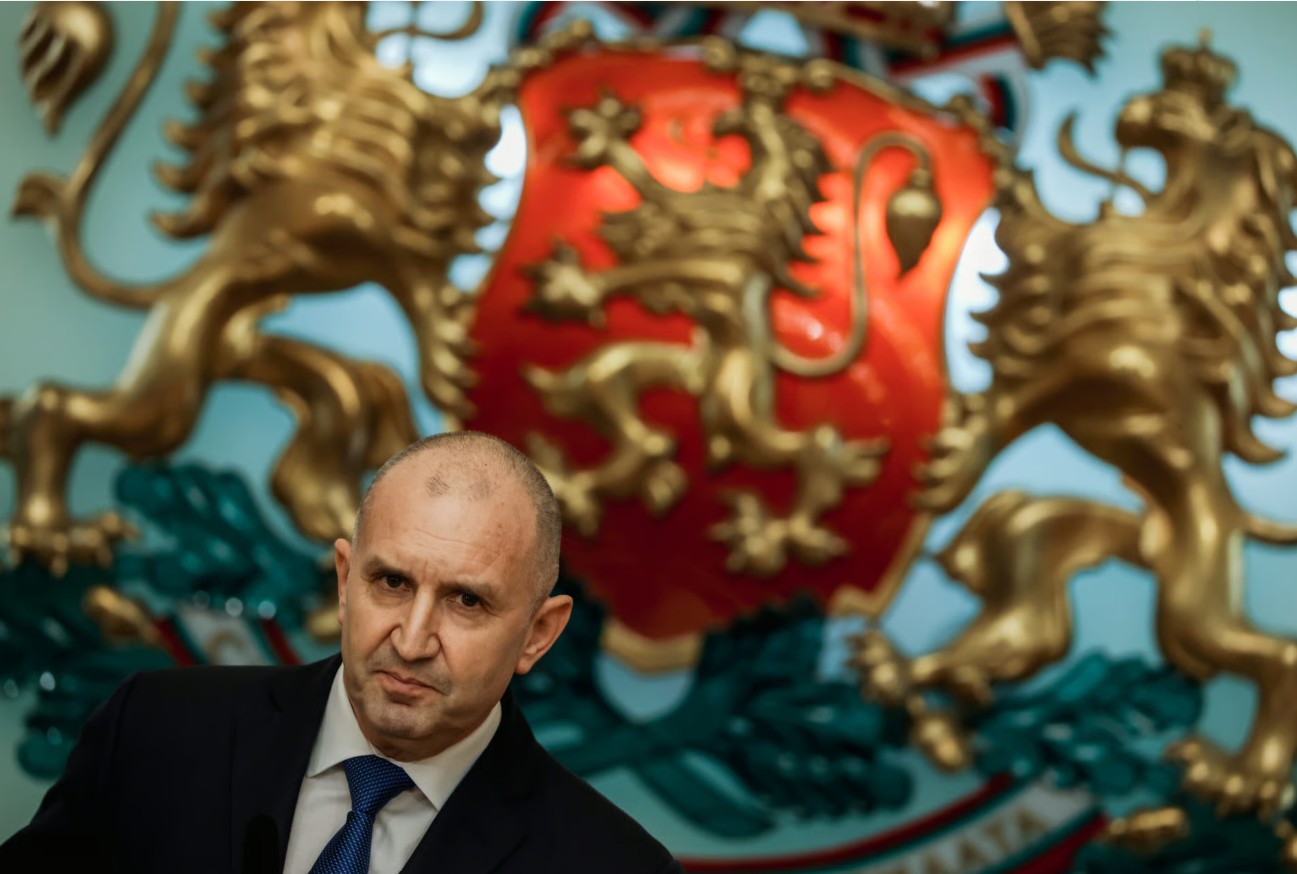
In the immediate aftermath of the April 19th general elections in Bulgaria, one question seems to be on every Western commentator’s mind: will Orbán be replaced by Rumen Radev? Orbán does not need an introduction. Rumen Radev was elected President of Bulgaria twice (2016 and 2021); earlier this year he resigned from the presidency and founded a party which unexpectedly won an absolute majority of seats in the Bulgarian parliament, the biggest landslide since 1997. The Orbán analogy is mainly about future policy making in the European Union: with the infamous Hungarian Prime Minister gone, will there be a leader of a EU country who consistently takes pro-Kremlin positions in the European Council and aggressively sabotages EU-led efforts to help Ukraine effectively defend itself against Russia’s invasion?
There are several well-established facts that present the starting point for reasonable speculations about Radev’s future geopolitical orientation.
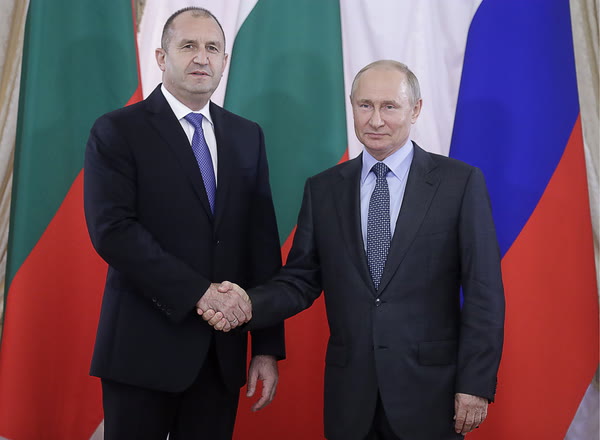
Most recently, during the electoral campaign that unfolded in Bulgaria this spring, the number of TikTok accounts popularizing #rumenradev rose dramatically – a phenomenon reminiscent of readily observable patterns of direct Russian involvement in recent elections across Europe. The last electoral event organized by Radev’s party featured a giant photograph of him shaking Putin’s hand. Further back in time, while he was occupying the presidency (a largely ceremonial position), on several occasions Radev voiced his admiration for Orbán and the FIDESZ regime in Hungary. In addition, he made statements that indicated that he shares the Kremlin’s positions, e.g. that Crimea is de facto Russian, that Europe’s policies towards Moscow should focus on diplomatic efforts rather than geopolitical confrontation, and that restoring peace is more important than the defense of Ukraine’s territorial integrity. Most explicitly, when President Zelensky visited Bulgaria in 2023, Radev treated him in a noticeably lukewarm manner and expressed his opposition to Bulgarian military aid to Ukraine. \
Finally, those who fear that Radev might become the Moscow’s minion bring up some aspects of his more distant, pre-political professional career. He went to an air-force academy in the 1980s, which means that all his teachers without exception were hard-core pro-Soviet military cadres. He became a member of the communist party shortly before the end of the Zhivkov era.
Still, this evidence does not warrant the conclusion that Russia’s old Trojan horse in Brussels will be replaced by a new one. In fact, the answer to the currently trendy question should be: it is unlikely that Radev will become the next Orbán.
The proliferation of TikTok accounts might be indicative of Russian support, but this support remained minimal and lackluster; arguably, what we have in this case is the sustaining of certain routines customarily followed by Russian political hackers rather than a strategic, country-tailored effort to sway Bulgarian voters. The unexpected and brief over-exposure of the Radev-Putin handshake marked the concluding moment of an electoral campaign in which Radev rarely if ever mentioned the Russian dictator and might therefore be construed as a last-minute opportunistic effort to attract some pro-Russian voters. While Radev would, indeed, make statements that arguably communicated messages sympathetic to the Kremlin, his electioneering ultimately revolved primarily around domestic issues. Moreover, he never insisted that supporting Moscow is a top priority for him and was evidently reluctant to turn the issue of Bulgarian-Russian relations into the centerpiece of his campaign. Another fact is worth accentuating here. In Bulgaria there is a party – named “Revival” – whose political rhetoric is completely permeated by pro-Kremlin and anti-EU bombast, and whose leaders clearly prioritize the “normalization of brotherly relations with Russia” over everything else. In the April 2026 elections this party sustained a massive electoral loss – the number of parliamentary seats it controls was reduced from 33 to 13. What this development demonstrates is that Bulgarian politicians who promote radically pro-Russian policies quickly alienate large swaths of the Bulgarian electorate – a development which an intelligent political animal like Radev has certainly noted.
While in office, Radev did occasionally talk the pro-Putin talk: he described the sanctions imposed on the Kremlin as ineffective, he opined that they hurt European economies more than Russia’s, and on one occasion he imposed a veto on a Bulgarian Parliament’s decision to ship Bulgarian-made missiles to Ukraine (the veto was swiftly overturned). But Radev did not determinedly walk the pro-Putin walk. He never engaged, Orbán-style, in the systematic and aggressive promotion of Moscow’s interests. Moreover, during the early, pre-drone phase of Russia’s war against Ukraine, Bulgaria became one of the invaded country’s most important military suppliers, mostly because it was still producing large quantities of the Soviet-era ammunitions without which Ukrainian firepower would not have been sustained. Clearly, Radev could have done a lot more than imposing a single veto in order to obstruct, impede, or sabotage such supplies; but this did not happen. And it is hard to think of a diplomatic move made by Radev that advanced a vital Russian interest: he never blocked an EU policy, he did not bring the functioning of EU decision-making bodies to a standstill, and while attending EU summits he never registered dissent from the opinions expressed by a majority of member states.
In order to draw the right conclusions from Radev’s professional career, one needs to look at this career’s long arch rather than exclusively at its beginning. He has always asserted that he entered the party for purely opportunistic rather than ideological reasons: there is no reason to doubt his contention that he took the step only because he wanted to fly a jet. In the 1990s he attended numerous training courses in several Western countries, including the United States, and became a commander of the Air Force when Bulgaria was already a NATO member. He has never expressed admiration or nostalgia for Soviet-era weapons, armies, or military practices. He is fluent in English and frequently characterizes himself as “a NATO officer and pilot.”
Finally, there is the question of Radev’s domestic reformist ambitions. While generally evasive about his plans, during the electoral campaign he did prioritize two issues, corruption and the modernization of the Bulgarian army. Whether his commitment to combating corruption is genuine or not we do not know at this moment. If it is, he will have to collaborate with the only parliamentary faction that shares his anti-corruption stance, a coalition called “We Continue the Change – Democratic Bulgaria” that is solidly pro-Ukraine and pro-Europe – and will instantly withdraw its support if Radev begins to pursue pro-Moscow policies. But former Air Force General Radev’s commitment to the latter policy, reforming the Bulgarian armed forces, is unquestionable – and he cannot pursue it without NATO’s active and massive assistance. Obviously, this assistance will instantly vanish if he starts taking Russia’s side in the Russian-Ukrainian war. Besides, Radev now has the benefit of a regionally important hindsight. He witnessed how Orbán’s ambitious efforts to choreograph geopolitical shenanigans eventually backfired. It would therefore be surprising if, acting on his sympathies for Russia – whether those are performatively showcased or genuine – Radev radically refashions his country’s rather normal relationship with the EU with the stridency continually displayed by the departing Hungarian populist.
That the Kremlin considers Eastern Europe to be part of Russia’s sphere of influence is beyond doubt. It is therefore possible that optimistic Cassandras who argue that worst case scenarios might not materialize in the region will have to eat their words when a local leader eventually removes his Russian-made Manchurian mask. But the odds are that as far as Bulgaria’s relationship with the EU is concerned, some version of the current non-turbulent status quo will endure.
Professor of Political Science, Miami University of Ohio
Faculty Associate, The Havighurst Center for East European, Russian and Eurasian Studies