By Anastasija Mladenovska
Oxford, OH. October 6, 2025
In the autumn of 1935, two unlikely ambassadors of Soviet humor embarked on one of the most unusual journeys of the interwar era. Ilya Ilf and Evgeny Petrov, satirists known at home as “Ilf-and-Petrov,” a single hyphenated persona, arrived in New York aboard the ocean liner Normandie to undertake a 10,000-mile automobile trip across the United States.
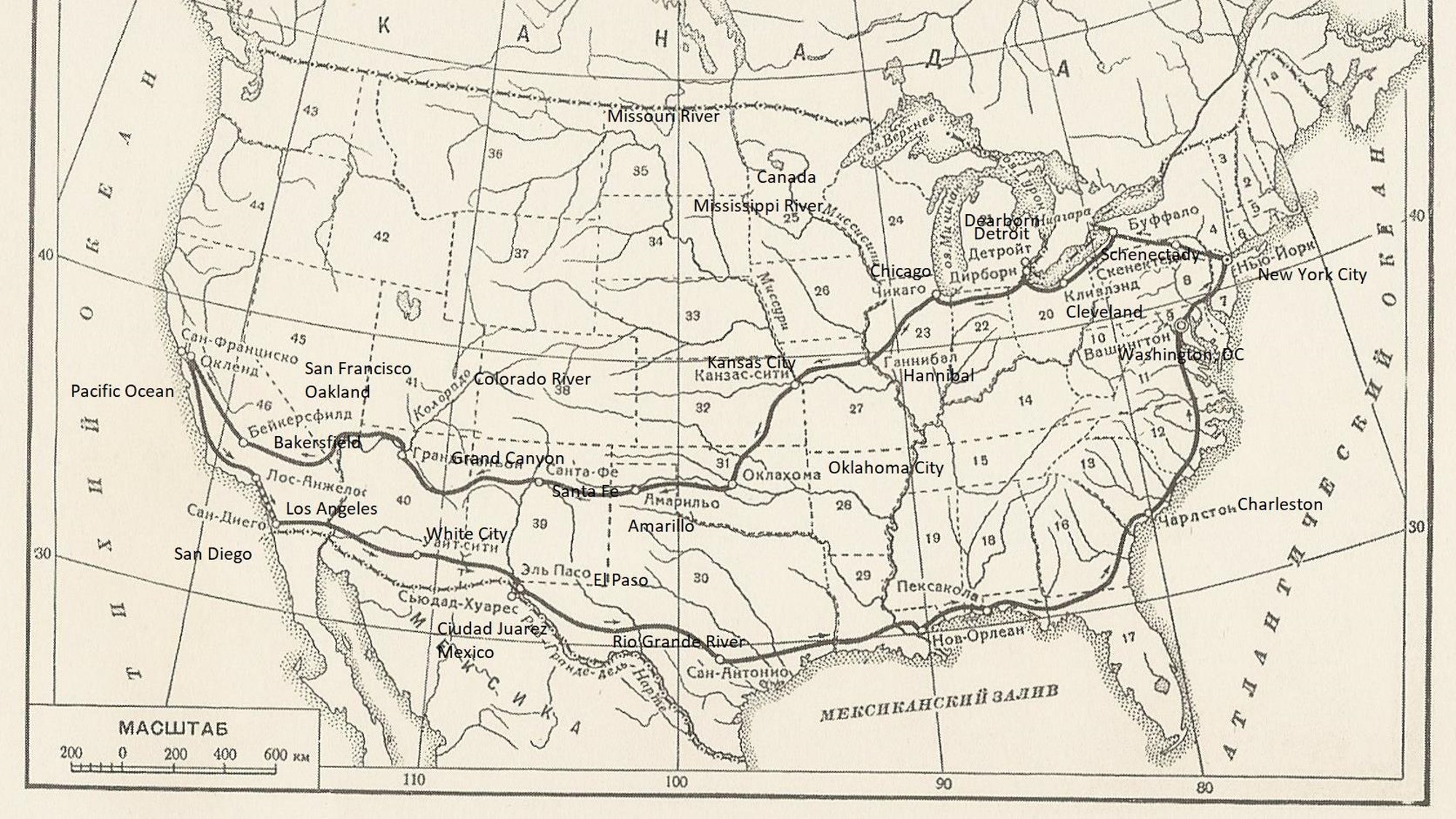
The satirical pair were celebrated in both the Soviet Union and abroad for novels such as The Twelve Chairs (1928) and The Little Golden Calf (1931), which skewered greed and opportunism with sharp irony. Now, as journalists for Pravda, they planned to survey the land of capitalism firsthand. Their guide was Solomon Trone, a Russian Jewish immigrant and former engineer for General Electric, and his American-born wife Florence, who drove the “mouse-colored Ford” that would carry them from New York to California and back.
Lisa Kirschenbaum’s lecture today, ”Soviet Perceptions of America,” revisited this improbable expedition. Drawing on her new book, Soviet Adventures in the Land of the Capitalists, she situated Ilf and Petrov’s Odnoetazhnaya Amerika (Low-Rise America, translated in 1937 as Little Golden America) at the intersection of travel writing, propaganda, and cultural diplomacy. Her talk reminded the audience that this was not simply a story about two writers on the road but about how ordinary people, immigrants, hosts, and hitchhikers, helped shape Soviet-American relations long before the Cold War hardened ideological lines.
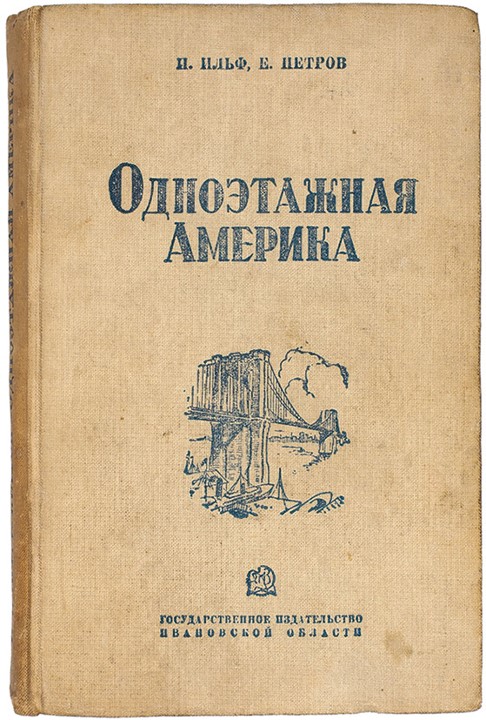
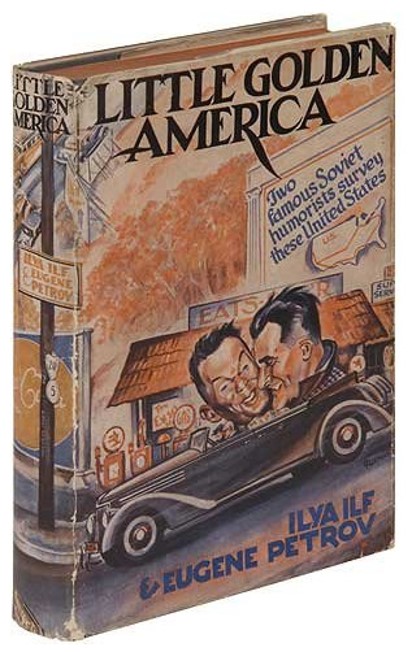
“Every detail of the adventure sounds implausible,” Kirschenbaum, Professor of History at West Chester University, writes, and her lecture opened in the same spirit of astonishment. The Soviet Union under Stalin was hardly known for letting its writers roam freely, yet these “Soviet Mark Twains” crisscrossed the United States with minimal oversight. Even more remarkable, their travelogue appeared in 1937, at the height of the Great Purges, when any contact with foreigners could provoke deadly suspicion. That such a book was published at all, both in Moscow and New York, reveals how cultural exchange persisted despite mounting xenophobia.
The America they encountered was a land of contradictions: “a phenomenally rich model of efficiency and modernity as well as an impoverished state in comparison to the Soviet utopia,” as Kirschenbaum summarized.
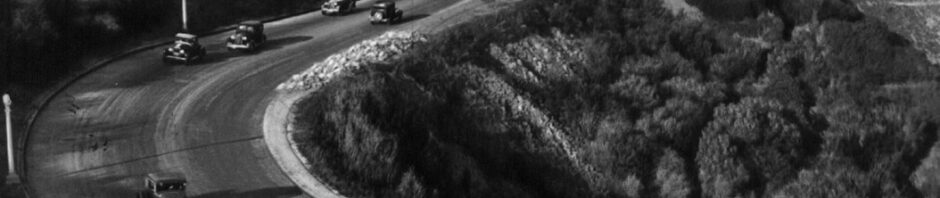
Ilf and Petrov could not help but admire American roads, which they described as “so smooth and gleaming you want to dance on them,” even as they mocked the gaudy consumerism those roads connected. They attended the 1935 New York Auto Show and fell in love with the automobile, one of the central symbols of Amerikanizm, the Soviet fascination with American technology and efficiency. Yet their awe coexisted with unease: what did it mean that the same system that built highways also produced unemployment and inequality on a mass scale?
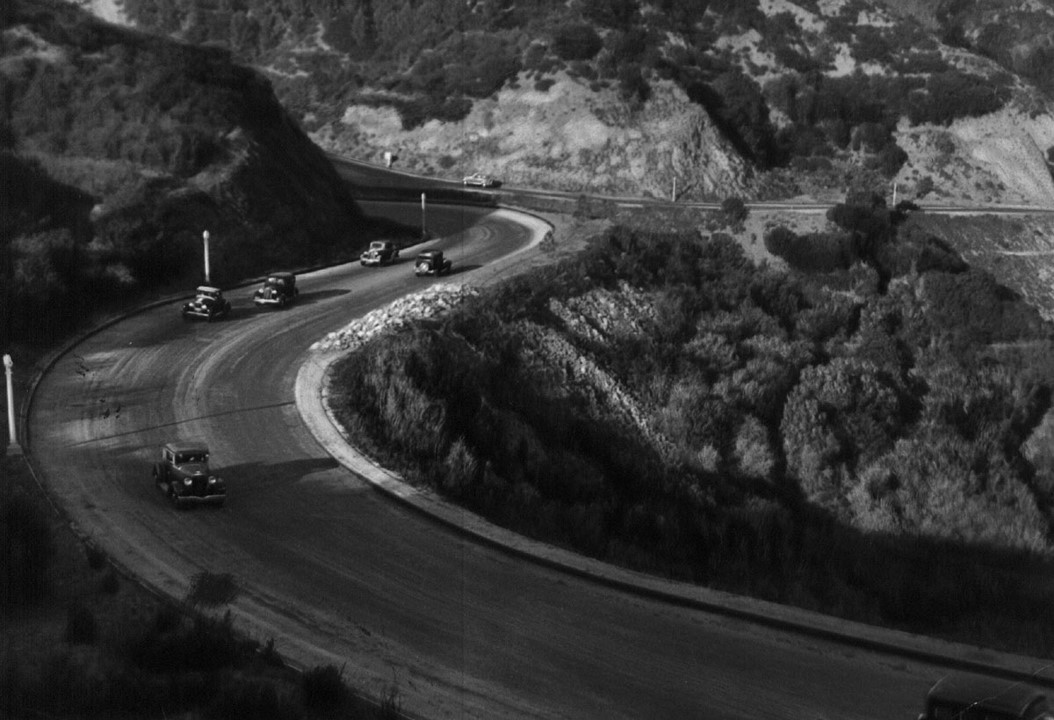
Kirschenbaum emphasized this double vision throughout her lecture. On one hand, Ilf and Petrov arrived with clear ideological instructions: as Pravda correspondents, they were expected to highlight the “distance separating the world of socialism from the capitalist world.” On the other, their writing brims with curiosity and humor that resist simple propaganda. Their tone shifts fluidly from mockery to empathy, particularly in encounters with ordinary Americans.
One of the most striking episodes Kirschenbaum noted concerned a hitchhiker named Mr. Roberts. Heading to Arizona to see his injured wife, Roberts had sold everything to pay her hospital bills. “It cannot be helped—tough luck,” he told the Soviet travelers without complaint. Ilf and Petrov recorded the moment with quiet disbelief: how could someone accept suffering so stoically? For Kirschenbaum, the episode crystallized the paradox of American individualism, its dignity and its blindness. “They recognized,” she explained, “that people could not see capitalism as the source of their misfortune, only as the stage on which personal virtue might triumph.”
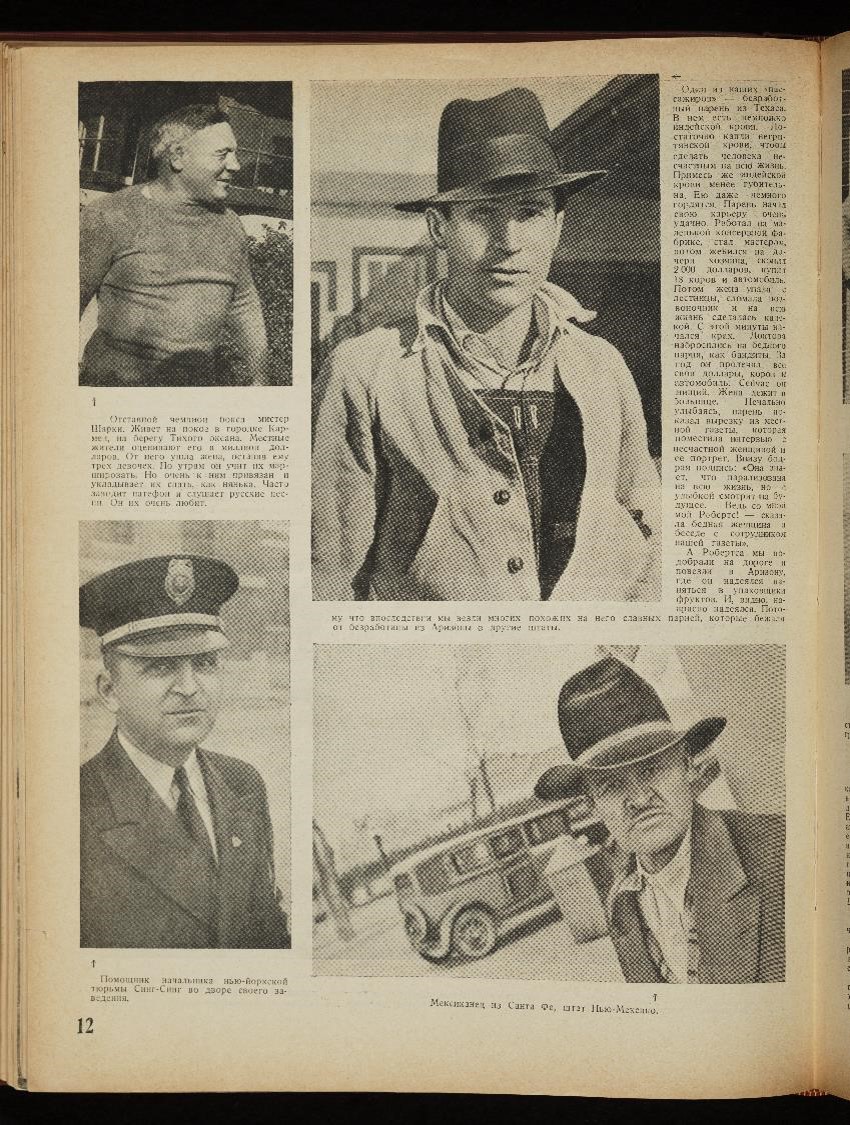
At other points, their admiration bordered on reverence. When the writers visited Henry Ford at his Dearborn factory, they described him not as a ruthless capitalist but as “a sharp-nosed Russian peasant, a genius inventor who unexpectedly shaved off his beard and donned an English suit.” Ford, they reported, advised them, “Don’t ever get into debt, and help one another.”
For Soviet readers, the image of Ford as a homespun moralist turned the world upside down. The industrial titan became an emblem of the very tekhnika, the uniquely American “know-how”, that Stalin had urged Soviet workers to emulate. Kirschenbaum reminded her audience that this worship of Ford was widespread in the 1920s and 1930s. To Soviet observers, “industrialized America became the Promised Land,” the model for how rational organization and mechanical ingenuity might accelerate socialism’s progress. The challenge, as Ilf and Petrov phrased it, was how “to get the benefits of Amerikanizm without falling into the misery of capitalism.”
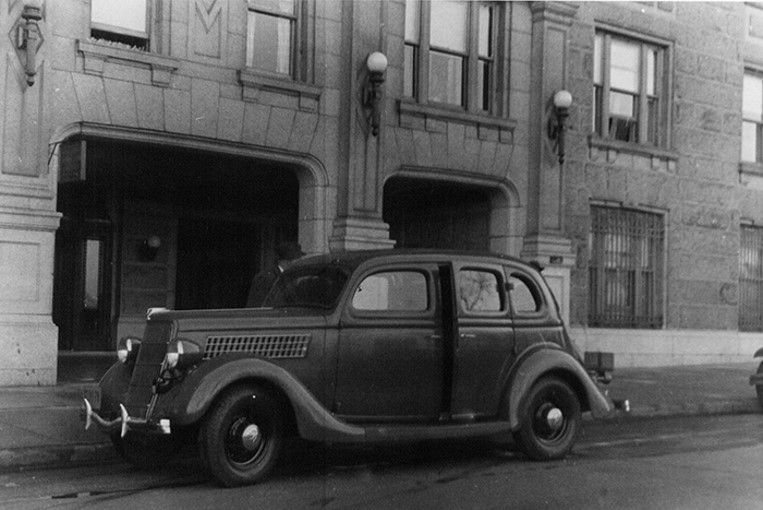
The pair’s reliance on émigrés such as Trone and his wife added another layer to this story. These guides, translators, and fellow travelers served as intermediaries between two suspicious nations. By foregrounding their role, Kirschenbaum argued, we can rethink foreign relations as a web of personal encounters rather than just state directives. Through visa records, letters, and even FBI files, she reconstructed how unofficial diplomacy unfolded in living rooms, diners, and garages across America, a grass-roots exchange carried out by people who were neither diplomats nor propagandists but simply curious about each other.
Despite their humor, Ilf and Petrov could not entirely escape their ideological frames. They often “misstated, misrepresented, misunderstood, and simply missed quite a bit,” Kirschenbaum admitted. Their section on “Black New York,” for example, betrays the racial blind spots of Soviet universalism. Fascinated by Harlem nightlife, they marveled at performers such as blues pianist Gladys Bentley but filtered what they saw through Soviet notions of racial hierarchy and “superior consciousness.” They criticized American racism while failing to see their own racialized assumptions—a tension Kirschenbaum used to illustrate how Soviet internationalism could both challenge and reproduce the inequalities it condemned.
Yet the travelogue’s contradictions also made it enduring. Beneath its satire lies a genuine sense of wonder. The authors praise the cleanliness of roadside motels, the availability of hot water and gas in even the smallest towns, and the efficiency of American service. Upon returning to Moscow, they wrote to Stalin suggesting that, instead of sending more engineers abroad, the USSR should send party officials “to see for themselves.” Only by witnessing these comforts firsthand, they argued, could Soviet leaders grasp what modernization truly required.
In her closing remarks, Kirschenbaum quoted Ilf and Petrov’s own reflection: “It is necessary to see the capitalist world to evaluate anew the world of socialism.” That insight, she suggested, captures the deeper purpose of their journey. Traveling through the capitalist heartland forced the writers to view their own society through a foreign lens. Their laughter at American excess often doubled as an indirect critique of Soviet shortcomings, the shortages, bureaucracy, and inefficiency they left unmentioned. By praising American gas stations or hotel plumbing, they subtly asked why similar amenities remained unattainable at home.
Kirschenbaum’s lecture ultimately painted Low-Rise America as an experiment in seeing: an attempt to translate one civilization into the language of another. The book’s success, both in 1937 and in Kirschenbaum’s retelling, lies in its refusal to fit neatly into propaganda. It is, as she put it, “an acute critique of capitalism, but an unconventional one, curious, comic, and deeply human.” Ilf and Petrov never fully transcended their ideological boundaries, but they expanded them, transforming satire into a form of diplomacy.
Nearly ninety years later, their journey reads less like a Soviet mission than a shared human search for understanding. Kirschenbaum’s reconstruction of their road trip, woven from letters, archives, and photographs, reminds us that the space between systems is often bridged not by policy but by people: by humor, by curiosity, and by the courage to look, as the authors once did, at the Other and see, unexpectedly, ourselves.