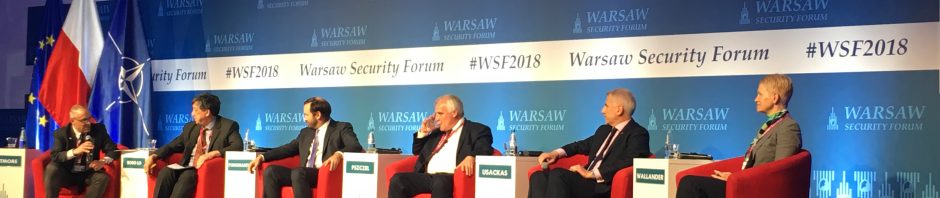


By Emily Tatum
At the end of October, with the support of the Political Science Department, I traveled to Poland to attend the Warsaw Security Forum. The Warsaw Security Forum has emerged as a leading foreign policy and international security conference for Central and Eastern Europe since its inception in 2014. I attended with Miami alumnus Mr. Brigham McCown, who will be teaching political science courses at Miami in the spring and who has been involved in the Forum since the first year.
Warsaw is a fascinating, beautiful city, etched with the devastating memories of World War II, yet marked with a new European sensibility and modernity. It was incredible to see these two sides of Poland come together in Warsaw. We visited the Warsaw Uprising Museum to learn more about the German invasion of the city then later walked the same streets afterwards. After the war ended in 1945, the cultural reconstruction in Warsaw began in attempts to reconstruct the historic city center. In 1980, the reconstruction efforts were recognized internationally as Warsaw’s Old Town was chosen as a UNESCO World Heritage site.
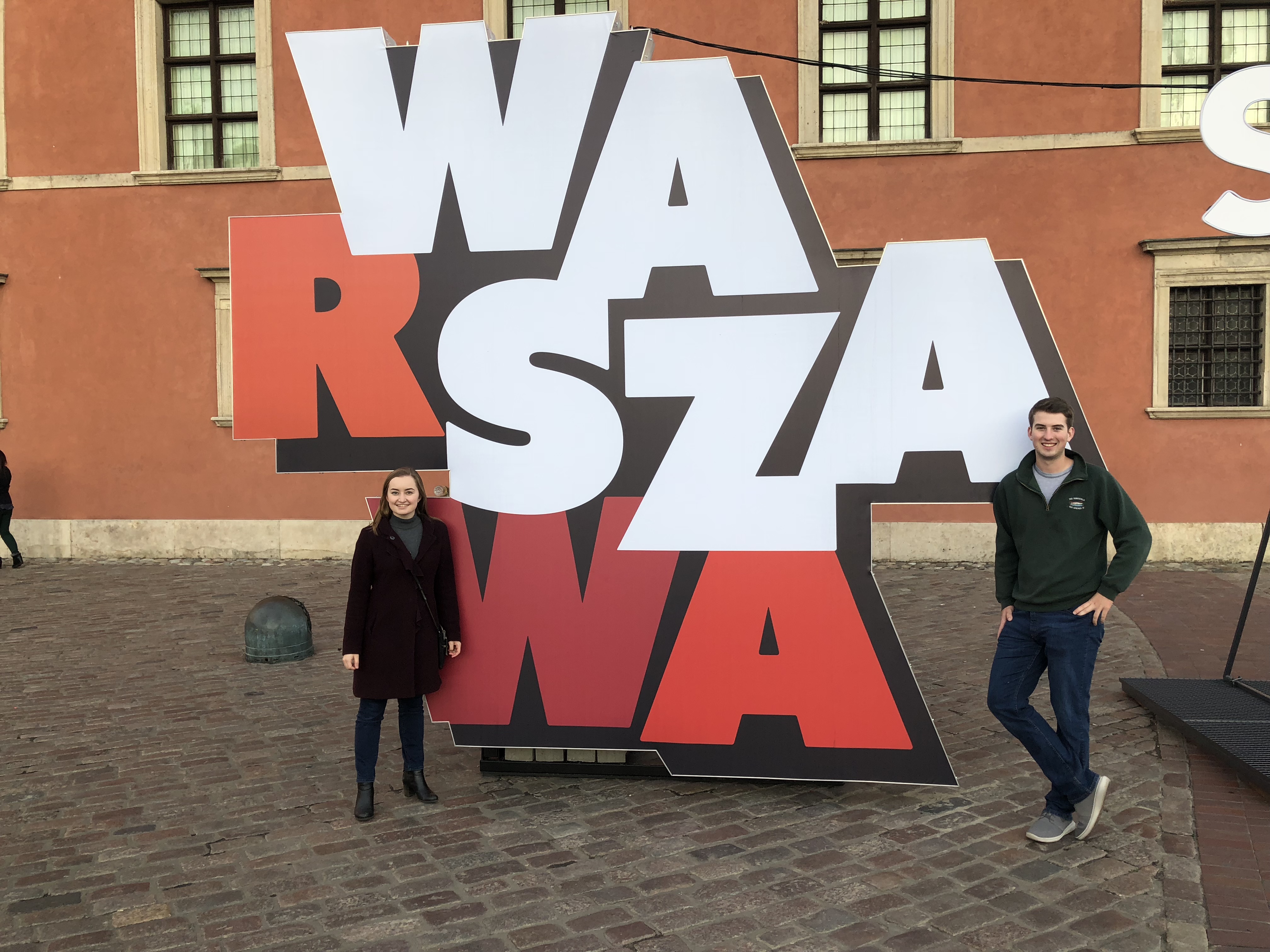
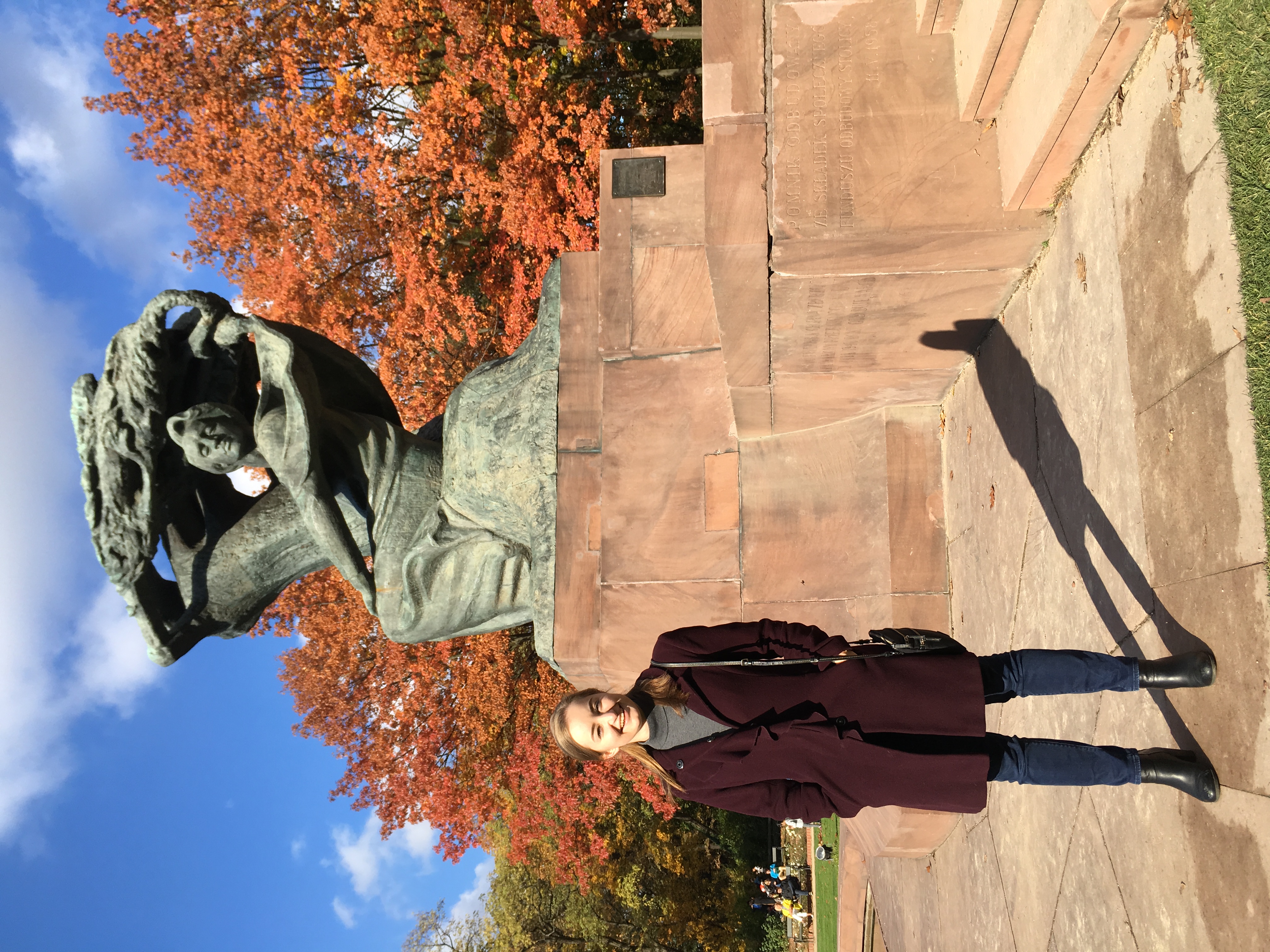
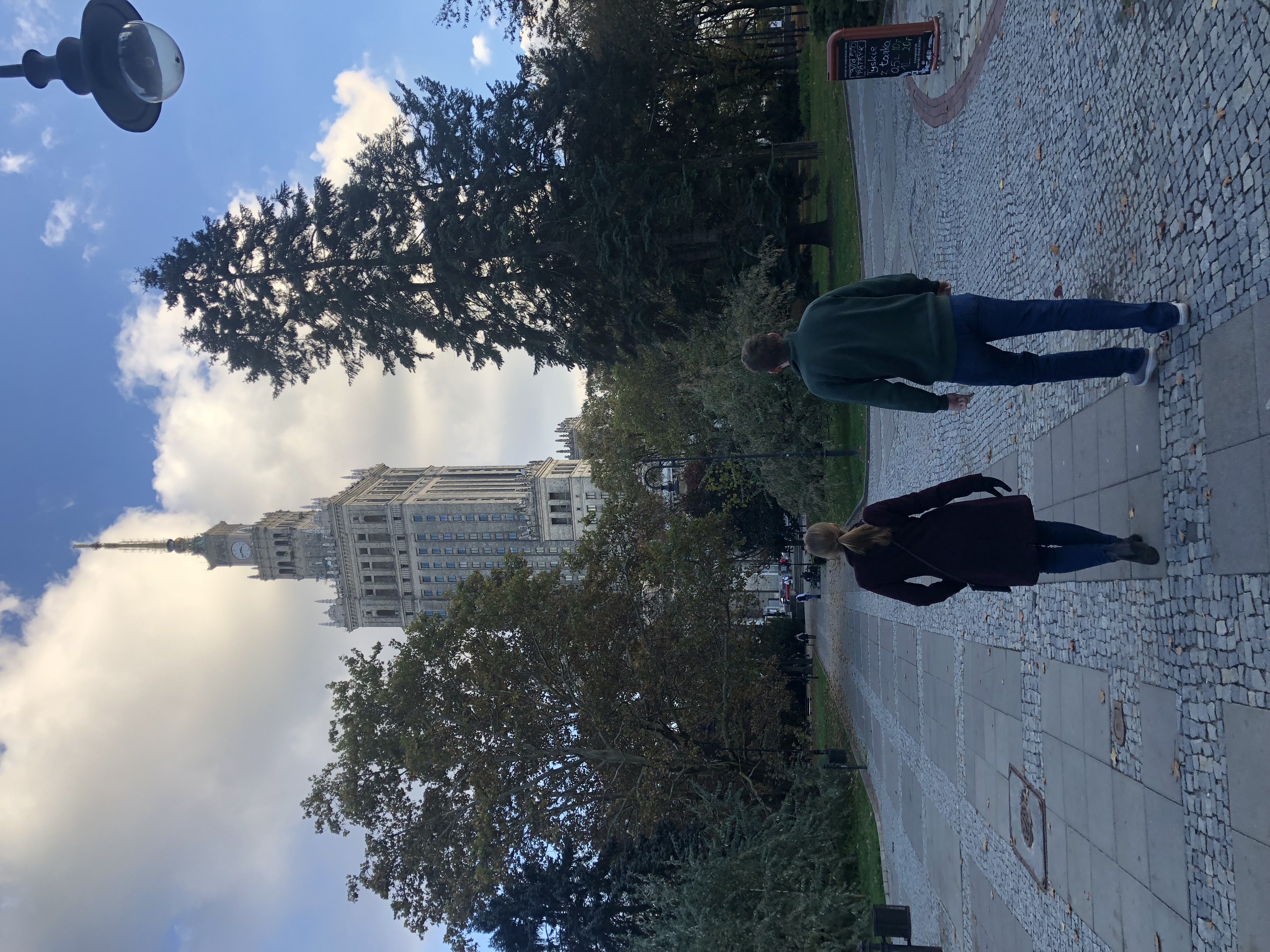
The Warsaw Security Forum was attended by a fascinating mix of civilians, defense officials, and leaders in the private sector. The Warsaw Security Forum is funded in part by NATO, and discussions largely centered on pressing security issues in Central and Eastern Europe. I was able to meet foreign policy professionals from all around Central and Eastern Europe, as well as U.S. defense officials. During the Forum, I served as a social media intern with the Casimir Pulaski Foundation, an independent, non-partisan think-tank specializing in foreign policy and international security. I worked alongside other interns from Poland and Germany as we would quickly transcribe quotes from the panelists and live tweet their comments during each panel.
The panels ranged from discussions on the war in Ukraine to the Three Seas Initiative to the 100 year anniversaries of Central European countries. It was fascinating to watch which panels were the most attended. Commonly shared perspectives from panelists and participants included support for the entry of Georgia into NATO, critique of Germany for agreeing to partner with the Russians on Nord Stream II, and belief in the transatlantic alliance. Additionally, given the tense political climate in Poland with the Law and Justice Party, Prawo i Sprawiedliwość (PiS), panelists frequently discussed the growth and proliferation of international populism. The week actually timed with the Polish parliamentary elections. The elections ultimately led to a decline in control for ruling Law and Justice Party and served as an interesting backdrop to the forum.
This experience was my first time in Central and Eastern Europe, and I look forward to returning for a longer amount of time in the future, hopefully with further regional study and progressed Russian language skills. I am very grateful to the Political Science Department for encouraging me to attend the forum, to hear the differing perspectives within NATO, and to know the city of Warsaw.
Thank you to the Havighurst Center for inciting this passion and interest of mine in Central and Eastern European politics