By Charlie Fair
At the time of writing, the Russian Invasion of Ukraine is over four years old. The Russo-Ukrainian War has now exceeded the Soviet experience of fighting in the Second World War. Russia has not inched any closer to its still-maximalist goals of territorial conquest and the political subjugation of Kyiv.
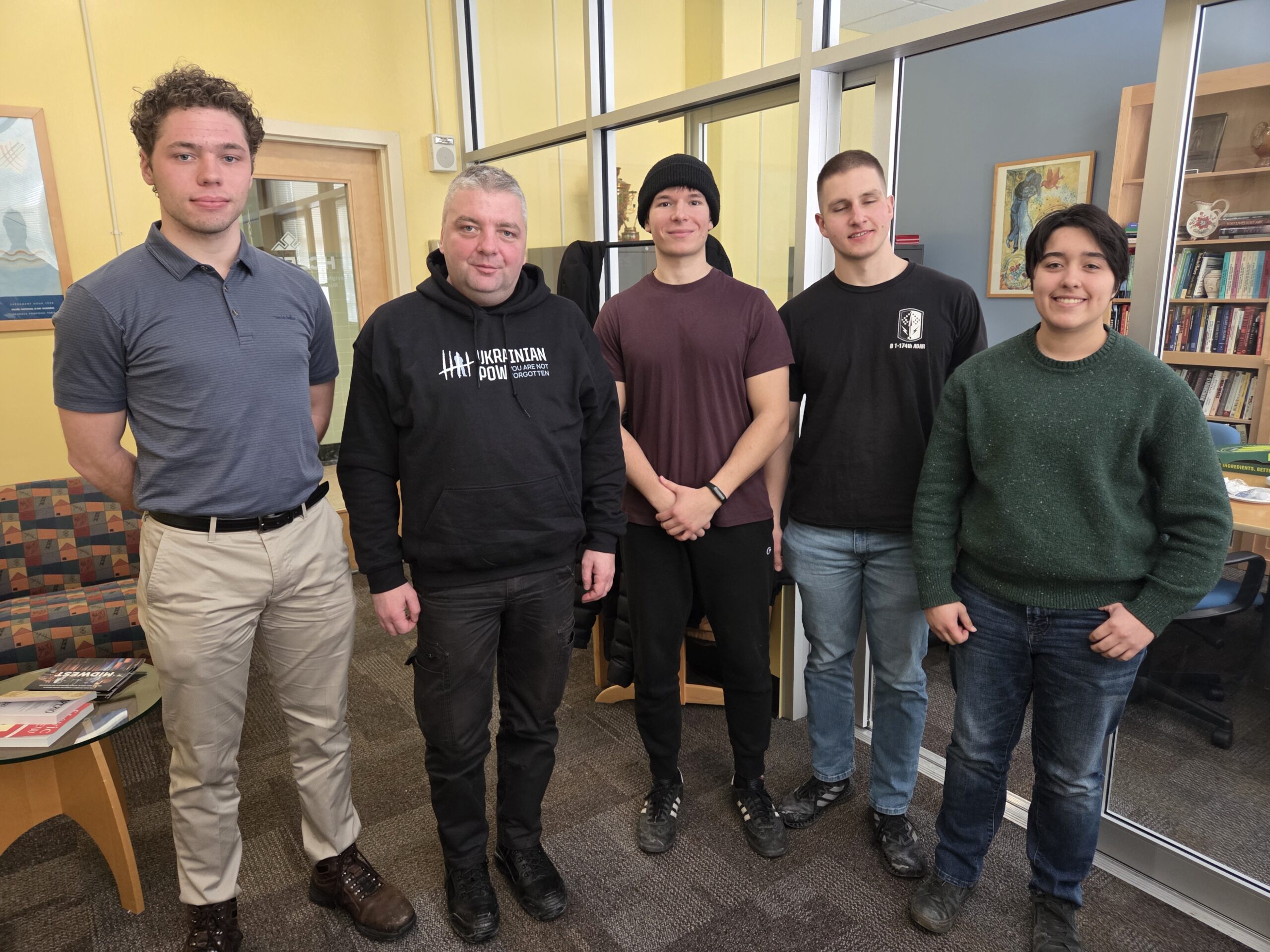
While horrendous, the war has produced a remarkable effect on Ukrainian society, bringing together a wide range of people from across careers, faiths, cultures, and more. Each one has a part to play in defense of the homeland and their mingling has created a stronger, more united Ukraine. One example of this effort is pacifist and human rights activist Maksym Butkevych, whom Miami University had the pleasure and honor of hosting on February 2, 2026. From political activist to frontline soldier to prisoner of war, Butkevych’s experience in this era-defining conflict for Ukraine tell us much about why Ukrainians fight as well as the enemy that they must throw back.
Butkevych came from an overwhelmingly anti-militarist background, having worked as a journalist and for numerous Ukrainian humanitarian organizations. Yet with the full-scale Russian invasion of Ukraine beginning in February 2022, Butkevych did not hesitate to volunteer to fight for the defense of his country. As the war failed to decapitate the Ukrainian state immediately and became a wider, protracted conflict, Butkevych was taken prisoner in the heavy fighting in Luhansk Oblast that same summer.
It was his time as a POW that revealed the most about the state that Ukraine – and very much the entire West – must now contend with. Butkevych spoke directly about the squalid conditions in a Luhansk POW camp, with abuse from the guards a frequent occurrence. Russian state TV was blared incessantly and prisoners were made to sing the Russian National Anthem.
And yet, while monstrous, Butkevych’s experiences as a prisoner of war do not exactly reveal a fearsome, well-oiled Russian machinery of death, as was seen in the days of Stalin. Instead, Butkevych spoke of local ethnic Russians – some far too young to have any business soldiering – guarding POWs. His captors were abusive and thuggish, but showed no keenness for the cause or any real awareness of why they were there. One amusing episode Butkevych reported recounted how his captors learned of the Ukrainian incursion into Belgorod, causing complete panic and confusion. It would seem that their efforts to harass and torture their Ukrainian POWs with Russian propaganda may have inadvertently clouded their own judgements.
Butkevych was later accused – without any evidence – of committing war crimes against civilians in a region he was not even physically present in. A lawyer approached him after he had learned of the charges and laid out two simple options for him; he could cooperate, and expect somewhat better treatment, or he could remain defiant. The consequences of choosing the latter, his lawyer did not subtly imply to him, would be profoundly unpleasant.
Fortunately for us at Miami University, Butkevych was released in late 2024 in a prisoner swap and was able to give us great insight into both Ukrainian and Russian affairs. While his experiences show the monstrousness and inhumanity the Russian Federation is willing to stoop to, it also illuminates the increasingly brittle and rusty hinges of the Russian apparatus of terror. The military is running out of bodies and those still left in its ranks grasp at straws for any sort of motivation to fight.
Yet we should not be quick to use Butkevych’s time to prophesize the collapse of the Putin Regime. As he himself pointed out while speaking to Miami Havighurst Center Undergraduate Fellows, Ukrainians and Russians have undergone fundamentally different political experiences since the end of the Soviet Union. After decades of betrayal and exploitation, Ukrainians have rejected subjugation to Moscow and want to use Western-style democracy as a pathway in uniting and developing their nation. Russia, on the other hand, traded its opportunity for political openness for the security of a police state. The people of Ukraine have rallied around their vision, while most Russians are at best apathetic about politics as long as the consequences of Putin’s adventures abroad and at home do not impede their own daily lives.
Since his return from captivity, Butkevych has resumed his humanitarian work, particularly in advocacy for Ukrainian Prisoners of War still not yet returned to Ukraine. Russian captivity has in no way diminished his love and care for his countrymen and women and for humanity. It is certain that with Ukrainians like Maksym Butkevych, Ukraine will triumph against Russian aggression.
Charlie Fair is a senior majoring in Global Politics and Russian, East European, and Eurasian Studies.