
By Grace Farrell
Miami University’s Havighurst Center for East European, Russian, and Eurasian Studies hosted a series of storytellers this spring, including Ukrainian POW Maksym Butkevych and “foreign agent” Katerina Gordeeva. The Russian state officially designates anyone who accepts foreign funding as a foreign agent pursuing the aims of a foreign state. Reminiscent of Soviet times, this term fosters sentiments of suspicion and fear, perpetuating the narrative that Russia is being eaten alive from within and without.
The first storyteller was Maksym Butkevych, who spoke at Miami on February 2. Accused of war crimes by Russia, a Russian court sentenced Butkevych to 13 years in prison. Speaking on his experience of being held captive, Butkevych provided insight into how his captors utilized violence to dehumanize and morph people into pawns of the state, ultimately aiming to suppress hope. In prison, he explained how he was forced to watch Russian propaganda shows that claimed the war with Ukraine is a wider one with the West. It is in this sentiment of forced community that the “state has monopoly to the truth.”
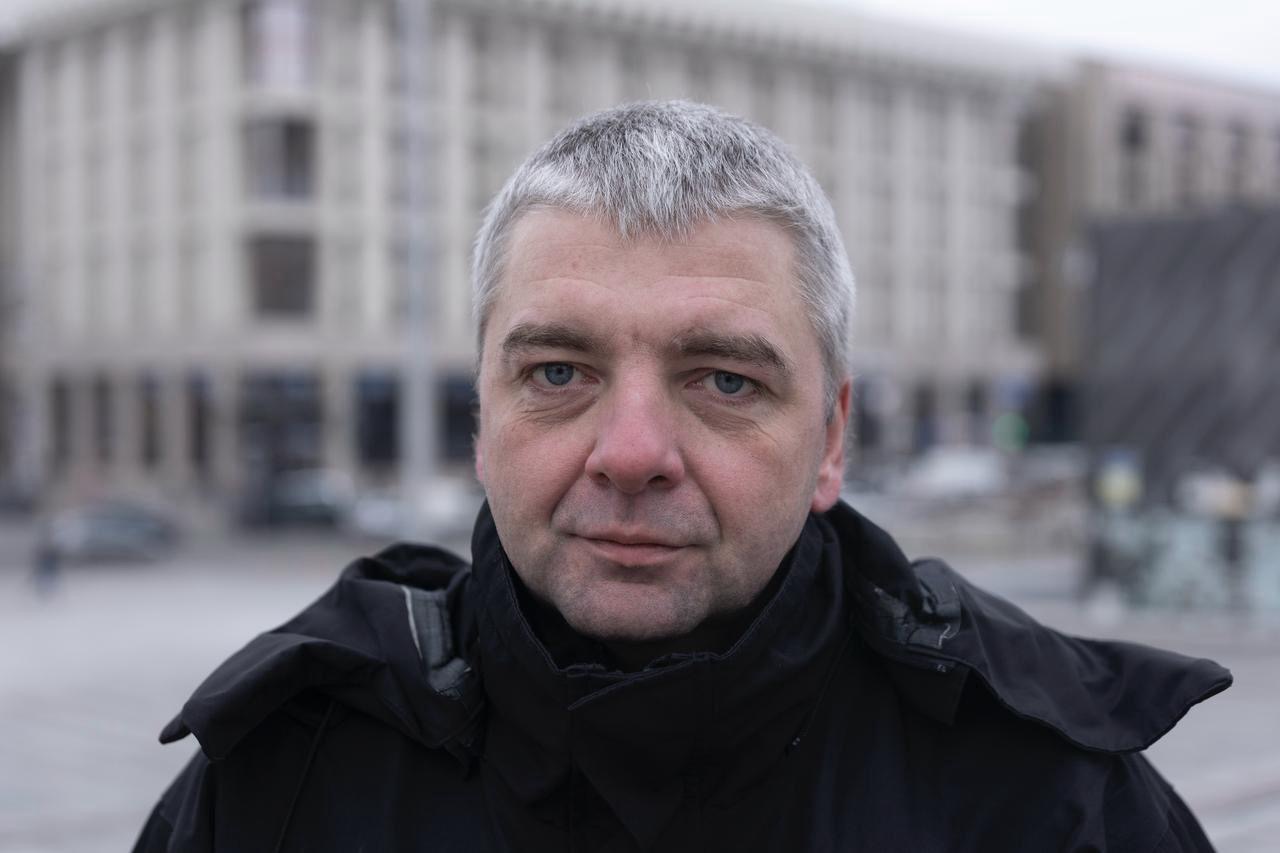
The state’s ability to decide what is “the truth” is intertwined with violence. Always deemed to be a pacifist by others but never himself, Butkevych explained in an interview with Die Ziet that at its root, violence is not about killing but rather, “violence is about dehumanizing people by treating them like objects without souls. It’s about transforming living beings into something inanimate.”
Remaining hopeful is the greatest shield against the poison of dehumanization. As Butkevych recalled his experience in prison, he reminded the audience that “the most important thing is to remember you’re not forgotten.” Remembering and thus preserving hope requires the most basic of human art forms: storytelling.
The next storyteller that visited was foreign agent and journalist Katerina Gordeeva, who spoke on March 2. Among her other projects, Gordeeva has documented people’s experiences during the Russo-Ukrainian war. While the Russian government may be trying to strip people of their humanity, Gordeeva brings up the point that every news report is colored in emotion, arguing that “we live inside an emotional picture of the world.”
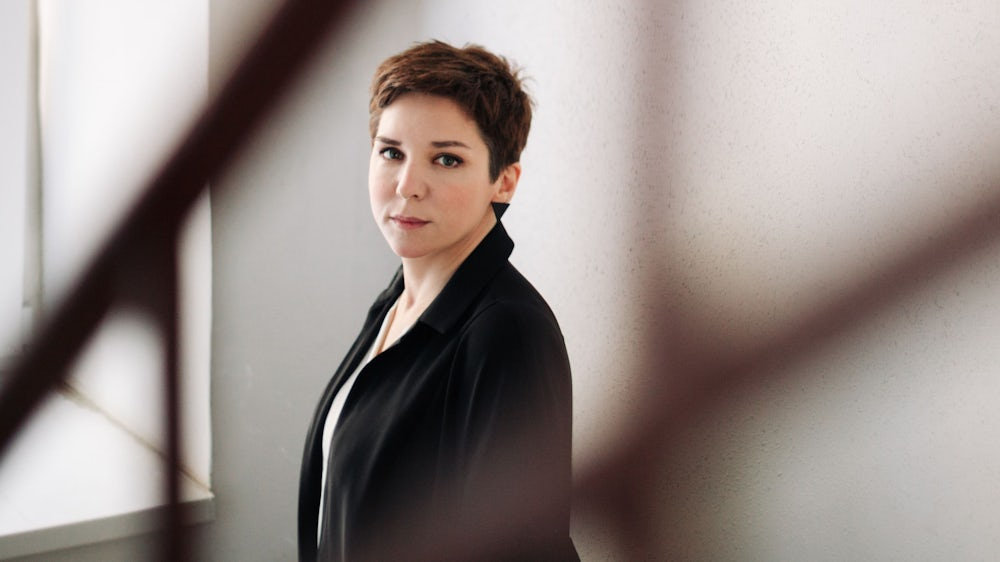
Through this emotional picture, we watch as “happy childhoods turn into a bloody mess” and photos of those who have died are erased from phones in an attempt to protect and bury painful memories. However, it is these painful anecdotes which are most important to preserve in order for the system to change.
As the sands of time erode away memories, Gordeeva strives to ensure that the remains are preserved, even to stories as far back as World War II. Known as the Great Patriotic War in the USSR and in Putin’s Russia, propagandistic tales mythologized the every-day Soviet citizen-hero; however, Gordeeva revealed that a new documentary shared the true tales of the conflict, unveiling unimaginable horrors.
One story reveals a woman’s recollection of Shostakovich’s performance of Symphony No. 7, or the Leningrad Symphony, in March of 1942. The newspapers portrayed the concert as a beacon of hope in a starving city. What they did not portray, however, were the rats running around the floor and the hollow sufferings of hunger and loss. Soviet reports on the concert never shared how civilians could not help but think about eating the rats that crawled along the floor, forcing people to sit with their feet above the ground to avoid them, or how the woman broke down crying because she missed the cat she had already eaten.
It is stories such as these that preserve humanity, and must continue to be recorded to emphasize the importance of hope. Uncomfortably violent tales often remain hidden, and Gordeeva explains that “the truth becomes undiscoverable.”
Foreign agents such as Gordeeva and POWs such as Butkevych are the ultimate storytellers, preserving hope and humanity in a seemingly endless battle against the great enemy of tyranny. By keeping stories hidden, people lose grasp on reality, the truth, and themselves, morphing into the forced identity that has been curated for them.
Gordeeva continues her valiant work as a storyteller by ensuring the atrocities taking place in Ukraine are not buried by propaganda or time. She tells struggles of families fleeing their homes, forced in a position they never thought they could be in. One woman Gordeeva interviewed for her book Take My Grief Away asks: “We didn’t believe until the very end that something like this could happen…so it turns out we’re dumber than cockroaches or something?”
However, she points out her humanity stating, “I’m not a cockroach! I care about things. And I can’t leave when it’s dangerous and come when food shows up, do you understand that?” Unlike a cockroach, people have the great tool of storytelling to survive. Conversely, those who are subservient to Putin are instead morphing into the cockroaches the government so desperately carved them out to be.
“Nobody needs your truth. We need to live.” A second woman Gordeeva interviewed offered this declaration. As the world seems to be stuck in a paralyzing poison, it may seem easy to just focus on survival; however, survival is not living. If people abandon hope and their stories are suppressed, then they are truly subservient. Anything can survive but only people live. Truth is necessary to live.
If there is anything the two storytellers taught, it was the importance of remaining human, not succumbing to pressures that beg us to be willing accomplices in the schemes that work to uproot the very foundations of who we are as people. In a world that is plagued with uncertainty, the strongest antidote is hope and resistance through storytelling, ensuring that nothing is left to become the victim of the silencing passage of time.
Russia is certainly getting eaten alive from the inside, but instead of by foreign agents or “war criminals,” like Putin wants people to think, it is getting eaten by the parasite of silence. A prevention of free thought weakens humanity and the state, allowing propagandists to create a population that bends to their will. As Russia continues to ravage Ukraine, Butkevych and Gordeeva remind us of the importance of not remaining subservient but instead of partaking in the most instinctual form of resistance: storytelling.
Grace Farrell is a sophomore History major.