The Force of Segregation in Cincinnati & Radical Chili!

Cincinnati, Ohio is the ranked as one of the top 10 most segregated city in the United States (Kent, Frohlich 2015). As a result, there are dire financial and educational consequences for non white families who experience this structural violence.  According to Richard Rothstein, research associate at the Economic Policy Institute (EPI), “Since wealth largely comes from housing investments, and home values have increased dramatically over the decades in many areas, those policies have exacerbated income and wealth disparities, Rothstein explained. Black Americans earn about 60% of what white Americans do, and accumulated wealth among typical black households is a mere 6% of the typical white household.” (Kent, Frohlich 2015).  With this context in mind, learners will explore the historic and contemporary forces of housing segregation in Cincinnati.


Conceptual Lens

  • Forces & Systems

 Unit strands

  • Understanding – (Interpreting information as informed through their lived experience)

Web out the unit’s topics and the concepts under the strands

Generalizations that you expect students to derive from unit study (what students must UNDERSTAND conceptually)

  • Racism has impacted housing and social patterns even in the colloquial North

  • Housing segregation remains pervasive

  • Northern cities were actively enforcing what was presumed to be Jim Crow southern housing policies

  • Segregation impacts all facets of life in Cincinnati

Develop Guiding Questions

Factual Question –

  • What were migration patterns of people of color during the post civil war?

    Debatable Question

    • How did Cincinnati officials promote segregation in their policies

Conceptual question

  • What was rationale for enforcing segregation?

Identify the Critical Content (What students must KNOW)

  • Students must know the definition of segregation and redlining.
  • Students must know federal policies that strengthened the promotion of segregation in housing.
  • Students must be able to identify local examples of institutions who fought for desegregation in housing and public accommodations.

 Identify key skills (what students must be able to DO)

  • Students must be able to explain the history housing segregation in the United States.
  • Students will be able to identify and critique housing policies that promote racial segregation.

Radical Chili:

The Paradox of Embracing & Rejecting Immigration in Cincinnati

     Cincinnati style chili, a local staple has immigrant roots. Writer Danny Cross explains, “Cincinnati-style chili goes back to 1922, with the creation of downtown’s Empress Chili — named after a burlesque theater next door called “the Empress.” Fact is, Cincinnati chili was invented by Greek immigrants — Empress owners Tom and John Kiradjieff — who used Mediterranean-inspired spices to create a meat sauce used initially to top hot dogs sold out of a cart.” (Cross, 2015). Despite this contribution, alongside the countless other cultural/political/social offerings, immigrant populations have faced waves of violence and resistance in the past (see anti German Hysteria and today see  Sanctuary City backlash). Students will research history about local immigrant populations and reflect on how the paradox between embracing immigrant inventions without embracing immigrant populations.

Identify the conceptual Lens

  •  Paradox & Origins

 Identify the Unit strands

  • “Connecting”

  • “Surfacing”


Web out the unit’s topics and the concepts under the strands

About that Skyline Recipe for Success Ban the Chili?
The folks behind the chili (Origins) Innovation within Immigrant Communities The Paradox between anti Immigration policies of today and the immigrant products Cincinnatians enjoy

Generalizations that you expect students to derive from unit study (what students must UNDERSTAND conceptually)

  • Non indigenous folks, and non descendants of enslaved Africans have immigrant backgrounds

  • Racial hiearchies are embedded in historic and immigration preferences and practices

  • Immigrants have uniquely contributed to social/political/ cultural practices that are commonly solely associated with white American

 Develop Guiding Questions

  • Factual Question –

    • Who is credited for popularizing “Cincinnati style” chili?

  • Debatable Question

    • Cincinnati chili would not exist without the ability for individuals to immigrate to Cincinnati. Explain why you agree or disagree with this statement.

Identify the Critical Content (What students must KNOW)

  • Students must know immigration patterns in Cincinnati.
  • Students must know how immigration has impacted the culture of the city of Cincinnati.

 Identify key skills (what students must be able to DO)

  • Students must be able to identify contributions from Cincinnati’s past immigrated populations
  • Students will be able to compare and contrast attitudes about immigrants in the past to current debates about immigrants today.

 Works Cited:

C. Frohlich, Thomas  Kent, Alexander (2015, August, 25) .The 9 Most Segregated Cities In America. Retrieved from https://www.huffingtonpost.com/entry/the-9-most-segregated-cities-in-america_us_55df53e9e4b0e7117ba92d7f
Cross, Danny (2015, July, 9). So You’ve Probably Heard of Cincinnati Chili. Retrieved from https://www.citybeat.com/home/article/13002194/so-youve-probably-heard-of-cincinnati-chili


Posted in Misc | Leave a comment

CHANGE and TRADITIONS

Concept-Based Unit Ideas

Kristina Hamester

Unit #1 is for a first grade ESL pull out class encompassing 3 days of material.

Unit Title: Changes Around Me

Concepts: Preview Sequence, Compare and Contrast

Web Strands:

  • Vocabulary,
  • Socialization
  • Earth Science

Generalizations

  • We can analyze changing things.
  • Change can be difficult to accept and adapt.
  • Change of setting enables the possibility of meeting new people and making new friends.
  • New neighbors benefit from prior know how of veteran neighbors.
  • The four seasons have distinct characteristics.

Guiding Essential Questions

  • What are ways of change? (C)
  • How will you change this year as you meet new friends? (C)
  • How have you learned new things because of change? (D)
  • What is good about change? (C)
  • What are changes we see in the four seasons? (F)

Critical Content:

Students can retell, describe, have basic knowledge of writing through sounding out words, ask questions, use the board and notes given by teacher to express ideas, try to explain themselves verbally, listen to peers, follow along with read-aloud text, relate to themes: adults moving in to a new house/apartment, changing clothes based on the weather outside, families learning a new language, animals that change according to their habitat: like a chameleon that changes color or a dog that sheds his fur

Key Skills

  • CCSS.ELA-LITERACY.L.1.1.D Use personal, possessive, and indefinite pronouns (e.g., I, me, my; they, them, their, anyone, everything)
  • CCSS.ELA-LITERACY.L.1.1.F Use frequently occurring adjectives.
  • CCSS.ELA-LITERACY.L.1.2 Demonstrate command of the conventions of standard English capitalization, punctuation, and spelling when writing.
  • CCSS.ELA-LITERACY.L.1.4 Determine or clarify the meaning of unknown and multiple-meaning words and phrases based on grade 1 reading and content, choosing flexibly from an array of strategies.
  • CCSS.ELA-LITERACY.L.1.5 With guidance and support from adults, demonstrate understanding of word relationships and nuances in word meanings.
  • CCSS.ELA-LITERACY.L.1.5.C Identify real-life connections between words and their use (e.g., note places at home that are cozy).
  • CCSS.ELA-LITERACY.L.1.6 Use words and phrases acquired through conversations, reading and being read to, and responding to texts, including using frequently occurring conjunctions to signal simple relationships (e.g., because).

Culminating Assessment Task

  • What (the unit study): Communicate characteristics of a season..
  • Why (the conceptual understanding): .. to demonstrate change from the previous season..
  • How: (Engaging Scenario):  .. by discussing change from an array of other examples and observing pictures of seasons and identifying the changing characteristics between the seasons.

Learning Experiences

  • Teacher Facilitated Discussion with Graphic Organizers about  – What are ways of change? How will you change this year as you meet new friends? Have you learned new things because of change? What is good about change? What are changes we see in the four seasons?
  • Read Aloud- Teacher Models Textbook to Encourage Reading Fluency
  • Writing Opportunities – Draw and Write Response, Word Books, Fact about Season
  • Auditory Learning -“Farmer in the Dell” – Changed to Song of Seasons
  • Visual Learning – Photos of elements of seasons
  • Technology – Chromebooks for Internet Research of Season

Unit Overview

When I was in the 5th grade, my two best friends told me they were going to new schools. I visited them on the weekends and learned about their new schools. One friend even got a big new house that we would play in. Sometimes change is hard. But sometimes change is fun!

Teacher Resources/Notes

Draw and Write Paper: https://pin.it/qwo2xmzxtu6idi

Farmer In the Dell: https://youtu.be/kP9PHArRM3E

Lesson 1 Idea:

Day 1

  1. Ask students to consider prior knowledge of Change through a List on Board: What kinds of things Change?
  2. Ask, “How will you change this year as you meet new friends?” Write on projected Compare and Contrast T-Chart: What are examples of Before and After Change?
  3. Read Text pg. 2-3 Aloud to Students
  4. Teacher Models a personal story about moving houses. Then the teacher asks students to, “Imagine welcoming some new person to your neighborhood. What would you tell them?” Give Draw/Write Paper for individual student responses. 
  5. Formatively Assess students during discussions and writing time on whether they are grasping the concepts of change and reflecting appropriately based on communicating their answers to the following questions: What is good about change? Have you learned new things because of change?


UNIT #2 

Unit Title


Traditions 
Concepts Compare and Contrast, Summarize, Context Clues
Web Strands
  • English Language Arts
  • Social Studies
Unit Web  
Generalizations
  • Traditions come from a family’s culture.
  • Traditions can include special dress, music, food, dance, activities, and decorations.
  • We respectfully share, analyze, and discuss cultures to learn about them.
  • Traditions may be added to your family if agreed upon.
Guiding Essential Questions
  • What are some of the occasions or reasons for celebration in your family? (F)
  • What traditions do you like the most? (D)
  • Do you usually have a party? (F)
  • Do you play special games or sing songs? (F)
  • How do traditions make your day special? (C)
  • What other holiday would you like to learn more about? (F)
  • How can you compare and contrast two holidays? (C)
Critical Content Students can describe in past, present or future tense, can ask questions, can follow along with read-aloud text, can sound out words, can use the board and notes given by teacher to express ideas, can listen and respond to peers,
Key Skills

  • CCSS.ELA-LITERACY.L.1.1 Demonstrate command of the conventions of standard English grammar and usage when writing or speaking.
  • CCSS.ELA-LITERACY.L.1.1.C Use singular and plural nouns with matching verbs in basic sentences (e.g., He hops; We hop).
  • CCSS.ELA-LITERACY.L.1.1.E Use verbs to convey a sense of past, present, and future (e.g., Yesterday I walked home; Today I walk home; Tomorrow I will walk home).
  • CCSS.ELA-LITERACY.L.1.2 Demonstrate command of the conventions of standard English capitalization, punctuation, and spelling when writing.
  • CCSS.ELA-LITERACY.L.1.4 Determine or clarify the meaning of unknown and multiple-meaning words and phrases based on grade 1 reading and content, choosing flexibly from an array of strategies.
  • CCSS.ELA-LITERACY.L.1.1.F Use frequently occurring adjectives.
  • CCSS.ELA-LITERACY.L.1.1.J Produce and expand complete simple and compound declarative, interrogative, imperative, and exclamatory sentences in response to prompts.
  • CCSS.ELA-LITERACY.L.1.5 With guidance and support from adults, demonstrate understanding of word relationships and nuances in word meanings.
  • CCSS.ELA-LITERACY.L.1.5.C Identify real-life connections between words and their use (e.g., note places at home that are cozy).
  • CCSS.ELA-LITERACY.L.1.6 Use words and phrases acquired through conversations, reading and being read to, and responding to texts, including using frequently occurring conjunctions to signal simple relationships (e.g., because).
Culminating Assessment Task
  • What (the unit study): Tell characteristics of traditions..
  • Why (the conceptual understanding): .. to share understandings and gain further understanding of various cultures..
  • How: (Engaging Scenario):  .. by discussing traditions and all their elements as a group, reading about them, watching video on them and creating a descriptive paragraph about the findings.
Learning Experiences
  • Teacher Facilitated Discussion with Graphic Organizers
  • Read Aloud- Teacher Models Textbook to Encourage Reading Fluency
  • Writing Opportunities – Draw and Write Response, Word Books
  • Auditory Learning – Video, Songs
  • Visual Learning – Video, Photographs, Textbook visuals
  • Technology – Chromebooks for Internet Research
Unit Overview Is there a special day of the year that only happens one time a year? When you get to decorate, or eat special foods, play music or games and be around your family? What tradition is that in your family?
Teacher Resources / Notes

Lesson 2 Idea:

1st grade ESL pull out class

Day 1

  1. Watch a short video clip of traditions: https://youtu.be/q8nh6qIh-_A
  2. Look at Photograph of Family at Thanksgiving. Ask students what they see. Explain that a tradition is something that a family does to celebrate special days such as holidays.
  3. Ask students to consider prior knowledge of Traditions through a Word Web either on the board or in group work or individual work. https://pin.it/5nvpxeqe566pdf 

Word Web Example

Think about the different celebrations your family enjoys:

    1. What are some of the occasions or reasons for celebration in your family?
    2. What traditions do you like the most?

Allow students to share their thoughts.

  1. Read Aloud pg 112-113 in text. Students Follow Along for Fluency Practice
  2. Teacher Models a personal tradition story to students. Then asks students to, “Think about how you celebrate your birthday. Do you have a party? Do you play special games or sing songs? How do traditions make your day special?
  3. Give Draw/Write Paper for individual student responses. https://pin.it/qwo2xmzxtu6idi
  4. Formatively Assess students during discussions and writing time on whether they are grasping the concepts of traditions and reflecting appropriately based on communicating their answers to the following questions: What holiday do you celebrate? What traditions do you and your family do on this special day? Extension: What other holiday would you like to learn more about?


Posted in Misc | Tagged | Leave a comment

Concept Based Curriculum

Unit 1: Miami University Power Point with CBCI

My classroom is the Admission Visit Center, but I am still a “teacher” in the sense that I teach students about Miami. I’d like to apply the Concept Based Curriculum Instruction to the admission presentations we do for prospective families. This is essentially a PowerPoint with a TON of information about Miami University – merit scholarships, applications dates, statistics and ratings.

  • Concept Based Curriculum and Instruction to be applied by adding a series of questions throughout the slideshow
    • “adapt[ing] lower level curriculum materials to teach for deeper understanding” (Erickson 10)
  • I cannot change slideshow info (because it is copyrighted) but I can enhance slides through what I say
  • Slideshow reveals facts and it’s my job to introduce the concepts and generalization thinking
  • MTR – Making Thinking Relevant – how does all the information that I am spewing out have any relation??


  • Concept: College is necessary in order to excel. Being a college graduate with a minimum bachelor degree allows for more career growth opportunities.
  • Conceptual lens: college degree/no college degree
  • Enduring Understanding: Miami is a public ivy offering a rigorous academic environment designed to prepare you for success. Attending Miami will prepare you for the future.
  • Guiding concepts: Higher Education is necessary to get a distinguished job; Higher Education develops critical thinking; A Liberal Arts foundation is necessary to continue developing/learning as a working adult.
  • Guiding Questions
    • Factual questions:
      • What is Miami’s ranking according to US News and World Report?
      • How long has Miami been considered the #1 institution for undergraduate teaching?
      • What about Miami’s size (17,200) makes it little and big?
    • Conceptual Questions:
      • What other schools can offer a rigorous academic environment?
      • Where do we see other examples of liberal arts education and well roundness in our life? Why does Miami choose to embrace this platform?
      • Everyone’s path is different but the end goal is the same: becoming employed
    • Debate Question:
      • Can one be as successful without a college degree?

Unit 2: Counseling 1:1

CBCI can be used in a counseling session with a student or family.

  • These sessions are specific to an area of study as students often want to learn more information on a major/program in order to make a decision about their college destination
  • CBCI can be used almost in a reverse “Structure of Knowledge Model” where the student shares the concept and/or generalization and I provide the topic/facts
    • Hopefully the topic/facts provided match what the student is looking for
  • EXAMPLE: A student is looking for an engineering program for their college studies

  • What is drawn here is a model that can be used reversely (as mentioned) and traditionally, hence the arrow point both ways. Since each counseling session is unique, I’ve prepared a model that could be used in situations where I present a generalization and the student presents a generalization.

From the presentation or counseling session, hopefully students are able to gather a worldly end product that is applicable to life. It’s not just about facts, but how this information enhances your knowledge. 

I learned that CBCI is really about applying the knowledge you’re learning and making it applicable for life. It’s not just retaining information to get a good score on a test. I consulted Google, Twitter (@Clip_School) and Google Images (visual learner).

CBC 2015 – 2016 – Migration & Global Interdependence (Links to an external site.)Links to an external site.

Posted in Misc | Leave a comment

Two CBCI Units for Fifth Grade ELA

UNIT IDEA #1: “You can’t go it alone!”

This concept-based unit will focus on communities and relationships in nature and in society. Our students study ecosystems in the natural world at the beginning of the school year in their science class. I don’t intend for this to necessarily be an interdisciplinary unit, but I do intend to use their conceptual understandings from science to make generalizations (by comparing/contrasting) about how organisms — including humans! — interact with others in their environment.

The conceptual lens for the unit is “community.” Because this is a language arts unit, I’ll use the unit strands for process disciplines: understanding, responding, critiquing, and producing.

Here are some significant topics and concepts for the unit:

  • UNDERSTANDING: Reading comprehension focus as we read a literary text (and small, supplemental informational text).
  • RESPONDING: Students will respond in the systematic way we do all year — in their reader response journal and partner-pair dialogue journals. Additionally, there will be opportunities in the course to respond verbally in partner, group, and whole class discussion.
  • CRITIQUING: Through discussion and structured activities (like ones from Making Thinking Visible), students will have opportunities to challenge one another’s thinking as they develop new conceptual knowledge about community.
  • PRODUCING: In the end, I imagine we’ll develop a project (or multiple unique projects) based on where the unit takes us, with an emphasis on ACTION or “doing.” Maybe we’ll create lapbooks to share with younger students studying “community;” maybe we will share our learning in a meaningful way with the larger community.

Generalizations:

  • Individuals in our communities have dignity and have their own important stories.
  • Sharing is essential for living in community.
  • Diverse perspectives within a community help us understand our own selves.
  • Members of our classroom community bring different perspectives that help us develop our own ideas (in writing and reading conferences especially!)
  • Characters in a sometimes book grow and change because of the members in their community.

Guiding questions:

  • What clues do authors give readers to understand how characters interact? (Factual)
  • How do characters interact with other characters in their communities? (Conceptual)
  • How do you interact with individuals in your community? (Conceptual)
  • What do characters in your book learn from one another? (Conceptual)
  • What do we in our own community learn from one another? (Conceptual)
  • What story do you have to share? What do you have to contribute to your community? (Conceptual)
  • What can we learn from someone else’s story? How do others’ stories impact us? (Debatable)

Some of the critical content for the unit includes the following strategies, skills, and processes: character traits, theme, using evidence, making inferences, character change, narrative, pre-writing, drafting, revising, using the writing process

Classroom Snapshot:

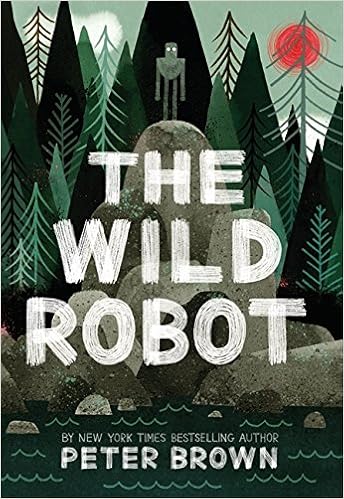
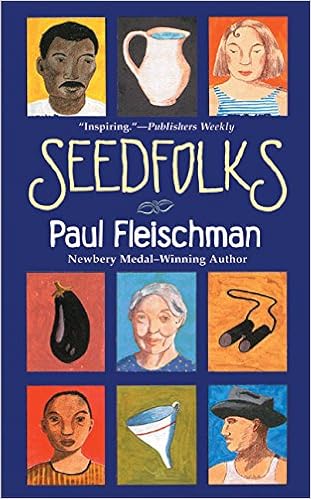
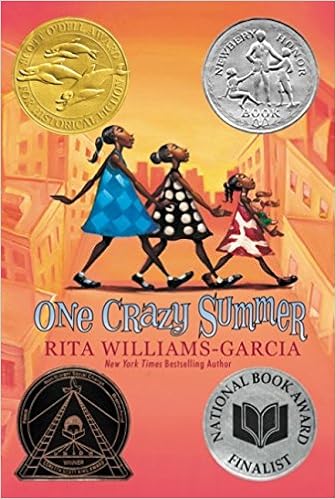
  • Students in their strategic reading groups will read The Wild Robot (Brown); Seedfolks (Fleischman); or One Crazy Summer (Williams-Garcia). In their reading groups, they’ll start by inferring character traits and recording supporting “evidence” in a double-entry journal. They’ll then use that information to choose a trait that shows their relationship with others in the community. We’ll extrapolate that trait to help answer one of the inquiry questions.

Image result for wild robotImage result for SeedfolksImage result for one crazy summer

  •  In another lesson, students will make a concept map about the word “community.” The intention here is for them to include ideas from their small group novel, their lives, and the larger concept of “community.” From this, they’ll brainstorm an aspect of community they want to write a story about.
  • I’ve found success in structuring units about identity and community with resources from Facing History and Ourselves (link to the Facebook page here).

In terms of the final assessment and learning experiences, I hesitate to dive too deeply into the work now, because I tend to let student inquiry guide where we go. Of course, if I am to implement this unit fully, I would take time in my weekly planning to pull texts and assessments and integrate other programs (our word work, for example) that are adaptive and context-dependent.

UNIT IDEA #2: “Is it worth the risk?”

This unit is one I have already done, but can’t wait to adapt! It focuses on taking risks conceptually. In addition, we examine stories of immigration and border crossing as examples of taking risks.

The conceptual lens for the unit is “risk,” evaluating types of risk, conditions around risk, the personal nature of risk, etc.

Because this is a language arts unit, I’ll use the unit strands for process disciplines: understanding, responding, critiquing, and producing.

Here are some significant topics and concepts for the unit:

  • UNDERSTANDING: Reading comprehension focus as we read a literary text (and small, supplemental informational text).
  • RESPONDING: Students will respond in the systematic way we do all year — in their reader response journal and partner-pair dialogue journals. Additionally, there will be opportunities in the course to respond verbally in partner, group, and whole class discussion.
  • CRITIQUING: Through discussion and structured activities (like ones from Making Thinking Visible), students will have opportunities to challenge one another’s thinking as they develop new conceptual knowledge about taking risks.
  • PRODUCING: In the end, I imagine we’ll develop a project (or multiple unique projects) based on where the unit takes us, with an emphasis on ACTION or “doing.” In the past students have written personal narratives about times they have taken risks. Other times they have used examples from our reading to write an editorial that answers one of the “inquiry questions.”

Generalizations:

  • Taking risks is valued differently by different people.
  • There is a difference between taking a risk and being put in a situation where you have to act in a “risky” way (where it is the only option).
  • One behavior may be perceived as a risk by one person or group but not by another.
  • We learn by taking risks — even when we “fail.”

Guiding questions:

  • How can freedoms be gained by taking risks? (Conceptual)
  • Why do people knowingly take dangerous risks? (Conceptual)
  • Are some risks worth taking no matter the consequence? (Debatable)
  • Can change occur without taking risks? (Debatable)
  • Where do characters in our common reading books take risks and why? (Conceptual)
  • When do I take risks and why? (Conceptual)
  • How can I take risks with my writing? (Conceptual)

Some of the critical content for the unit includes the following strategies, skills, and processes: theme, using evidence, personal essay writing, writing process

Classroom Snapshot:

  • Students will analyze “I Look at the World…” by Langston Hughes and “Risk Taking is Free” using these guiding questions.
  • After many weeks of inquiry, students will use this organizer to help them develop an opinion piece about taking risks. To begin, they will identify “evidence” from multiple sources that can help answer some of the inquiry questions.

In terms of the final assessment and learning experiences, I hesitate to dive too deeply into the work now, because I tend to let student inquiry guide where we go. Of course if I am to implement this unit fully, I would take time in my weekly planning to pull texts and assessments and integrate other programs (our word work, for example) that are adaptive and context-dependent.

Posted in Concept-Based, Misc | Leave a comment

Concept-Based Curriculum and Instruction Methods

CBCI Method 1: Intradisciplinary Process Web

A simple and creative way that allows students to make broad generalizations and develop critical thoughts about a topic is through an intradiscriplinary process web. Though this method, students are given a critical topic or question to focus on and can support their thoughts with conceptual understandings in the form of textual evidence, personal beliefs and reflections, relations that topic has with another field, and more from what they read.

The intradisciplinary web is diverse enough that it can be used in many different ways to encourage concept-based learning. Because of this, students are able to make multiple generalizations about what they know and read without overwhelming them with a heavy curriculum. In addition, once these generalizations are made, students make factual and conceptual guiding questions written for each generalization written to further their thought process and engagement in understanding that particular critical topic (Erickson et al, 69). With the intradiscplinary process web, a topic or question is placed in the center of the page with 4 larger boxes surrounding it for each ‘strand’. The strands are predefined as: understanding, responding, critiquing, and producing (Erickson et al., 139).

For example, a topic for student focus could be ‘How Can Life Experiences Transform Me?’ where the conceptual lens would be transformation. Under the understanding text box, students would fill out some of their own hardships or feelings, major events or life experiences they’ve gone through, points of view, possible virtues, etc. Under ‘responding’ students would support their opinions with textual evidence, their reflections, and other personal attitudes. Under ‘producing’ students would fill out written, oral, and visual representations that present or support their ideas. Finally under ‘critiquing’ students would fill out ideas about the text such as the author’s purpose, development of characters, forms of author’s craft, etc.

Other examples of questions or topics that could act as a ‘unit’ could be:

  • The Importance of Money vs. Happiness (Conceptual Lens: Money vs. Happiness)
  • Is Too Much Power a Bad Thing? (Conceptual Lens: Power)
  • Do People Change? (Conceptual Lens: Change)

What is nice about this approach is that it allows students to explore topics through understanding concept-based ideas without needing to dive into a heavy amount of information yet still allowing them to gain critical skills and ‘get the gist’ of broad topic units.

Lesson plan (How to Create an Interdisciplinary Process Web):

  1. A ‘unit’ or topic title should be made for student focus
  2. A concept should be chosen that gives more detail about the study while allowing for factual and conceptual thinking
  3. The predefined strands should be made to surround the topic (as stated above)
  4. After students brainstorm their generalizations, they should document their (multiple) ideas under each corresponding strand or category. The number of generalizations written may depend on course curriculum and the length of time spent on that unit
  5. Guiding questions should be written in the form of factual, conceptual, or debatable for each generalization made. As a rule, 3-5 factual and conceptual questions should be written along with 2-3 debatable questions for the entire unit
  6. The teacher should identify both critical content students should focus their understanding on in that particular unit as well as critical details about key skills
  7. Students should be assessed using a scoring guide or rubric to check their understanding of important generalizations and how well they are able to apply key skills in this activity
  8. The teacher should design learning activities and opportunities for the students to reflect on their understanding of unit content
  9. A unit overview should follow to introduce the study to the students in a way that captures their interest

This classroom method is quite unique, and finding other information about intradisciplinary process webs was difficult. I did have to refer to a website to get a better understanding of the difference between an interdisciplinary approach in the classroom vs. an intradisciplinary approach from this website. I was able to have a clearer idea of how an intradisciplinary process web would work, only focusing small and working within a single branch of discipline unlike an interdisciplinary approach which would integrate multiple disciplines in a larger combination. For a similar idea of how to imagine this graphic organizer, it is somewhat similar to spider mapping, only student ideas would go under the branching bubbles. This video shows a somewhat clear representation of how these webs should be drawn (with the suggestion above!)

CBCI Method 2: Book Talk

When reading classroom material, students are able to make connections with information they read and questions they’re answering to form broad generalizations about a topic.This method uses a graphic organizer to group together 3 boxes for students to include their supporting ideas in connection with a factual question they’re answering. Students have the opportunity to get creative with the information they choose and are able to interpret questions in different ways depending on how they support their findings. At the end, students are to answer a conceptual question by including a broad generalization that combines each of ideas learned from the reading. This concept-based learning activity is helpful in that it allows students to gain a deeper understanding of multiple topics by supporting their responses with textual evidence in the form of quotes from their reading (Erickson et al., 137).

For example, a conceptual focus could be character development. These three example texts all include characters that are explained to the reader through dialogue, their behavior, and the way the author describes them:

  • Edward the Edmu by Sheena Knowles
  • Wilfred Gordon McDonald Partidge by Mem Fox
  • Wombat Stew by Pamela Lofts


3 Factual questions that can be asked within this character developmental focus are:

  1. What do you know about the main character from the author’s description?
  2. What do you know about the main character from the dialogue?
  3. What do you know about the main character from his/her actions?

When presenting this assignment to students, each of the 3 boxes that are connected to each question can hold textual support from each of the 3 books. These example texts are each very different in their own ways. The first book explains a story of how an emu comes to accept himself as he explores life as multiple other animals. The second text is about a boy and his relationship to an elderly woman who has lost her memory, and the third is about a group of friends that try to save a wombat from being eaten by making his predator some stew. All unique in their own ways, this makes finding connections and similarities across multiple texts easier for students to see. When allowing students to include their support from each text, some examples of how the author describes these characters from their description could be:

  • “Edward was easily adventurous and brave to join the other animals” (Text 1)
  • Wilfred was caring” (Text 2)”
  • “Dingo was easily fooled” (Text 3)

Finally at the end of the activity, an example of a conceptual question could be: How do author’s deepen a reader’s understanding of characters? Students can then come up with conclusions about how the author’s methods of writing descriptions and dialogues within each story allows the reader to better get a sense of what a character is like. Having students sum up their ideas from the activity in their final generalization statement encourages students to grasp concept-based ideas and similarities from multiple texts. Doing so makes this a unique learning tactic to use within the classroom.

Lesson Plan (How to Perform Book Talk):

  1. Pass out a sheet to each student with 3 factual questions to answer as well as a conceptual question to answer at the end of the activity
  2. Require each student to support their responses with 3 quotes (1 from each text) per factual question
  3. Allow students to gather their understandings in 1 final statement about what they learned that answers said conceptual question

For this method I sought out to look for other examples of similar graphic organizers like the example in the book, and found one that seemed fairly close in design on pinterest here called a ‘persuasion map’ where students would be given 1 idea and would need to support their 3 reasons with 3 additional facts or examples. While not in this particular example, when scrolling I also found other examples that used the same idea of requiring students to sum their ideas up in 1 final conclusion. 

Posted in Concept-Based, Project-Based Learning | Tagged , | Leave a comment

Booth: CBCI Unit Ideas

Unit #1: Inventions & Their Impact on the U.S.

  • Conceptual Lenses: Innovation & Change
  • Unit Strands: History, Technology, Geography, Language Arts
  • Unit Web: (See Graphic Below)

  • History
    • Compare & Contrast (how things were before an invention was made vs. after it was made)
    • How inventions have impacted history
    • Cause & Effect
  • Technology
    • Technological advancements and their impact on the U.S.:
      • Energy & Power
      • Transportation
      • Manufacturing
      • Construction
      • Communication
      • Medicine
  • Language Arts
    • Creative Writing (Plan for Invention)
    • Biography Writing
    • Plan for Invention, Reasons for Invention, Benefit of Invention
    • Writing Process: Plan, Revise, & Edit
  • Art
    • Students will draw a picture of their model
    • Possibility: Students will create a 3D model of their invention
    • Multiple materials & tools
    • Integration of knowledge from other subjects
  • Generalizations:
    • Inventions are made to improve our way of life or to solve a particular problem.
    • Inventions can improve and evolve over time to meet needs and demands.
    • Inventions have improved health care, communication, transportation, etc.
    • Inventions can have advantages and disadvantages.
    • Creativity is essential to invent something new.
  • Guiding Questions:
    • Why do inventors invent something new? (C)
    • In what ways have inventions improved your life? (C)
    • In what ways have inventions improved our nation? (F)
    • What factors have contributed the desire for people to invent something new? (F)
    • In what ways have inventions improved health care, the way we communicate, transportation, etc? (F)
    • Do all inventions improve our way of life? (D)
    • How have inventions evolved over time? (F)
    • Why is creativity essential to invent something new? (C)
  • Critical Content:
    • History of inventors and their inventions
    • How inventions have benefited Ohio and the U.S.
  • Key Skills:
    • Explain how technological innovations of inventors from Ohio or that originated in Ohio benefited the United States. (Taken from the Expectations of Learning from the Ohio Learning Standards-4th Grade S.S.)
    • Analyzing a text and providing evidence
    • Creative writing and the writing process
  • Culminating Assessment:
    • What: Investigate Ohio inventors and explain how their inventions have benefited Ohio and the U.S.
    • Why:in order to understand that inventions from inventors in Ohio have developed the world we live in today and have improved our way of living in the U.S.
    • How: Students will become an Ohio inventor. They will have to devise a well thought out plan for their invention. The prompt will be given to them as followed:
      • You are now going to become an Ohio inventor! You are to create a well thought out plan for your invention. In your plan you need to address the following questions.
        • What is your invention?
        • What does your invention do?
        • What materials will you need to create your invention?
        • How much will your invention cost for consumers?
        • Why is there a need for this invention? What problem does your invention solve?
        • How will your invention improve the way of life for others?
        • Draw what your invention will look like.
      •  *If there is time students will be able to create a model (probably not a working model) of their invention.
      • *I will also compile all of the students’ invention plans into a book that all the students can read. They will present their pages of the book (with possibly their model) to the class.
  • Learning Experiences: (Links are Underlined, Click to Continue to Website)
    • Reader’s theater to start a discussion on Ohio inventors, (Who are some inventors in Ohio? What inventions did they invent? What impact do the inventions have on your life? Why do you think they made these inventions?): Reader’s Theater: Ohio Inventors
    • Introduce some inventions to the class using this website (to come after Reader’s Theater) 17 Ohio Inventions and this introduction video 
    • Students will research inventors and create a biography on one inventor of their choice. They will have to answer factual, conceptual, and debatable questions in their biography. (A guide will be given.)
      1. Ohio Inventors Biographies
      2. Famous Female Inventors: 12 Famous Female Inventors & Women Inventors  
    •  Compare & contrast graphic organizer for inventions that have evolved over time
    • Cause & effect graphic organizer for a deeper understanding of the impact of an invention
    • Introduction to student invention project:

  •  Unit Overview:
    • Think about all of the things you use on a daily basis. For example:the pencil you have on your desk, the glasses some of you are wearing, the bus or car you came to school in, the light switch that turned on the lights when you woke up, etc. Those are all inventions that people just like you invented. In this unit we will explore and learn about many different inventors that include men, women, and even children! We will explore how these inventions benefited Ohio and the U.S. You will have to determine how these inventions have evolved over time and the impact these inventions have had on our society. In the end, you will become inventors and come up with a plan for your invention.


Unit #2: I’m a U.S. Citizen! My Rights & Responsibilities


  • Conceptual Lenses: Freedom/Change/Power
  • Unit Strands: Rights, Responsibilities, Action, Influence
  • Unit Web:

  • Rights
    • Examining primary sources: Bill of Rights
    • How these rights affect us today
  •  Responsibilities
    • Personal vs. civic responsibilities
    • Laws
    • Taxes
    • Respecting rights of others
  •  Action
    • Voting
    • Communicating with government officials
    • Participating in civic and service organizations
    • Running for office
  •  Influence
    • Cause & effect: examining the impact we can have on government and in the community
    • History of those who have had influence on our government and our nation over time
  • Generalizations:
    • U.S. citizens have responsibilities that they must adhere to. If not, there could be consequences.
    • U.S. citizens have rights that allows them to have freedoms in the U.S.
    • U.S. citizens have the power to influence our government and can change the way things are.
    • Throughout history, many people have stood up for what they have believed. People have changed laws and the way our government is run. These events have caused conflict, brought people together, and have shaped how our nation is today.
    • A democracy allows for all U.S. citizens (over the age of 18) to vote for who they believe would make the best leader.
  • Guiding Questions:
    • What rights do all U.S. citizens have? (F)
    • What rights do U.S. citizens have that citizens in other countries don’t have? (F)
    • What responsibilities do all U.S. citizens have? (F)
    • How does voting impact our government and nation? (F)
    • Why do some U.S. citizens vote, while others do not? (C)
    • Why do people take a stand and try to influence our government? (C)
    • How do you will our government change in the future? (D)
    • Do you think U.S. citizens’ rights and responsibilities will change in the future? Why or why not? (D)
  • Critical Content:
    • The responsibilities that U.S. citizens have such as obeying the law and respecting others’ rights
    • The freedoms U.S. citizens have such as those covered in the Bill of Rights
    • The differences between rights and responsibilities
    • The requirements to vote in the U.S. and how voting can impact our government
    • People who have influenced our government by taking a stand for what they believed in
  • Key Skills:
    • Describe the ways citizens participate in and influence their state and national government. ((Taken from the Expectations of Learning from the Ohio Learning Standards-4th Grade S.S.)
    • Explain the rights and responsibilities of citizens in a democratic government. (Taken from the Expectations of Learning from the Ohio Learning Standards-4th Grade S.S.)
  • Culminating Assessment:
    • What: Investigate the rights and responsibilities of U.S. citizens
    • Why: …in order to understand that U.S. citizens can participate in and influence our government.
    • How: Students will be asked to creatively demonstrate how they could take action in their government/community by either writing a letter to a government official, writing a poem, creating an art piece, writing a petition, starting a fundraiser, or writing a song.
  • Learning Experiences: (Links are Underlined, Click to Continue to Website)
    • Watch the following YouTube video to start a classroom discussion on the rights and responsibilities of U.S. citizens
    • Citizenship Resource Center for information on rights and responsibilities of U.S. citizens. This can be used as content for the unit.
    • Use the Bill of Rights to analyze some rights that U.S. citizens have. Students will have to choose which rights they think are the most important and explain why they chose the ones they did. Students will then answer why they believe having all of these rights are crucial to our society.
    • Biographies: People who Changed the U.S. Students can use this resource to investigate how people have changed the government throughout history. Have students choose one or more people and have them reflect on how they changed our government, why they changed our government, and the impact they have made on our government today.
    • Students will choose one of the conceptual lenses and write a summary of what that conceptual lens means to them after completing the unit.
    • Watch this Kid President video to start the students thinking about what they want their final project to be on
  • Unit Overview:
    • What rights do you have as a U.S. citizen? What responsibilities do you have as a U.S. citizen? Do you know the difference between the two? In this unit, we will be learning about the rights and responsibilities that you and every U.S. citizen has. We will also be determining the difference between the two. We will explore how people have changed our nation and their reasons for doing so. You will also learn about how YOU can make a difference in our government. At the end of the unit, you will have the opportunity to take a stand and change our government and/or community!


Posted in Concept-Based | Leave a comment

Concept-Based Curriculum – Whalen

Idea 1 – WW2: The Perils of Indifference

This will be used for my unit on the novel All the Light We Cannot See.  It will focus on how different  perspectives impacted the dynamic of WWII, and how the indifference of those not directly impacted by the events were able to turn a blind eye.  This unit is taught shortly after the history class teaches WWII, so it is not interdisciplinary, although it builds directly off the history class’s timeline.

The conceptual lens is “perspective.”  Students will look at the perspective of a German character and a French character, as well as additional readings (including a concentration camp survivor) to see the war from all sides.

Unit strands for process disciplines: understanding, responding, critiquing, and producing.

  • UNDERSTANDING: Reading comprehension focus as we read both fiction and nonfiction texts.  Before this discussion we will have read some of the novel, but we also will have read Elie Weisel’s speech “The Perils of Indifference.”
    • https://www.youtube.com/watch?v=JpXmRiGst4k&t=154s
  • RESPONDING: Students will respond using civil discourse in a democratic discussion. I like using Socratic Seminars where the class is split in half so there are more opportunities to speak.  Students not speaking will have a peer observation sheet, and be in charge of tracking one student from the inner-circle’s contributions.
    • This will maintain focus so no one drifts from the conversation even though it is not their turn to speak.
  • CRITIQUING: Students will be able to directly critique during the discussion, as differing opinions are always welcomed and explored.
    • The Socratic Seminar’s smaller group sizes make this more comfortable for students.
  • PRODUCING: Students will write a response to be turned in detailing what new perspective or information they gained from the discussions, and give 2-4 ways indifference can be battled in our society.

Generalizations include …

  • Indifference to suffering aids the oppressor
  • Leaders should never be blindly followed
  • All world matters should be approached through democratic discussions
  • Understanding someone else’s perspective makes their actions able to be comprehended as well, even if they are not agreed with
  • All people have the right to speak on behalf of themselves and others

Guiding questions:

  • How did indifference aid the Nazis in WWII?
  • What are some reasons people blindly follow their leaders, or don’t want to “make waves”?
  • What has been the result, in historical or modern events, of not allowing discourse in large matters? (think national/world events)
  • What has been the result of indifference in our community?
  • How do you feel about those that have displayed indifference? Have you ever displayed indifference?  How and why?

Some of the critical content for the unit includes the following strategies, skills, and processes: character traits, using evidence, character change, perspective, discussion, using the writing process

Final assessment and learning experiences: Students will be assessed on the discussion and will have additional opportunities to explore readings, videos, etc. that show the consequences of indifference as well as the effects when indifference is not practiced – like this inspiring video with education activist Malala Yousafzai. (This might be extra moving to students because of her young age.)


Idea 2 – Psychology: Why Our Brains Betray Us

This will be used for my unit on the novel Lord of the Flies.  This unit is inter-disciplinary and incorporated informational texts on psychology.  These texts relate directly to the actions of the boys in the book and explain WHY the boys are acting the way they are based on studied patterns in human behavior.

The conceptual lens is “implicit bias” – this goes into the fact that our brains are often manipulated into thinking certain ways without our direct control.  I would focus on a psychology topic called The Halo Effect, where people automatically think physically attractive people are more friendly, trustworthy, etc. without actually speaking to them.

  • I might also include something related to this topic for additional student reading- the effects of everyone trying to fit into traditional beauty standards that might trigger The Halo Effect.  This article details the negative consequences of wanting to look like everyone else.  This might be a valuable message for my class: a group of teenage girls.:
  • https://nypost.com/2017/06/13/the-rise-of-the-instagram-face-and-how-its-destroying-us/

Because this is a language arts unit, I’ll use the unit strands for process disciplines: understanding, responding, critiquing, and producing.

  • UNDERSTANDING: Reading comprehension focus as we read both fiction and nonfiction texts (the novel and the psychology article)
  • RESPONDING: Students will respond through written paragraphs explaining how the psychology topic (ex: The Halo Effect) is present in the novel, and also how it is present in their lives.
  • CRITIQUING: Through informal discussion as well as formal activities, such Circle of Viewpoints from Making Thinking Visible, where students will look at the viewpoint of Jack, Piggy, Ralph, and Simon during chapter 1, when a chief is elected.
  • PRODUCING: Students will produce a developed and edited written response explaining how the boys on the island are impacted by the psychology topic.

Generalizations include …                 

  • Implicit bias is present in every person on earth
  • Implicit bias negatively impacts our ability to make informed decisions
  • There are present patterns of implicit bias in nearly every community in the world, and even the animal kingdom

Guiding questions:

  • Why is it dangerous to trust an attractive person on sight, without speaking to them first?
  • Looking back, when have you fallen victim to The Halo Effect?
  • What are some possible consequences of choosing leaders while influenced by The Halo Effect?
  • How can people fight back against implicit bias?
  • When is a time you have felt a negative bias based on a first impression?
  • Where else in our society have you experienced this type of bias?

Some of the critical content for the unit includes the following strategies, skills, and processes: character traits, theme, using evidence, making inferences, character change, using the writing process.

Final assessment and learning experiences:  Students will be assessed on their written response answering how The Halo Effect impacts the characters in the novel.  They will have the opportunity for learning experiences based on activities to identify The Halo Effect in our society, and how it has impacted their lives without them even realizing it.

  • Students looking for more information on The Halo Effect can check out this interesting informational piece I found on Pinterest:  https://www.pinterest.com/pin/392516923756589036/

*I will use this process for several different psychology concepts throughout the duration of the novel, including mob mentality, mass hysteria, and the evolutionary origins of bullying.*

Posted in Concept-Based | Tagged , , , , , , , | Leave a comment

Stepping Stones to Scholar Activism using MTV

As an aspiring scholar activist it is crucial for me to find ways to connect abstract sophisticated systems to the lived realities of learners. Ricchart interprets this method as a subversive activity amidst the high stakes testing era. Ricchart states, “We must learn to identify the key ideas and concepts with which we want our students to engage, struggle, question, explore and ultimately build understanding. Our goal must be to make the big ideas of the curriculum accessible and engaging while honoring their complexity and beauty and power in process” p.26 (Ricchart 2011)

With this in mind I have outlined the Headline activity which is d

MTV structure #1 – Headlines –  Using news sources such as the New York Times, Washington Post, or a news outlet of their choice, students will compare the current child border immigration separation actions of the current administration to previous historic immigration policies. In doing so, students will identify the necessities and inequities of this enforcement, while critiquing a greater prevalence of his racial, religious, and national bias in the history of immigration policy throughout the United states. An activity of this nature is crucial due to the precedence this immigration enforcement could set in the national and global community. Additionally an activity of this sort allows students to examine the present philosophy of the United States as a global actor.

MTV structure #2 – Red Light Yellow Light   –  “School is no longer about the “quick right answer” but about the ongoing mental work of understanding new ideas and information” p. 28 (Ricchart 2011) This is essential context that guides my second activity.  This second Red Light, Yellow Light, is an exercise I would use to unpack preconceived notions about individuals or parties in conventionally understood contemporary and historic landscapes. For example, one could present the Doctrine of Discovery as a neutral tool to understand the exploration of the New worlds, by foreign entities. However using this tool could illustrate individual and institutional bias which had/ and still has a literal disparate impact on communities of color, (in this instance, Indigenous communities).

Both of these techniques are urgent due to the ongoing crisis being faced by historically marginalized communities. MTV possesses the opportunity to critically examine perhaps overlooked institutional and individual bias. Additionally MTV can create space to juxtapose injustices of the past to current inequities, to galvanize everyday students, and people to advocate for those who are at risk of experiencing oppression.

Posted in Misc | Leave a comment

MTV Learning Strategies- Chalk Talk & Tug-of-War

MTV Strategy #1 -Chalk Talk

Engaging students in the classroom can be difficult thing to do. Often times many students may feel intimidated by their peers out of fear that they might be judged for their ideas or what they have to say. One activity that encourages student learning is known as the “Chalk Talk”. This activity is both interactive and simple to conduct because it only requires a prompt, pencil, poster board, and post it-notes.

This routine allows students consider concepts or questions in a quiet setting that is free of judgement, interruption, or influence from other colleagues. Such a setting allows students to relax about their ideas they’d like to present, which is why the chalk talk proves to work so well in the classroom. In doing this, the teacher’s role in this is to encourage students to be more open about their ideas and questions to create a better and safer learning environment.

For example, given the prompt: “Why should we educate ourselves about other cultures?” students are given the chance to:

  • Bounce their ideas off one another anonymously
  • Promote their thinking intuitively
  • Follow up on their thoughts by examining other viewpoint made by their peers by commenting

How can this be performed?

Lesson Plan (In 3 Simple Steps):

  1. -Using something such as a poster board with the prompt used earlier, (why should we educate ourselves about other cultures?) is a great way to get students brainstorming. –
  2. After announcing the prompt to the class, go around passing a few post-it notes to each of the students and patiently wait until everyone was done posting their ideas on the poster.  In this way, no one knows who wrote what and everyone has the chance to put up at least one of their ideas.
  3. Once everyone is finished, verbally review and go over all of the ideas that the students came up with for the prompt to construct a classroom discussion.

Using strategies like the “Chalk Talk” are important to implement in teaching because it gives students the ability to express themselves in the classroom anonymously.  This makes learning more of a ‘judge-free’ zone regardless of someone’s gender, culture, ethnicity, sexual orientation, etc. as well as giving shy/timid students a voice and being able to have the chance to be more engaged in the classroom. These strategies promote equity in the classroom, so that everyone can brainstorm their own ideas regardless of their identity.

For a visual representation of how this strategy can be conducted, here is a video that goes into more depth: https://www.youtube.com/watch?v=doXtVENCq8M

MTV Strategy #2-Tug-Of-War

Many a time, students are unsure about where and how to take a stance on a certain issue. To be able to provide reasoning as to why one side is more favored than another by that student is a critical skill to have. This is where the MTV strategy “Tug-Of-War” comes into play.

The purpose of this strategy is to encourage students  to initially avoid choosing a side and to allow them to instead think carefully about the ‘tugs’ or ‘pulls’ that were used to make a student choose the side that they did.

Lesson Plan (In 3 Simple Steps):

  1. Create a controversial question to stir up a debate in the classroom, such as “Can money buy you happiness?”
  2. Once the question is open to the students, allow them to split up in groups based on their thinking and to give them the chance to create conversation with opposing sides to understand why the other groups chose their respected side and why. This allows students to be exposed to other students different thinking and how they got the ideas they did.
  3. Once the conversation is over, students “Share the thinking”(Ritchhart, Church, & Morrison, 2011) and learn from one another in the process.

The “Tug-Of-War” strategy allows students to create discussions with one another when debating on a certain issue. In the process, both sides can learn from one another and essentially think in a different way than they would’ve when first approached with the issue. This is important to implement into the classroom because everyone thinks differently, and the more we learn from one another, the better we will be at understanding each other and promoting equity in the classroom.

An example of this activity being performed in a more visual/”Chalk Talk” manner can be found here under this pinterest link!

Posted in Concept-Based, Cooperative Learning, Making Thinking Visible | Tagged , , , | Leave a comment

Building a Community of Inquiry

Creating a Community of Inquiry Using Philosophical Discussion

Before you Begin: An Introduction: These strategies promote student voice. This, in turn, creates a culture of participation and attention and allows for an inclusive and collaborative space verses a more (typical) competitive learning atmosphere. Additionally, participants can find commonalities and differences among their shifts in thinking to promote understanding of alternate perspectives and ideas.

Communicate to participants the role of the facilitator as somewhat “disassociated” and only present to assist in guiding discussion. (This is often necessary; the goal is to break the hierarchy of the teacher-student dynamic) However, this may also mean that you can also become a member of the community of inquiry as a participant with equal weighting. (Note: This should only be applied when the group has attained adequate skills and mature understanding.) The community of inquiry works optimally when students are aware of their control over the discussion.

Icebreaker: Create post-it notes with icebreaker questions such as:

  • If you could meet any historical figure, who would it be and why?
  • What is your favorite material item and why?
  • If you could choose to be an animal, which one would you select and why?

Stick post-it notes to the board. Select a participant to come up and address the question on the back of the post-it. When the student has answered the question, have that participant select another group member to answer the same question. Complete until all members have had a chance to participate. Explore Pinterest for a wide variety of icebreaker ideas.


Lesson #1-Thinking Aloud (Using: What Makes You Say That?)

Setup: Arrange participants in a seated circle. Provide a small table in the middle of the circle.

Stimulus: Place several common everyday items on the center table, for example, a shoebox, an empty can, Mason jar, or piece of construction paper.

Independent thought:Allow a brief moment for individual thought. Encourage participants to view and explore the items.

Communal Thought: Break participants into small groups (3-4) and allow the group to discuss everything that they could use this item for, other than its expected intention.

  • Use “What makes you say that?” to capture initial responses about the item. Ask that the group record a description of the items and define what the items are, what they’re made of, and their intended use.
  • Add a prompt: Encourage participants to think what they might use this item for, if they were in different settings. What could you use this item for if you were a fish? Or, what if you were on only two inches tall? Allow learners to come up with their own settings and ideas for creative ways in which the item could now be utilized.
  • Open the discussion to the entire group and probe students to answer; what do you know? What do you see that makes you say that? How did the change in setting change the items use?

Purpose: This exercise allows participants to create explanations of both strongly held beliefs and those newly created. It encourages views of multiple perspectives and interpretations. These discussions are intended to promote individual thought and group conversations. Continued questions by group members will promote further thought and understanding.


Lesson #2-I, Pencil (Using: I Used to think…But now I think…)


Setup: Arrange participants in a seated circle. Provide a technical resource in order to view video.

Stimulus: Begin with a question for participants: Think of the term “self-made millionaire” or “Independently wealthy.” Can you think of anyone who you would describe in this manner? What makes you think this way about this individual?

Independent Thought: Allow a brief moment for individual thought. Encourage students to reflect in writing.

Stimulus: Present I, Pencil: The Movie

 Additional Independent Thought:Ask that the group think and explain their movement in logic and understanding. Did your thinking shift after watching the video? Did this make you think of something that you wouldn’t otherwise?

Communal Thought: Discuss topics: allow personal stories, or suggest that they consider the number of people who have aided in their individual successes. Divergent topics could include privilege and socio-economic status, etc.

Purpose: These topics are intentionally subversive to allow participants build a comfort and familiarity around critical thinking. This lesson allows participants to work through the creation of new values and beliefs, as well as analyze and decipher former knowledge and opinions.


Additional Resources for Visible Thinking:

For more making thinking visible strategies check out the following links:

Visible Thinking

Pinterest

Thinking Routines

Posted in Cooperative Learning, Making Thinking Visible, Social Justice | Tagged | Leave a comment