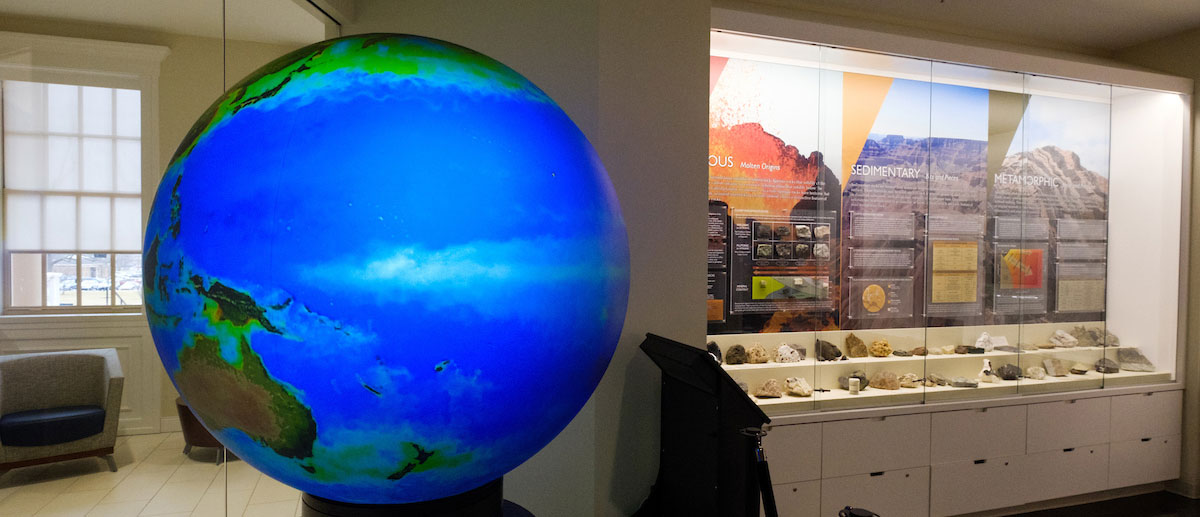
When walking into the lobby of Shideler Hall, you may have noticed an assortment of crystals neatly displayed behind a glass case. Behind this case is the Karl E. Limper Geology Museum, directed by Dr. Kendall Hauer. I was fortunate enough to have the opportunity to pick his brain about what the museum does, the importance of geologic studies, and how Miami’s location allows us to play an integral part in understanding the history of the planet.
While we may take the rocks and dirt around us for granted, Dr. Hauer works to advocate for these underdogs. Before his time in the museum, Dr. Hauer worked in environmental consulting and taught geology courses at Xavier University and at Miami’s regional campus in Hamilton. When the museum’s previous director retired at the end of 2001, Dr. Hauer applied for the position and was selected as his replacement. What began as a temporary position in 2002 eventually became permanent. Ever since, he has continued to modernize the space, creating an engaging environment that encourages deeper thinking about the natural world around us.
The Karl E. Limper Geology Museum was created in 1967 and was located in the basement of Shideler for its first 46 years. However, when the building was undergoing renovations in 2014, it was decided that the museum should have a more prominent location in the main lobby. Additionally, this new version of the museum was given a clean, modern design. With collections consisting of around 160,000 local fossils, 5,000 rocks, 5,000 minerals, and 75 meteorites, the geology museum almost serves as Earth’s biography. Considering the large number of undergraduates at Miami that take an introductory geology course, there is no question of the significance of a space like this to the student body.
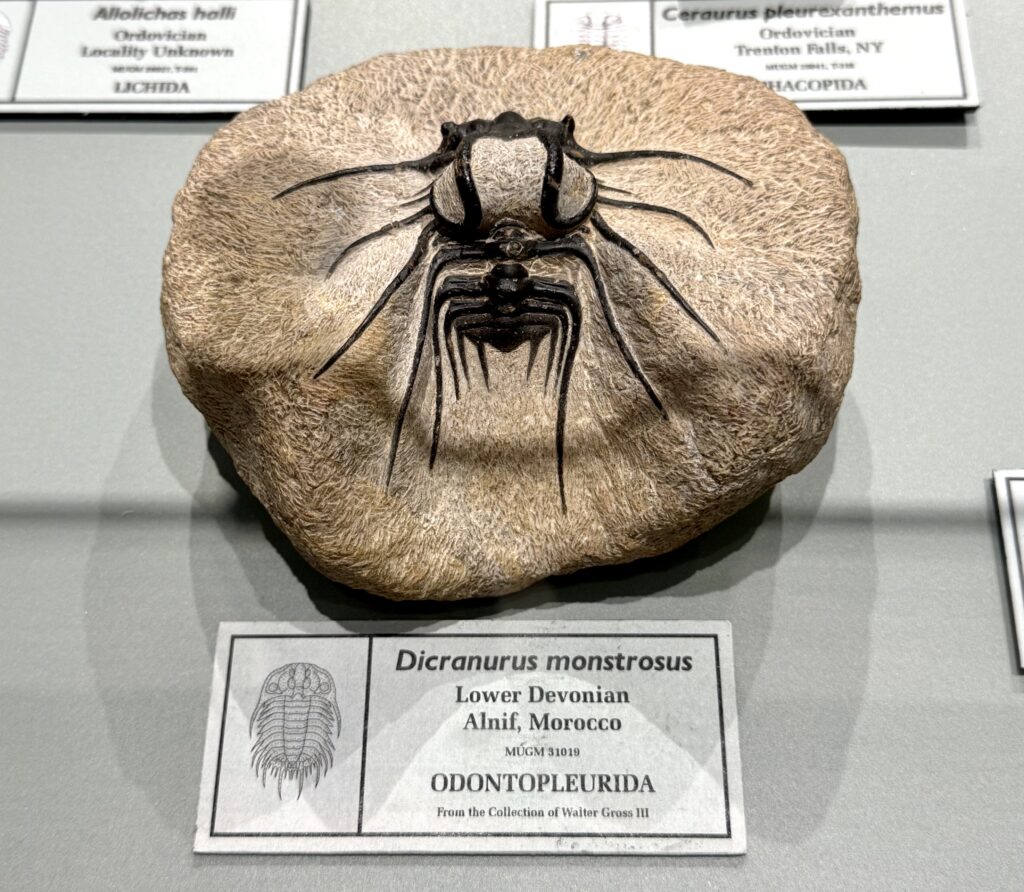
Not only is geology important for the Miami community, it is essential in understanding our place in the history of Earth. For example, 450 million years ago, much of what would become North America was covered by a warm, shallow sea. This environment allowed for an extremely productive ecosystem dominated by a huge variety of marine invertebrate animals. Fortunately, Ohio’s far inland location spared the local bedrock from the destructive effects of tectonic plate collisions, resulting in the preservation of an extremely fossil-rich limestone and shale bedrock. Not only does this excellent preservation make our location in the Midwest world-famous for its amazing fossils, it also provides perhaps the best record of what life on Earth was like nearly half a billion years ago.
Dr. Hauer works to promote the museum’s mission of supporting deeper learning of geology and environmental earth science by hosting classes, tours, and designing thoughtful displays about our role on the planet. From noting the cultural significance of fine jewels to displaying the minerals present within our own bodies, he paints a picture that ties the human experience to the planet. While it’s easy to forget what the ground beneath our feet has provided for our lives, we are constantly impacted by the resources we obtain from it. Even now, as I type this blog post on a computer built from rocks that have been manipulated to display my course work, connect me with all parts of the globe, or even just show me funny cat videos, I am reminded of our constant reliance on geologic discovery and innovation.
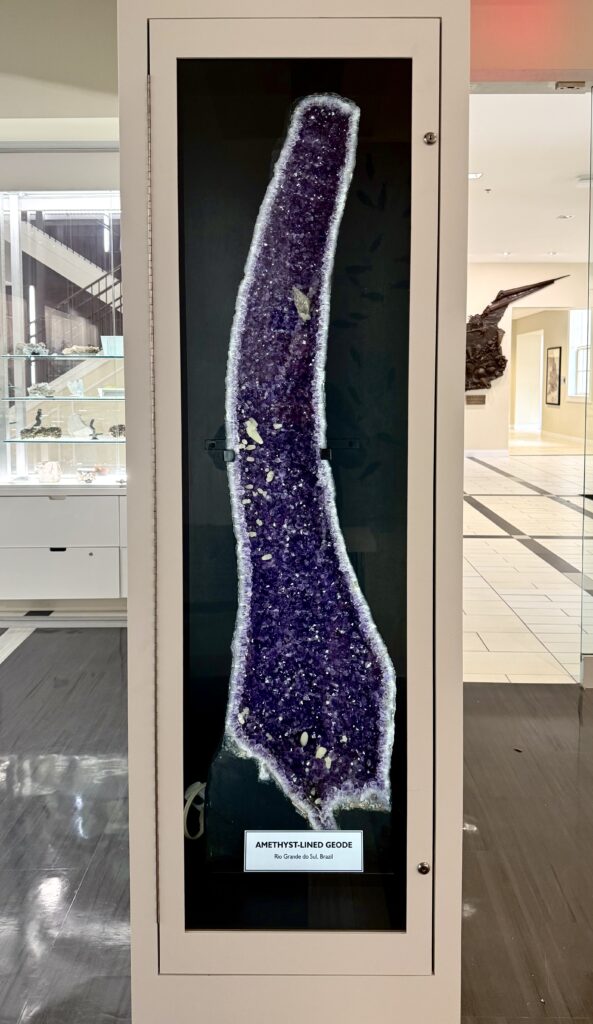
Some other notable parts of the collection include a five-foot-tall amethyst geode, trilobites the size of dinner platters, and meteorites. Dr. Hauer has a special interest in these meteorites, as they are quite rare and represent materials left over from the formation of our solar system around 4.5 billion years ago. Interestingly, Dr. Hauer receives inquiries from people who believe that they have found a meteorite almost weekly. Although he has been presented with only one actual meteorite in nearly 25 years, he will always make time to discern meteorites from “meteor-wrongs.”
To get involved at the museum, Dr. Hauer encourages you to just stop in and take a moment to explore the collection. Much like the herbarium, he finds that students view the space as restricted to major-specific individuals. However, the museum is for anyone curious about minerals, rocks, or fossils. From the general public to Miami students, there is something of interest for anyone wanting to learn about the history and design of our planet. The museum also employs up to two student workers each semester. While some basic knowledge of geology can help secure the position, the role is open to any student who is seeking museum-related experience.
If you are interested in learning more about the planet we live on and your significance in the environment, the Karl E. Limper Geology Museum is an absolute must. Take the opportunity to look around the museum and expand your understanding of what is possible in the natural world. Dr. Hauer’s knowledge about the topic is not something you’d often come across, so visit the museum and ask questions. You won’t regret it!

- Dr. Kendall Hauer
- Role: Director
- Contact: [email protected]
![The Miami Student. (2024, March). [Photograph of plant specimens at Miami’s herbarium]. In Miami’s herbarium preserves campus plant history. The Miami Student.](https://sites.miamioh.edu/museums-and-society/files/2025/10/077c5ad0-c92d-4c23-9dd7-39b495f049dc.original-1.jpg)