
By Hannah Armentrout —
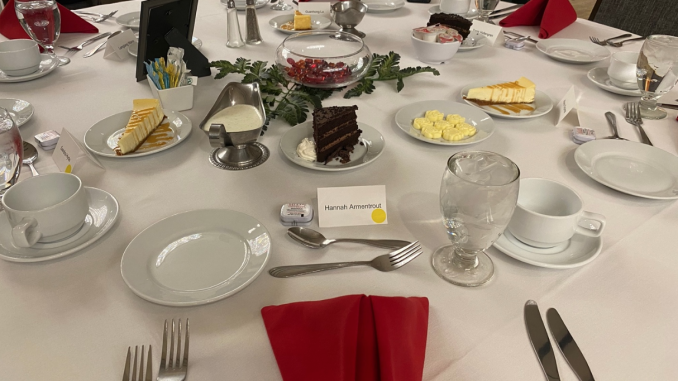
On Wednesday, November 16, Sandy Hyde hosted a dinner etiquette event through Miami
Regionals. This free event was held at the Marriott Hotel in Hamilton. Sandy Hyde is the
president and founder of the Etiquette School of Ohio. Learning dinner etiquette skills are
important for making a good impression in formal business environments, and good table
manners and appropriate communication skills can sometimes be the determining factors for a
job or promotion.
Sandy Hyde defines etiquette as “making the people around you feel comfortable.” She stressed
that learning proper dinner etiquette will result in the confidence to make other people around
you feel more comfortable. Formal dinners can be intimidating, and having good etiquette means
helping others that did not get the chance to attend an etiquette class. It’s also important to be a
good host and guest.
Sandy discussed various dinner etiquette norms throughout this two-hour event, and she also
shared the history and norms of different countries. In America for example, we use the “zig
zag” method when cutting our food. We are the only country that uses this method, since most
other countries use “continental style.” Another interesting norm we have here in America is
rushing through our food. In Europe it is normal to have four-hour dinners. People will go out to
dinner to enjoy the smell of the food, the environment, and enjoy the company and conversation
with the people they’re with. However, in America, we tend to rush dinner and finish far before
Europeans.
Tonia Hyllengren, the Regional Assistant Dean for Academic Success, attended this event and
discussed her dining experiences when she traveled to Europe. She said that when dining out
there, the servers did not portray an urgency for guests to leave like they do sometimes in
America. She even said she struggled to get her check in a timely manner because the servers in
Europe expected the guests to stay for hours.
Ms. Hyde says that if you are the first one to finish your food, you’re not talking enough. If
you’re the last person to finish your food, you might be talking too much. In such social dining
situations, she encouraged the audience to engage in conversation and include everyone at the
table. She also noted that it’s often important to avoid discussing inappropriate subjects such as
politics, religion, or health, as those can often make other dinner guests feel uncomfortable.