
by Joey Puckett
This past week, we student researchers were delighted to have our drab, physically-distanced lecture hall filled with lively discussions about Storm Lake’s history, national politics, and education.
Class opened on Monday with news from Dr. Offenburger. He had transcribed our interview with Dr. Michael Whitlatch, and the process took around seven hours. Mindful of students’ time, he therefore decided each of us will only have to transcribe two interviews this semester, rather than three. (This process was supposed to be made easier by Zoom’s automatic voice-to-text transcription service, but the software proved less reliable than expected.)
Once this business was settled, the class launched into a long discussion about Art Cullen’s recent book, Storm Lake. In fact, before Dr. Offenburger’s arrival, we already had begun to discuss Cullen’s book.
Typical of college students, we opened by bonding over the parts of the text we struggled with most. Once the discussion formally started, we were ready with a series of critiques. For one, we thought Cullen occasionally oversimplified complex dynamics, paving over broad claims with a humorous and folksy “that’s just the way it is” kind of tone. Other students noted that some chronological jumps felt choppy and disrupted reader immersion. Many also felt drained of precious time by various anecdotes. Of course, we didn’t fault the book itself for this. It’s a research problem: sifting the wheat from the chaff, searching for evidence to meet our own particular needs.
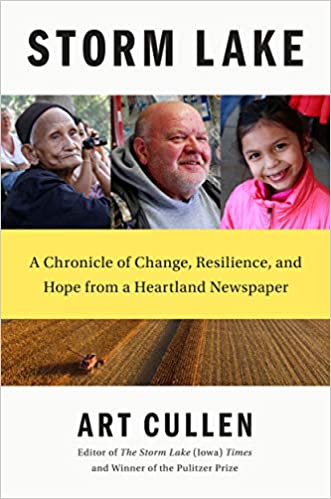
Nevertheless, our praise far outweighed the criticisms. It was a well-written, well-structured book. It served as a compelling, cogent introduction to Storm Lake, its history, and how economic circumstances brought it unexpected changes. Students were especially impressed by Cullen’s retelling of the public affairs reporting on Big Agriculture that earned his paper the Pulitzer Prize. Fellow student Adam Kimble told the class he “wanted to underline the whole section.”
Students were captivated by the chapter “We Can’t Go On Like This,” which detailed the environmental history, degradation, and future in Storm Lake and the surrounding region. Also noted were the innumerable mini-profiles of area residents prominent throughout the book. I (Joey Puckett) likened his style to Gene Weingarten of the Washington Post, and students took note of his anecdotal structure for their own forthcoming profiles of Storm Lakers.
The text’s broad political scope raised questions among students curious about Iowa and its people within the national political scene. Specifically, students inquired about immigrant gun ownership, housing divides, the police force, and the protection of the lake. Michel Reising observantly commented on Cullen’s politics, “I know where he stands on some issues. I know how he feels about guns, because nobody in my community at home would use the phrase, ‘assault weapon.’” Our discussion about national politics highlighted a welcome challenge for the class: addressing hot-button political and racial issues directly. These questions are front and center in the study of Storm Lake. Whereas most history courses avoid discussion of current events, our course demands we work through these questions, without evasive or couched language.
Our many political questions spurred interest for us to speak with other residents of conflicting experiences: an unabashedly anti-immigrant resident, for example, or a former subordinate of Steve King, or a Tyson executive. Dr. Offenburger mentioned that he reached out to Tyson, but has received no response to date. Only time will tell if these interviews come to pass.
Much like last week’s guests, Cullen’s love for Storm Lake radiated throughout the text. Our admiration grew for him as a loyal local, a dogged editor, and an eternal optimist.
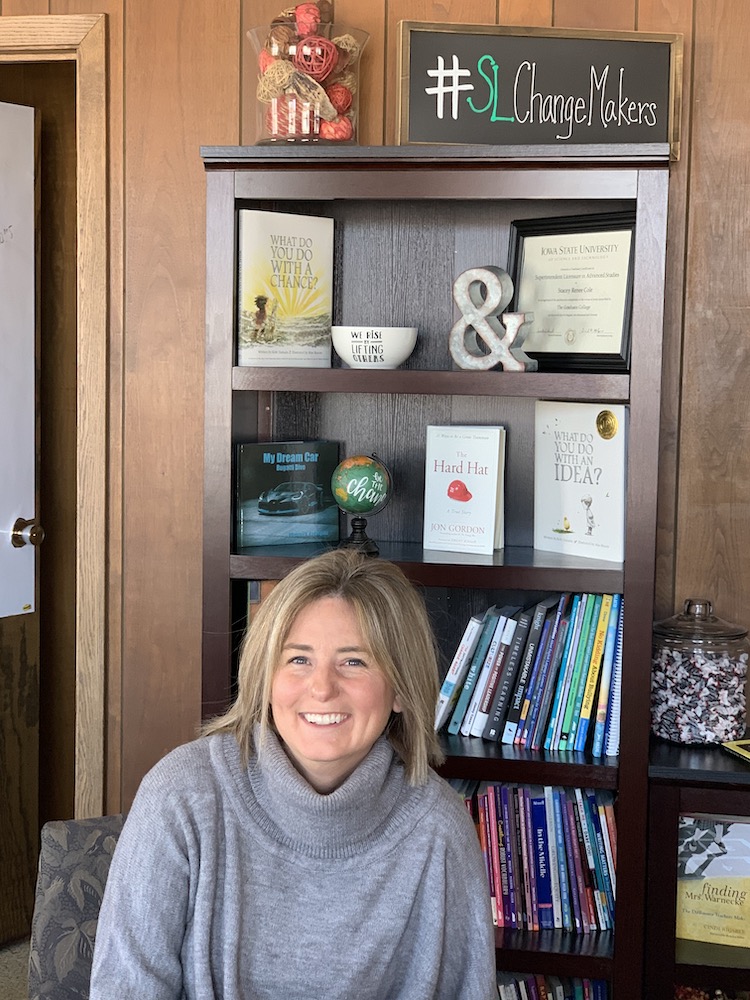
On Wednesday, the class was joined by Dr. Stacey Cole, Superintendent of the Storm Lake Community School District, for a discussion on education. She spoke about her experiences running the district during the pandemic, working with a diverse student body, and serving underprivileged students.
In her introductory remarks, Cole said she was “really all about the underdog, and thinking about how to help people win who don’t have as clear of a path to winning options as others.” Cole said of Storm Lake’s unique challenges, “One of the things that I know is true in Storm Lake, that I don’t believe is true in every Iowa community, is what we do in Storm Lake matters every single day, the decisions that my teachers make every single day.” The decisions they make determine whether the kids will succeed and graduate with options, or struggle in the transition from high school to adulthood. Parents who lack the social capital to make informed big decisions usually place enormous trust in Storm Lake schools to help.
Her student-centric mantra shined through as she talked about the many ways schools in Storm Lake adapted to recent challenges. The district’s response to COVID, as described by Cole, is a case study in flexibility and creative logistics. She noted with pride that the SLCSD tries to answer every question of “how” with a response of “yes.”
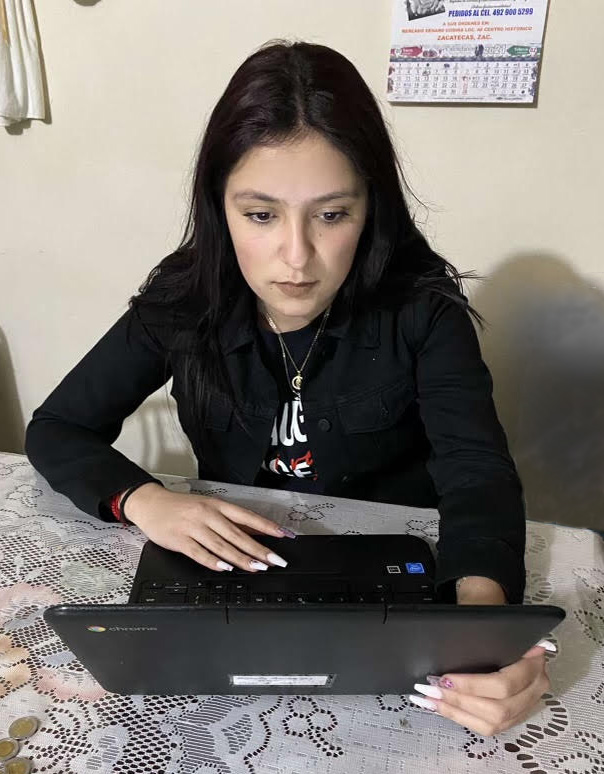
One surprise: some students, who started the year in Storm Lake but were on a trip to Mexico, have been allowed to complete the school year virtually from Mexico. The district has responded to their needs by sending technology to them, whenever possible, so they can work virtually. This aid raised some controversy in the community, Cole recognized, but she believed the rewards far outweigh the risks. “If I have a hotspot and it’s sitting here on my table next to me, but it could be in Mexico helping a kid get their diploma, it should be in Mexico,” said Cole.
This shift online has actually reaped unexpected rewards for the district, which may continue in years to come. The changes have addressed the issue of the district’s overcrowded classrooms. The staff has adjusted well, and has been relieved of certain pressures. The district is also responding to kids who help support their families by working with the addition of night classes, and changing to a model of taking one class per month with daily three-hour periods. This massive rethinking of what school can be has turned an otherwise dreadful past year into one with some blessings for the SLCSD.
Cole also spoke about the recent statewide law which mandates schools to provide a 100% in-person educational experience. She expressed frustration with the law, which she believes is the state government’s headstrong way of improving Des Moines schools at the expense of other communities. “They continue to move a target that we have been trying to hit since June,” she said.
Of central concern for our class: how is the district working to serve such a diverse body of students and families? Cole said that children who come from different backgrounds and regions tend to deal with different sets of issues. Her goal is to uplift students from Asian, African, and Micronesian backgrounds to the same levels of success the district has seen in Latino students. She invoked author James Collins’ Good to Great to explain how “good” can be, in fact, the enemy of “great.” Another way to put it: “good” isn’t good enough. Cole questioned whether Storm Lake can celebrate its diversity when the district is struggling to meet the needs of non-Latino, non-Caucasian minorities. “I think diversity has become the ‘good of the great’ in Storm Lake,” she said. “I think being great at diversity is when everybody is being successful,” she said.
In Storm Lake, we learned, Micronesian students are the fastest-growing student population. Cole expressed tremendous adoration for these students, saying, “I love our kids from Micronesia. They are so much fun. … They are all-in with everything they do.” But such an affable sociability, when met with the implicit bias of others, can sometimes hamper perceptions of student performance. She believes that the structure of the district has not quite adapted to the needs of this relatively new minority population.
Cole is working hard to train staff and teachers—and herself—to identify and question implicit bias. She believes that students from Africa and Micronesia, with their own cultural expressions that can appear more boisterous than those of white Americans, are misunderstood as in-need of remedial instruction. She leads a team of anti-implicit-bias staff, which is working to change the perception of employees one interaction at a time. Cole is optimistic about this grassroots approach to combatting bias, saying, “What I know hasn’t worked is you hire someone and call them an ‘equity coordinator,’ whose job is to create equity throughout the district … That person isn’t going to be in the hallway when someone says something negative about a Black kid who just walked by.”
The anti-bias push also involves a public relations campaign. Until recently, the only stories of students in regional news outlets have tended to be negative ones, highlighting crimes or other transgressions. In the past three years, she and others in the district have been placing students in the spotlight not for extraordinary achievements, but simply as a celebration of their everyday positive contributions to the community. She believes this has already improved the wider perception of Storm Lake’s students and shrunk implicit biases.
As Cole spoke, she referenced an ampersand—a real, decorative sculpture of an ampersand—sitting on a shelf behind her. She keeps it there to orient her thinking on how to create an inclusive community. Instead of questioning, “How can we do this or this?” she said, the ampersand reminds her to ask, “How can we do this and this?” In a district where over 70% of students are on free or reduced lunches (and whom, by Iowa law, cannot be charged for any other activities necessary to their education), the financial strain is sometimes tough to manage. Financial reality confronts buoyant optimism. Cole has done what she can personally, too, like bringing four or five students along when she and her daughter visited potential colleges.
More importantly, she has worked to address the lack of “social capital” that students from impoverished families face, particularly those whose parents come from foreign countries. Cole says parents from different cultures often don’t know the “invisible rules” of high school: which classes to take, how to prepare for and apply to college, or how to navigate the stressful, complex environment of American high schools. Though these families might not know the answers, they know there are people in the district who can help.
“Right now, [immigrants in Storm Lake] are essential workers who probably—not probably—who absolutely do not get the respect that they deserve, for what they have done for their family. And the fact that many of them are here without papers but are still doing the right thing by their kids…that is actually courageous and brave and not spiteful and deceitful as some of the national narrative would suggest.”
— Dr. Stacey Cole
Unfortunately, Iowa’s social services system are broken, according to Cole. Knowing how to get help doesn’t mean it is on the way. No matter how desperate parents or the district is for assistance from the state, kids often can’t get the help they need without first entering the criminal justice system. She likens this to criminalizing poverty and mental health issues. It’s an ongoing challenge not unique to Storm Lake.
Her goal is to educate and provide students with as many options as possible. Cole said there is a lot of work to be done in this area. Storm Lake schools recently created a program with the local community college to offer training in hands-on careers to kids who want to move on from the classroom. They are also offering a financial literacy class and other classes which are career-focused. They are also developing a tiered diploma system.
Cole also touched briefly on the district’s relationship to Tyson. When asked about the company’s role in the community, Cole laughed and responded, wryly, “That is a loaded question.” She continued, “I wish that [the parent company of] Tyson was a more community-oriented organization. And by that I mean really loving the communities that they have put their plants in, and really thinking about what the needs of that particular community are, so I will say that I think that that it could be improved.” However, Cole is immensely grateful that the company has appointed a new community liaison, Cynthia Trujillo, a “Godsend” who works to bridge the gap between the district and the plant’s working parents. “Especially during the pandemic,” she said, “I don’t know what we would have done without Cynthia.” Cole hopes that once the pandemic is over, Trujillo will have more time to focus on strengthening the community’s relationship to Tyson.
Cole said her biggest takeaway from living in Storm Lake is the incredible courage and bravery of the immigrants who come to live there, whom she is proud to serve. “Living here now, for as long as I have lived here,” she said, she is inspired by “the courage and bravery that comes from every family that is an immigrant or a refugee that steps into this community to live…Right now, they are essential workers who probably—not probably—who absolutely do not get the respect that they deserve, for what they have done for their family. And the fact that many of them are here without papers but are still doing the right thing by their kids…that is actually courageous and brave and not spiteful and deceitful as some of the national narrative would suggest.”
Joey Puckett is a sophomore at Miami University majoring in history and English literature.
