
By Tricia Cherry —
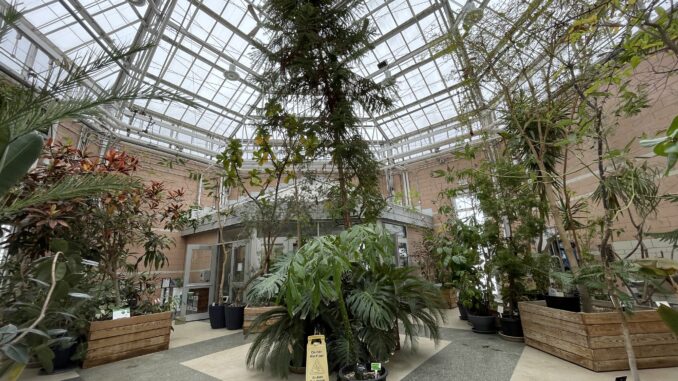
“Exploring Plants and Local Biota Up-close Through Macrophotography” was the title of a presentation given in the Conservatory recently on Hamilton’s Campus, conducted by Miami student Cole Coomer, and assisted by Biology professor Deidra Jacobsen. It was also connected to Zoom for those who couldn’t make it in person. The event offered hot coffee and cocoa, free to guests coming in from the bitter cold that day.
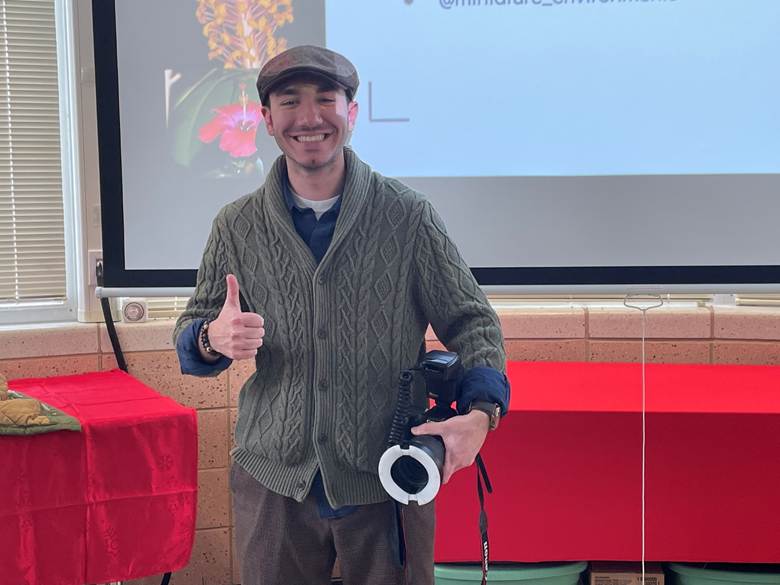
Macrophotography, as the name suggests, is a branch of photography. Specifically, it involves the closeness of the subject, ratio of the shooting, and the limited depth of focus. Macrophotography is a precarious artform that requires rapid shots taken of the subject at an extreme close-up. A specialized camera lens and controls, beyond the abilities of commercially available smart phones, is needed for this work.
The key aspect of macrophotography is called “focus merging,” where the crispest, most focused parts of various, but ideally identical, photos are combined into a hopefully fully focused picture, and the blurry areas of the image are discarded. This is more easily done with stationary objects such as plants or figurines, but considerably more difficult with insects, which are notoriously difficult to keep still for a camera so as to get the multiple pictures needed for this process. The audience was shown a microphotographed picture of a horned caterpillar for reference, which still had some blur to it, but was largely crisp. When this was commented on, Coomer admitted that the caterpillar wouldn’t sit still, so a section of his photograph couldn’t be focused.
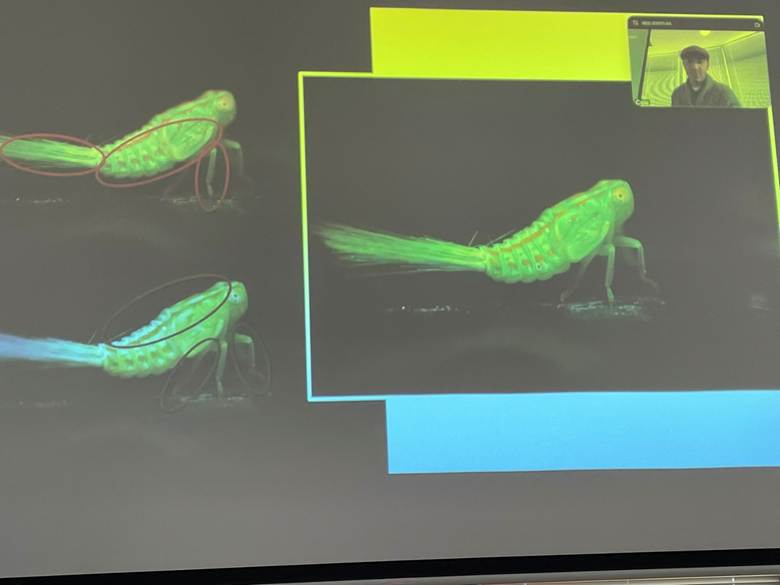
and combined to create a clearer image.
Coomer set up a brief participation exercise with the audience: They were to hold their hands in front of their faces at various distances and notice the difference in focus. One can’t focus on his or her own hand and the background of one’s vision at the same time, as visual focus is limited, especially as one ages.
When asked about his journey as a macrophotographer, Coomer said that the camera is now two or three years old, and that he started by photographing his Star Wars figurines, “kinda like crawling through bushes and stuff.” Coomer plans to minor in photography but is unsure about which scientific field he’d like to pursue further. As a freshman at Miami, Coomer mostly attends Oxford, and he was assured by an audience member that he has time to figure that out.
When asked if macrophotography has changed his perspective on anything, Coomer responded, “It helps you notice things, obviously, like when you look at plants, you see more and you want to capture the unique adaptations that each of them have, as opposed to before, you photograph and you don’t know.” When asked about his favorite subject to photograph, Coomer said jumping spiders were, because their eyes were so visible.
While the camera on one’s phone is not as powerful or as precise as the camera demonstrated, Coomer did have a piece of advice if one wanted to try macrophotography with his or her phone. He recommends not zooming in until the image has been taken. “Zooming just kind of blows up the pixels, so it’s more grainy. If you take an image and then zoom in, you’ll see more details.”
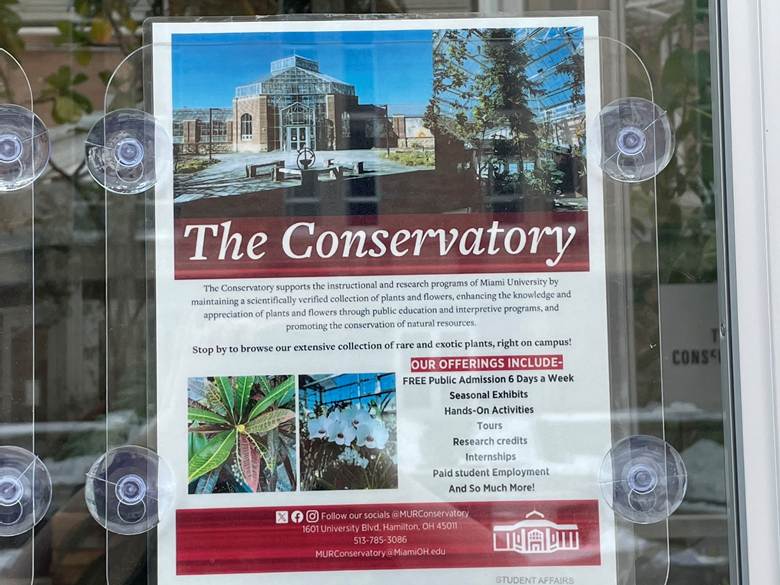
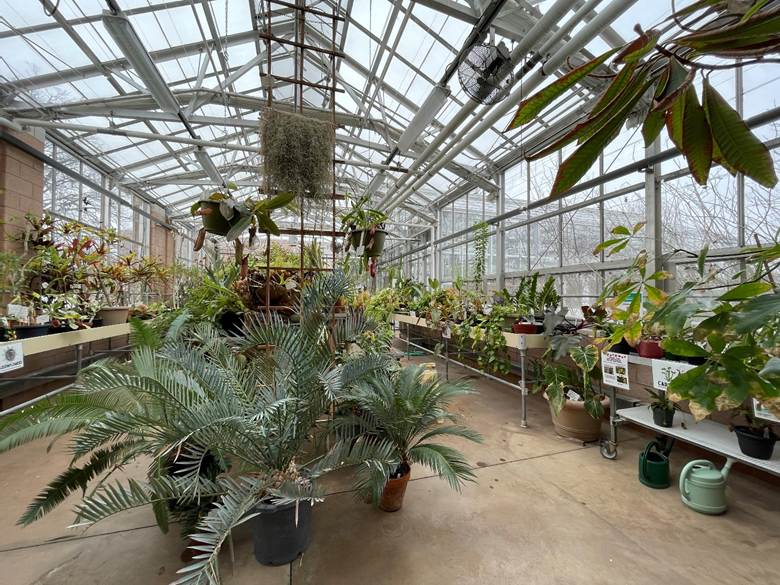
Clearly, macrophotography is a unique skill and process, one that uses extreme close ups and merges images together to create a clearer picture than is otherwise possible. This also helps to increase interest in the world around us. Additionally, for those interested in plant life, the Conservatory is free to enter and sits behind Mosler Hall and beside Phelps.
Excellent site you have here.. It’s difficult to find quality writing like yours these days. I seriously appreciate individuals like you! Take care!!