By Tricia Cherry —
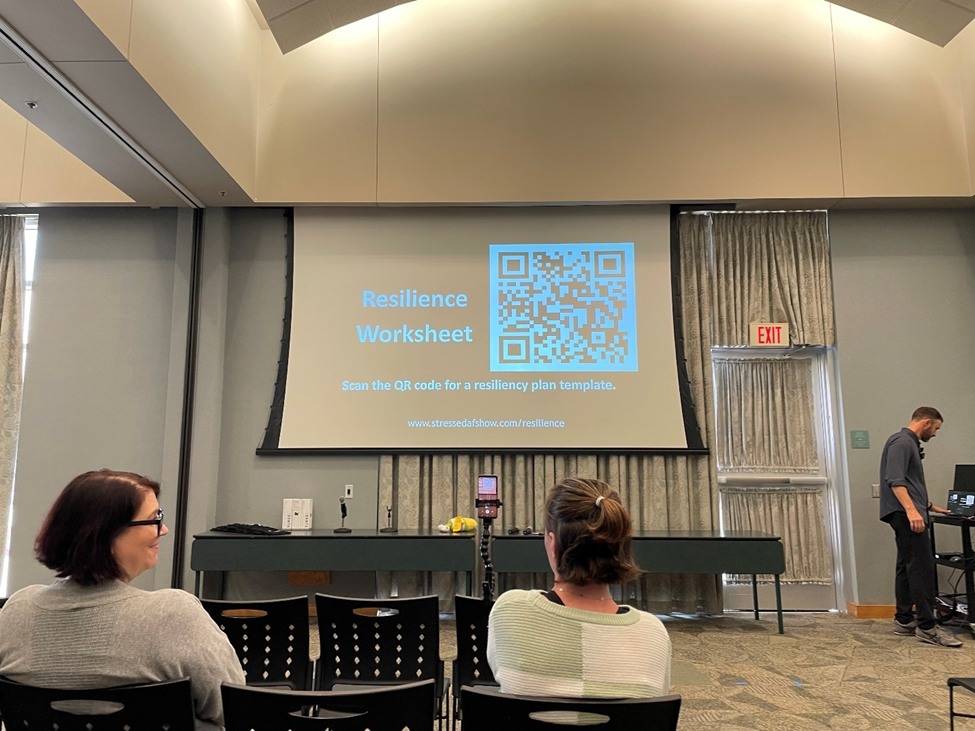
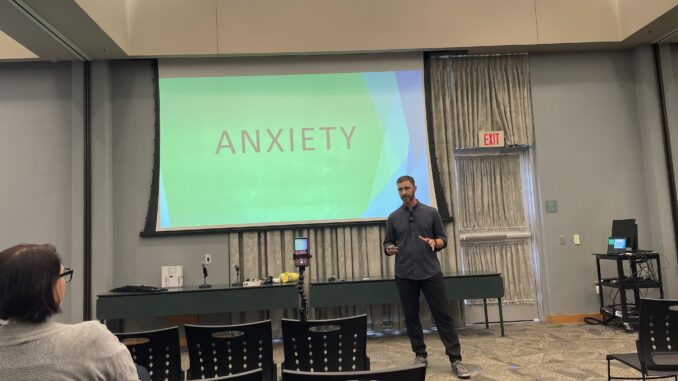
On Wednesday, August 27th at 4 pm, a seminar called “Stressed AF: Learn to Chill Out” was held in the Wilks Conference Center on Hamilton’s campus.
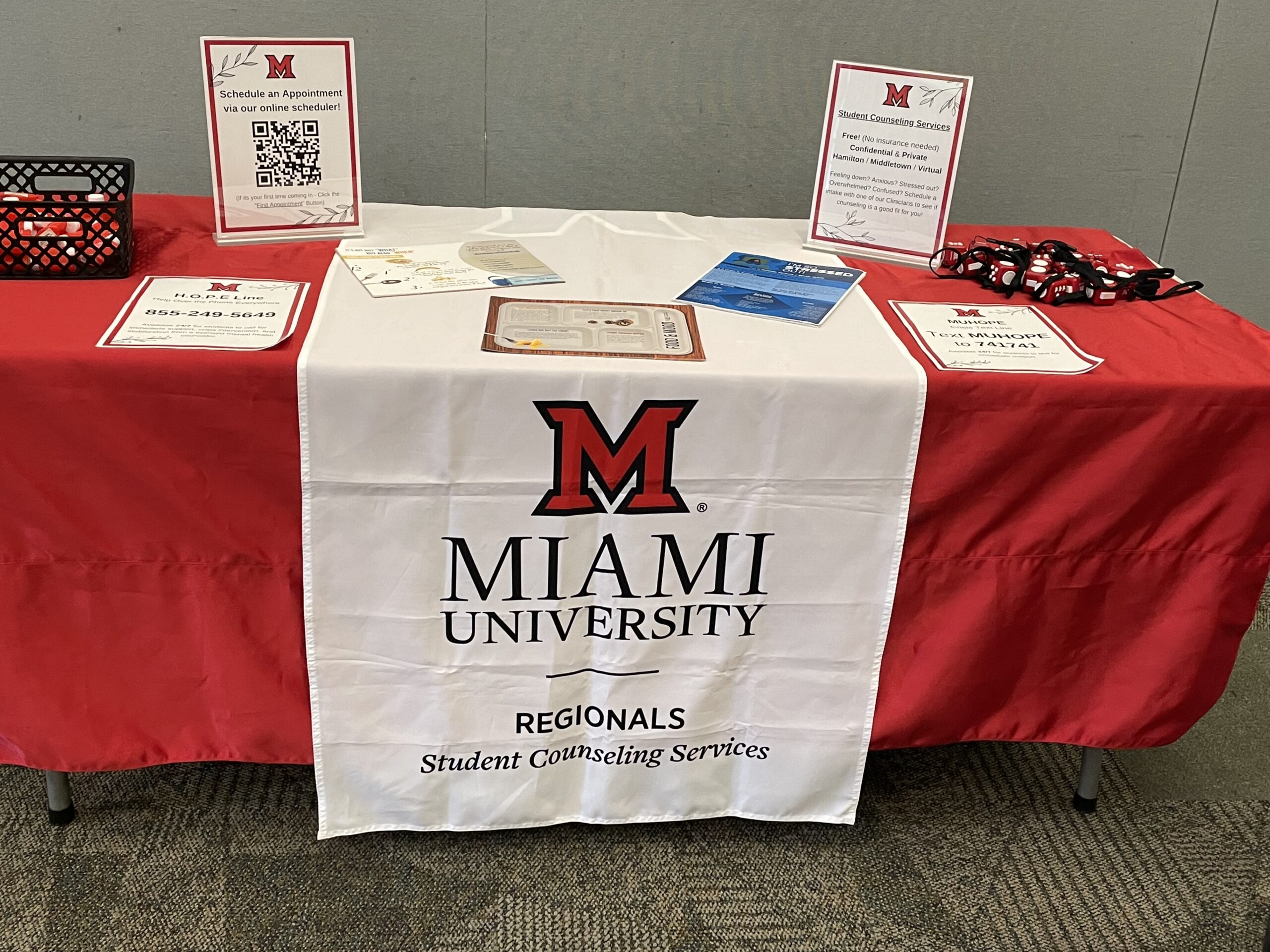
Free to attendees were small snacks and a couple of stress-relieving trinkets, including fidget toys and, of all things, bubbles. As it turns out, blowing bubbles is an underrated stress reliever, because not only does it require breath control to blow the bubbles properly, but there is something soothing about seeing the bubbles dance around in the air before popping.
“I dare you to be stressed looking at bubbles,” said Julia Pond, Director of the Rosa office and the organizer of the event.
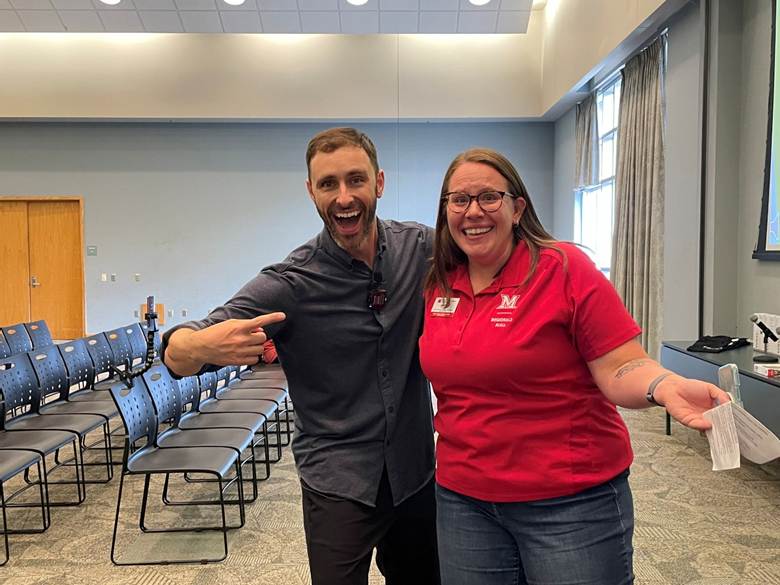
These bursts of technicality were interspersed with simple games that encouraged audience participation. The games were designed to induce small levels of pressure in a controlled, ultimately friendly environment. Those who participated in these games received small, seemingly random prizes (a shirt, a random framed picture, etc.).
The speaker, Patrick McIntyre, is a comedian, the first such speaker since before the pandemic. Rather than a monotonous, stale speech about cortisol and blood pressure, Mr. McIntyre spoke in short bursts about the technical side of stress, such as how stress can manifest as physical symptoms including increased heart rate and blood flow, sensations like pins and needles, and loss of bodily control such as freezing up or loss of bladder control.
The show “Are You Smarter Than a Fifth Grader” was invoked for the first game, the task being to stand in front of the audience and answer the questions to the best of one’s ability. The attendance at the event was relatively small and spread-out, which likely helped the more nervous players. When an answer was correct, one person would call out “Point!” but a wrong answer got a shout of “Wrong!” from the rest of the audience. This led into an observation by McIntyre that, while nobody means to, we were all judging the player silently in our heads, and that it is simply human nature to judge, even if no one means anything by it.
Stress can also be empathetic. We can become stressed in response to another’s stress, and constant stress over a long period of time can rewire the neurons of the brain, conditioning it to look for the stress in even none-threatening situations, leading to black-and-white thinking. Fortunately, this is true in the opposite direction as well; avoiding or managing stressful situations increases the brain’s ability to deal with stress.
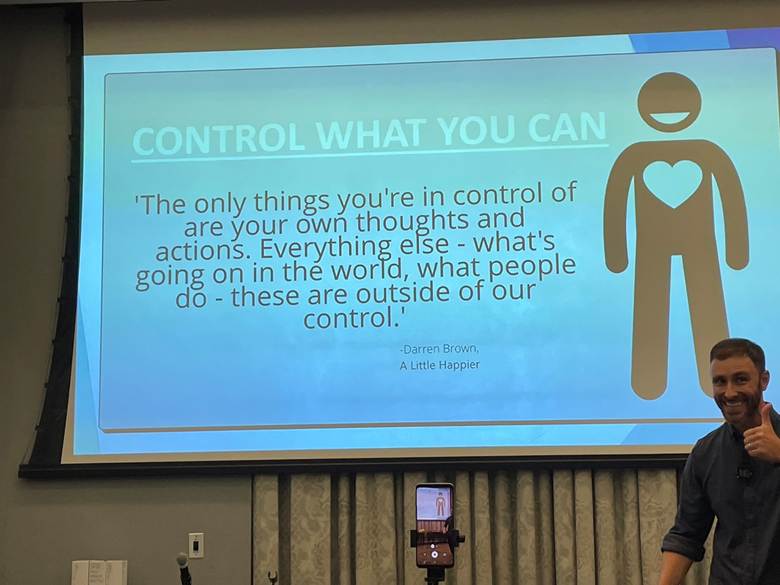
“How you feel affects how you think, and how you think affects how you feel.” – Patrick McIntyre.
Seventy percent of students report constant stress since their college careers began. McIntyre describes stress as something that is stored in the body and that builds and builds if not relieved. Some proven ways to relieve stress are things that you’ve likely already been told: enough restful sleep, a cleaner diet, more exercise (preferably outside), and an array of breathing techniques. More information is available through the Miami campus therapists and advisors.
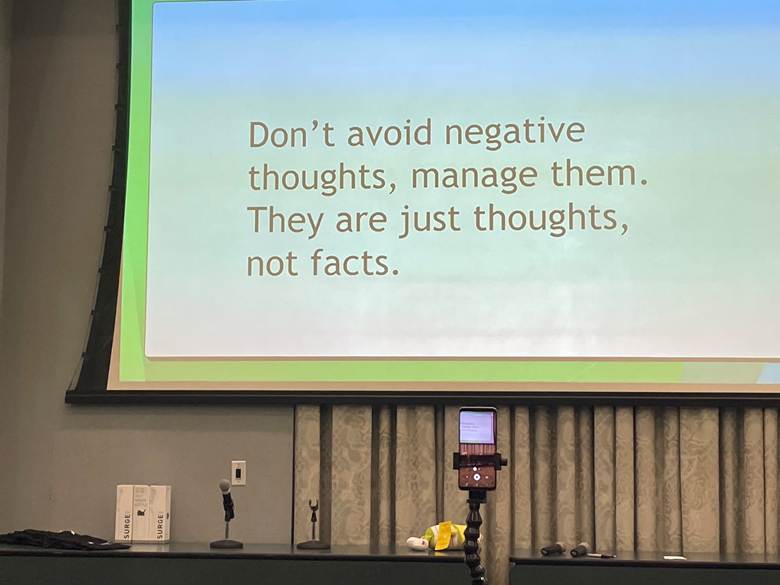
WARNING: The following section of this article mentions suicide.
The games and laughing stopped when the subject of suicide came up. The slides were darker in their backgrounds and more somber, listing off techniques to help people and numbers to call.
The reason the topic of suicide is so tricky to talk about is that there is an assumption that, no matter how happy or healthy a person is, talking about taking one’s own life could possibly give them ideas. In addition, many of the questions we could ask simply don’t have easy answers.
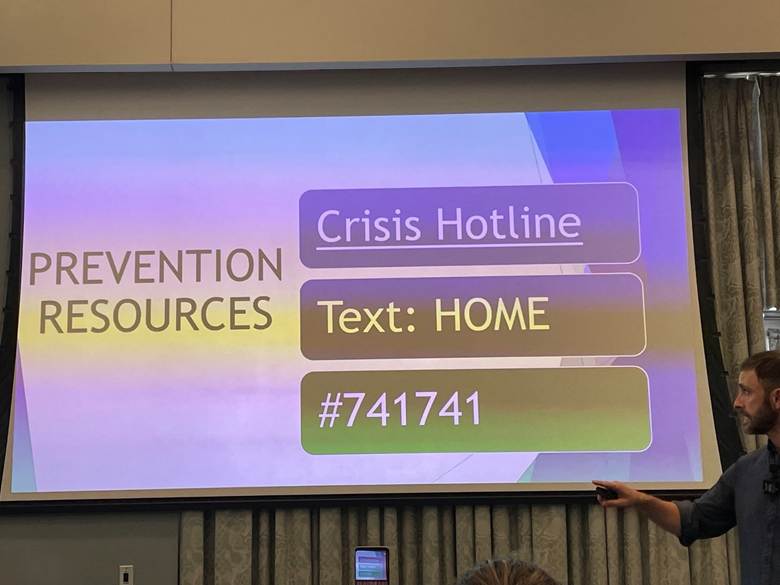
One piece of advice that was given when dealing with a person one suspects of even passive suicidal ideation is to employ the acronym ACE.
A – Ask them honestly if they are okay or if they need help. Start a real dialogue.
C – Care about what they say, even if they are not suicidal, just upset or stressed.
E – Escort them to resources to speak to trained professionals.
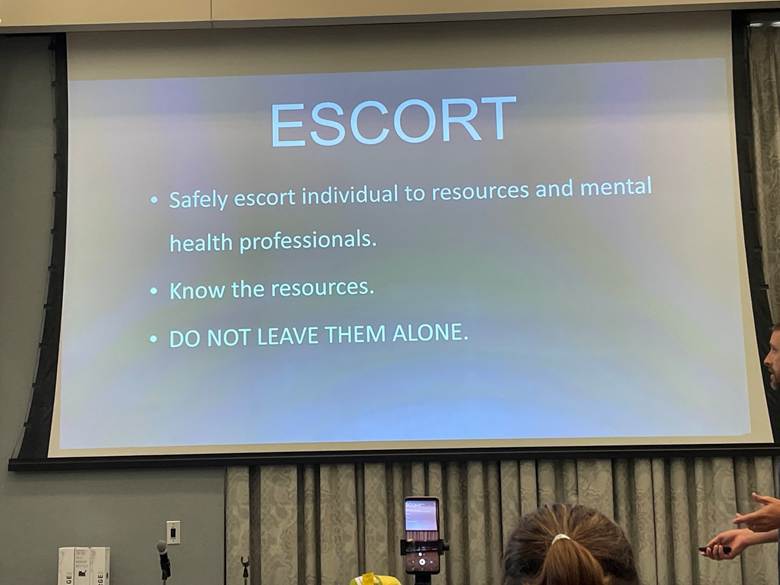
Resources, both on campus and outside of Miami University, are available and ready to help.