
By Ana Diaz —
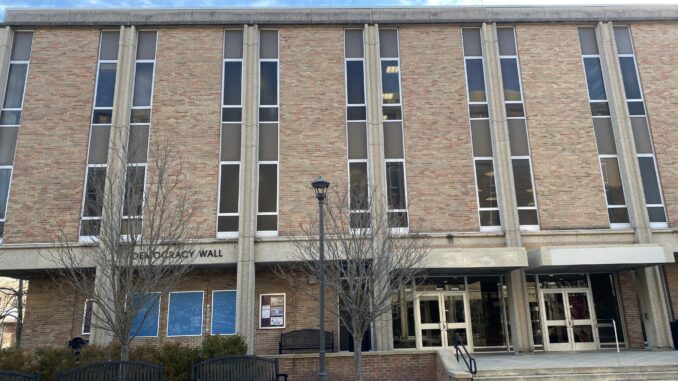
On a recent Wednesday afternoon, a couple dozen people gathered in Rentschler Hall on Miami’s Hamilton campus for free pizza and some stimulating conversation. The discussion is part of Miami University’s program “Faculty Unhinged,” a series of talks meant to challenge preconceived notions and opinions. Wednesday’s topic was appropriate for Black History Month: the Freedom Summer of 1964.
The summer of 1964, also known as Freedom Summer, was a voter registration campaign which recruited mostly white, wealthy volunteers from some of the best schools in the country to help register voters and aid in other grassroots efforts in Mississippi. Mississippi was chosen because of its dismal voter registration numbers. Though they made up more than a third of the state’s population at the time, only some 6–7% of eligible African Americans were registered to vote.
Freedom Summer has its own connection to Ohio: Two one-week training sessions were held that summer in Oxford for the volunteers before they relocated to Mississippi for the campaign. The training sessions were held at Western College for Women, which is now a part of Miami University. The training was intensive, intended to prepare the volunteers for the brutal reality of what they would be facing when they arrived in Mississippi.
In Mississippi, things were dangerous for African Americans and for white Americans who were known to be supportive of or active in the civil rights movement. The Ku Klux Klan had their eyes on the volunteers, which numbered about 700, as soon as they entered town.
One fateful night that summer, two white students from New York, Michael Schwerner and Andrew Goodman, and a local Black man, James Chaney, disappeared after visiting Philadelphia, Mississippi to investigate the burning of a church. They were not found alive after that. Their bodies were recovered six weeks later and had been brutally beaten by a Klan mob, who had been protected by the local police. This crime sent a clear message to the rest of the volunteers of the Freedom Summer: They were not safe.
Shaken but undeterred, the volunteers continued their important work that summer, helping voters register, educating Black students at Freedom Schools, and helping locals gain leadership skills so they could continue the fight after the program ended. While the direct impact of the Freedom Summer seems small—only about 1,200 voters were actually registered out of 17,000 who applied—the campaign and the tragic murders helped garner national attention and put pressure on the White House, which passed the Civil Rights Act of 1964 and later the Voting Rights Act in 1965.
After Jacqueline Johnson’s presentation about the Freedom Summer, it was the audience’s turn to ask questions. The discussion was engaging and lively; it seemed everyone was passionate about how things used to be, and how they are now. One member of the audience asked a very relevant question: Is voting rights “resolved”? Have we entered some era where racism and discrimination are “over”?
The answer to that is, simply, no. While significant progress has been made since the days of the Civil Rights Movement, there is still much work left to do. There are still current attempts, in Ohio and across the country, to silence voters and make casting one’s vote more difficult. While the Ku Klux Klan is no longer terrorizing Americans fighting for a better future, oppression still happens in different ways.
Johnson wrapped up the discussion with a few words of advice regarding how to move forward in our increasingly divided world: The issue of civic and voting rights goes beyond political parties. “Don’t get angry and divisive. Talk to each other.” When we’re separate and divided, she said, is when groups like the Klan have the opportunity to seize control. “Start communicating and listening to each other,” Johnson advised. Disagreeing with someone on political issues doesn’t mean we can’t listen to each other and respect one another, and advocate for everyone’s right to participate in political life. As Jacky Johnson said, no matter our political affiliations, we can always ask this question: What is the best thing for society?