
By Ana Diaz —
On the evening of Wednesday, November 16, the cold temperatures and wintery weather did
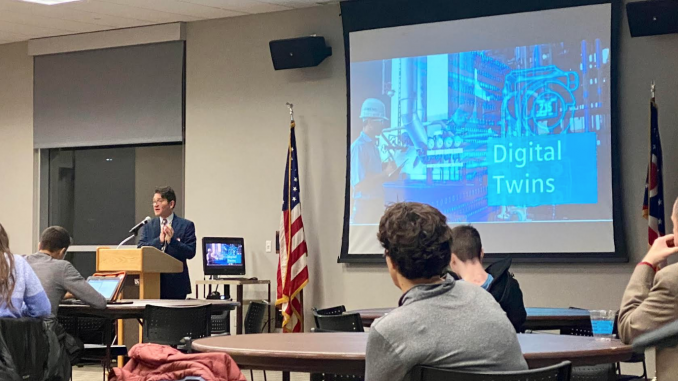
not deter Dr. Mert Bal and a small group of other tech enthusiasts from gathering inside
Johnston Hall on Miami University’s Middletown campus. Dr. Bal is an associate professor and
chair of the Department of Engineering Technology at Miami. He completed his doctoral
research on the applications of virtual reality technology in designing manufacturing systems.
He gave a talk Wednesday evening about the applications of virtual reality as part of a STEM
lecture series at Miami that disseminates information about STEM topics in accessible
language. He is clearly passionate about the applications of virtual reality (VR) in a variety of
fields.
Warm and out of the wind inside Johnston Hall, Dr. Bal told his listeners about one such
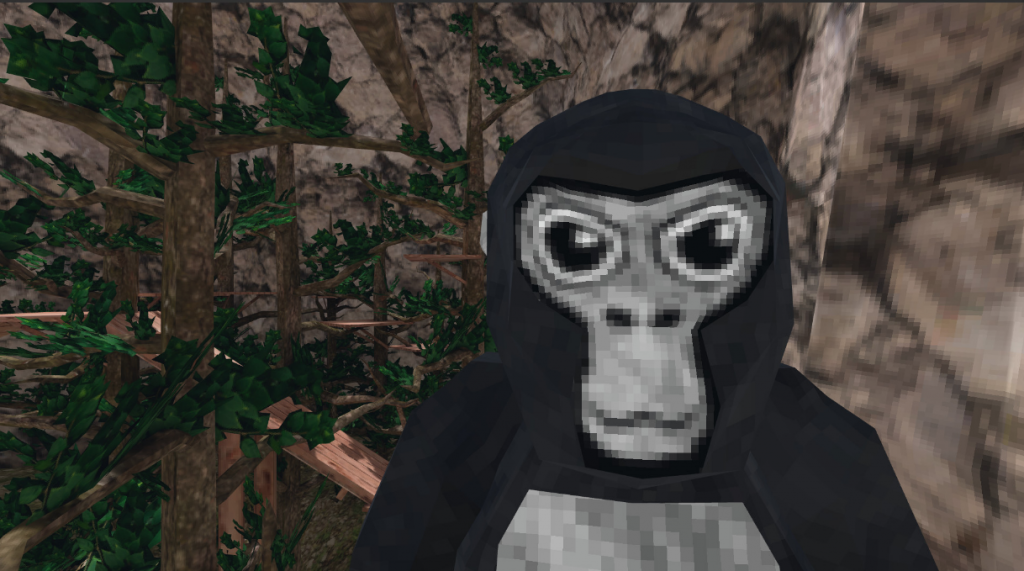
application for VR: a game called Gorilla Tag, playable on Meta’s Quest gaming platform. Each
player dons a headset and two controllers (one for each hand) and is then transported to a
virtual jungle world where up to three players—who are all gorillas, by the way—can join in an
old-fashioned, simple game of tag. In a gameplay video Dr. Bal shared, players can run, jump,
and climb through forests, caves, and other environments, all with rhythmic drum music playing
in the background.
Of course, gaming is an obvious leader in virtual reality technology, but according to Dr. Bal, it’s
not all just fun and games. He says it’s the “collaborative, interactive” nature of VR technology
that makes it so useful for a variety of applications.
VR technology is already used in many fields for training and education purposes. For example,
flight simulators are a type of virtual reality that can train newly recruited pilots in a safe and
controllable environment. VR can also be used to train new warehouse employees on
machinery without having to take the machine down for learning, which can impact productivity.
Virtual reality also allows students to have hands-on classroom experience from remote
locations, something many educators, including Dr. Bal, found useful as the COVID-19
pandemic forced a shift to remote learning.
VR technology allows students and novice learners to access training that is not always “easy,
affordable, or safe,” said Dr. Bal. “This includes accessibility,” he added. Virtual reality has
applications for disabled students who cannot normally make it to in-person classroom settings,
making this technology useful even after schools shift back to in-person instruction.
Dr. Bal says that while VR is certainly becoming more widespread across industries, there is still
much for us to learn. For example, we are still developing VR technology that includes haptic
feedback, or touch responses, in the virtual environment. This could have applications in
healthcare and may even allow doctors to interact with their patients in a virtual environment.
Dr. Bal thinks the future is bright for both virtual reality and its more affordable cousin,
augmented reality, in many industries, including manufacturing, healthcare, retail, and
education.
Dr. Bal wants everyone to know and be excited about these possibilities. It’s clear that through
his work and his STEM lecture series, he’s passionate about introducing people to the fields of
engineering and technology. In a changing world, Dr. Bal says we must also learn to change
with it, and we can do that through engineering and technology, with VR as a promising, still
young field.
And to those who are curious and enthusiastic about technology, Dr. Bal has this to say: “If you
have some crazy ideas, futuristic thoughts, or if you have something that changes the entire
game, a virtual reality concept would be the best to test those things.”