
By Kathleen Perkins
Ceramic pillows date back to ancient China’s Sui Dynasty (581-618 CE) and remained prominent in middle and upper-class houses for centuries. The Richard and Carole Cocks Art Museum (RCCAM) has a ceramic pillow in the collection from the Southern Song Dynasty (10th – 13th centuries), which dates to the 13th century. Located in the Orpha Webster Gallery as part of the Global Perspectives exhibition, this Cizhou ware ceramic pillow depicts scenes of nature framed by intricate patterned detailing. In small living spaces, seemingly common domestic objects became important decorative pieces within the home, meaning pieces were both functional and ornamental. Objects like pillows and beds became highly symbolic to align with the home’s aesthetic.

China, Southern Song Dynasty, 13th century
Cizhou ware: ceramic, glaze, and slip
5 ½ x 12 x 16 inches
Art Museum purchase, 2006.5
This piece, which measures 5 ½ x 12 x 16 inches, is traditional Chinese Cizhou ware, composed of ceramic, glaze, and slip. An inscription on the bottom of the pillow reads 张家造 “Zhang jia zao,” which translates to “made by the Zhang Family.” The landscape, bamboo, bird, and floral motifs depicted here are commonly seen in Song Dynasty pillows. Other common symbols include children and animals, though nature seems to be the most prominent. Due to the belief that certain animals had the power to ward off evil spirits, pillows depicting lions and dragons grew increasingly popular.
Cizhou ware ceramics are characterized by their use of monochromatic colors, typically black and white, and porcelain materials. Decoration and symbolism vary by time and region, and later dynasties tended to include more color in their ceramic pieces. Artists in ancient China used a variety of techniques to build ceramics, and common methods include wheel-thrown or slab-built. Many ceramic pillows would have been built using slabs or molds due to their general shape and size.
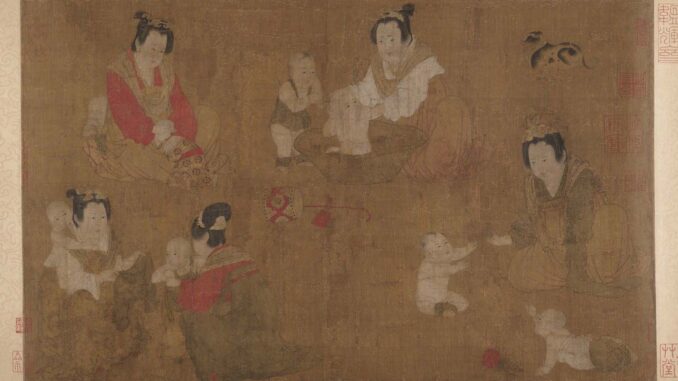
Upper and middle-class women of the Song Dynasty typically wore their hair in elaborate updos. This image of a painting from the Met’s collection shows several examples of traditional hairstyles of upper and middle-class women from the dynasty. In addition to providing support and ensuring a better sleeping position, ceramic pillows were used to maintain these elaborate hairstyles. Ceramic pillows also offered temperature stability, cooling the owner’s head on a hot summer night.
Further Reading
Valestein, S. 1989, A Handbook of Chinese Ceramics. The Metropolitan Museum of Art, pp. 83 – 122.

Kathleen Perkins is a Senior at Miami University majoring in Anthropology and Professional Writing with minors in Archaeology and Museums & Society. Kathleen is currently serving as a Curatorial Intern at the Richard and Carole Cocks Art Museum, and she is also involved in the Anthropology Department’s Collections Management team.
SUPPORT US
Please visit the Art Museum Giving Page and consider becoming a sustaining member or making a donation to support RCCAM’s exhibitions, programs, and collections.
FOLLOW US ONLINE
Access all of our online social media accounts here.