By Carson Brown
The excitement of prowling through a dusty physical archive is a rush only a few will understand. But those who do understand the high of discovering something new to add to your research will quite enjoy my experience with compiling research surrounding Orpha M. Webster (1893-1976), one of the museum’s founders. Despite being named proudly on a dedication plaque in the RCCAM’s entrance and having an entire gallery dedicated to her memory, on my first day my supervisor, Jack Green, remarked that he had never even seen a photograph of her. Her file contained laughably little in comparison to the expansive Walter I. Farmer files, which were filled to the brim. The two are both credited with the Art Museum’s founding, with former Monuments Man, Interior Decorator, and art collector Walter I. Farmer ‘35 becoming involved with the project with his mentor and former professor, Miami University Instructor, Miss Orpha Webster. While Farmer’s files amassed several folders worth, Webster’s didn’t even occupy one folder. I was determined to rectify that.
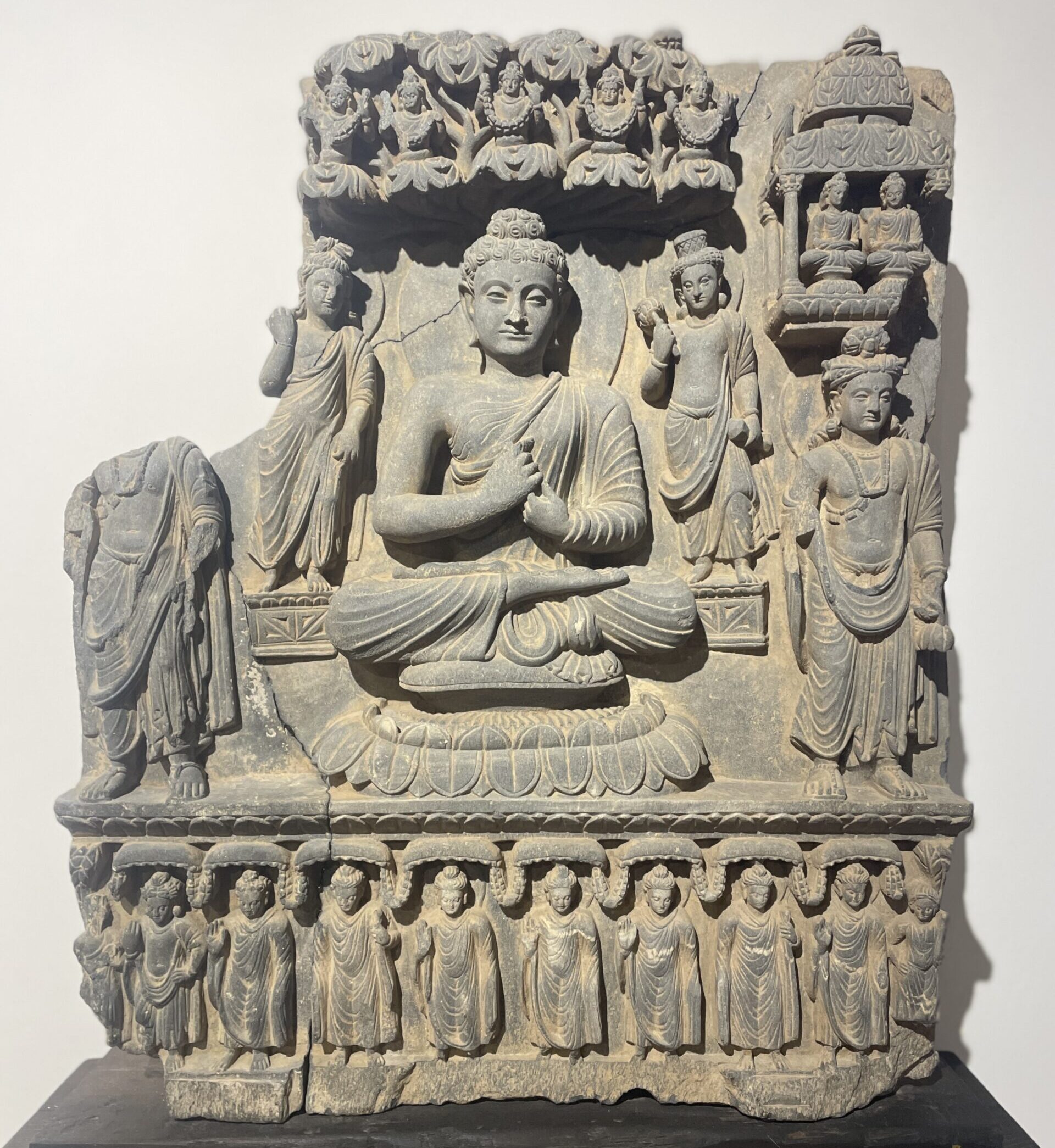
Artist unknown (Gandharan)
Buddha Sakyamuni on Inverted Lotus Throne, 2nd-3rd Century, CE
Grey schist
Miami University Purchase, 1973.S.1.1
After scanning through the scraps from her file and the ‘Beginnings’ files within the Art Museum’s Archive, I came across a file on the dedication of the gallery in her name, which included a tape recording and transcript. I had found my beginning, and it ironically started after Miss Webster’s death. The transcript of the dedication gave me some incredible insight into how many lives she touched and how important she was to the museum’s founding – she would eventually leave her estate to the Art Museum. How without her and her efforts to create a committee for the museum, or expansive knowledge of collections, the art museum may have never come to be. The transcript and her obituary were crucial to piecing together her overall life story, and how it was inextricably bound to both Miami University and the Art Museum.
This win was temporarily met with more dead ends. My oral history interview with retired Miami Professor and former director of the University’s Performing Arts Series, Donald W. Fritz, provided me with some wonderful insights into Orpha’s personality and style, however the two weren’t very close. I was able to hear a few funny stories involving her and lifelong friend Elma Pratt, who helped oversee the collections at Rowan Hall, and served as a volunteer at the Art Center, before the Art Museum was fully official. Webster eventually helped bring the Elma Pratt International Folk Art Collection to Miami University, as well as a collection of ancient Ghandaran art, which served as cornerstones of the Art Museum’s fledgling collection. After this interview, I even found an unlabeled document Orpha wrote reflecting on her years involved with the University and Museum Committee, where this blog draws its name from. As it was one of the few sources composed in her own words. But I still felt that there was more I could learn.
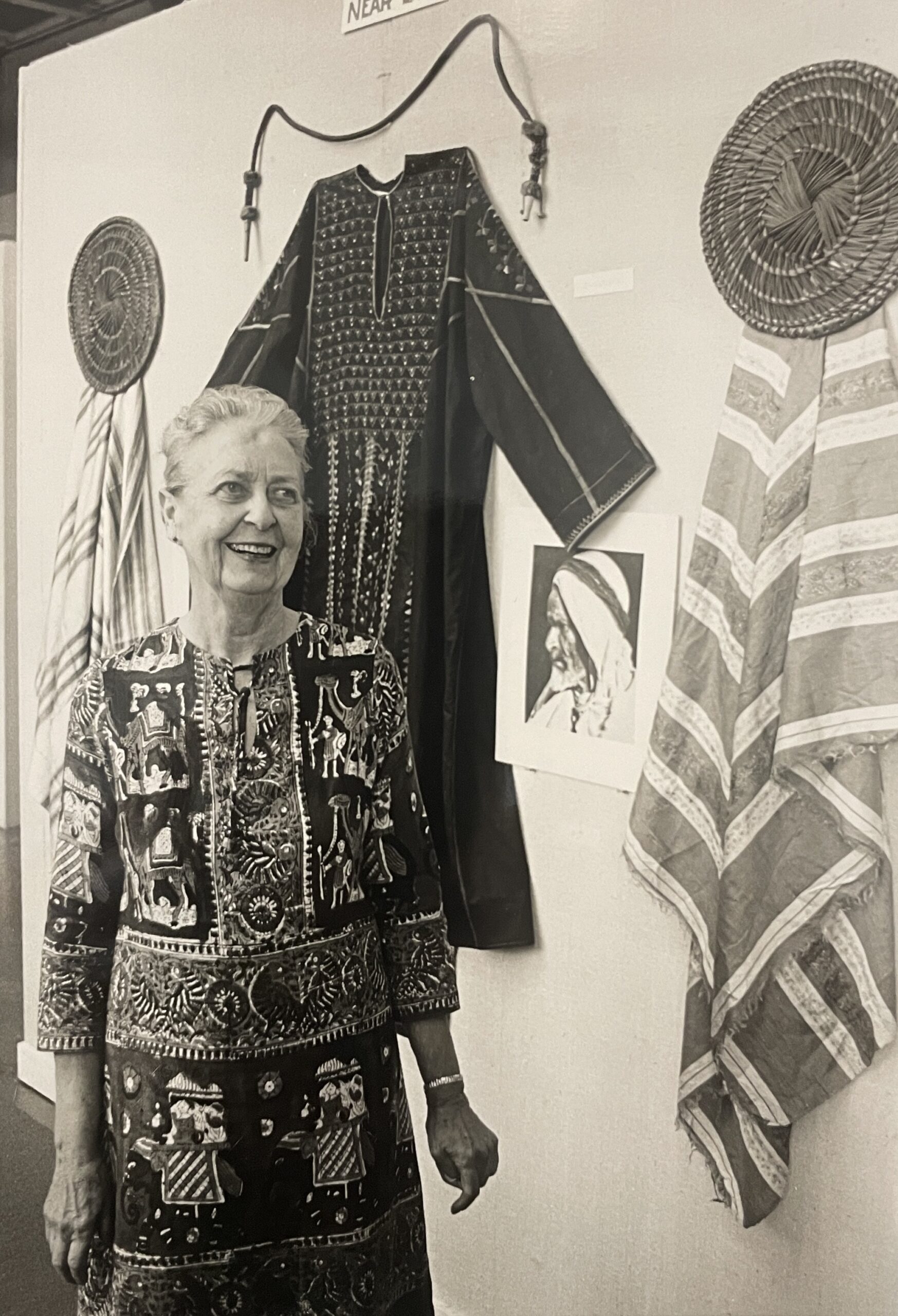
One February night while I was researching a paper on Miami’s Library Online Database, I decided on a whim to search up Orpha’s full name, and was met with a gold mine of scattered information. I found remnants of Miss Webster lying in scans of yearbooks, newspapers, and old university adverts. Photographs that not even the Art Museum had lying in its archive. I found images of Miss Webster in her second year of teaching in 1929, photos of her from when she served on the disciplinary board in the 1950s, and so much more. Beyond photographs I found a mention of Orpha Webster from a 2008 interview with Chris Stousland. I was ecstatic.
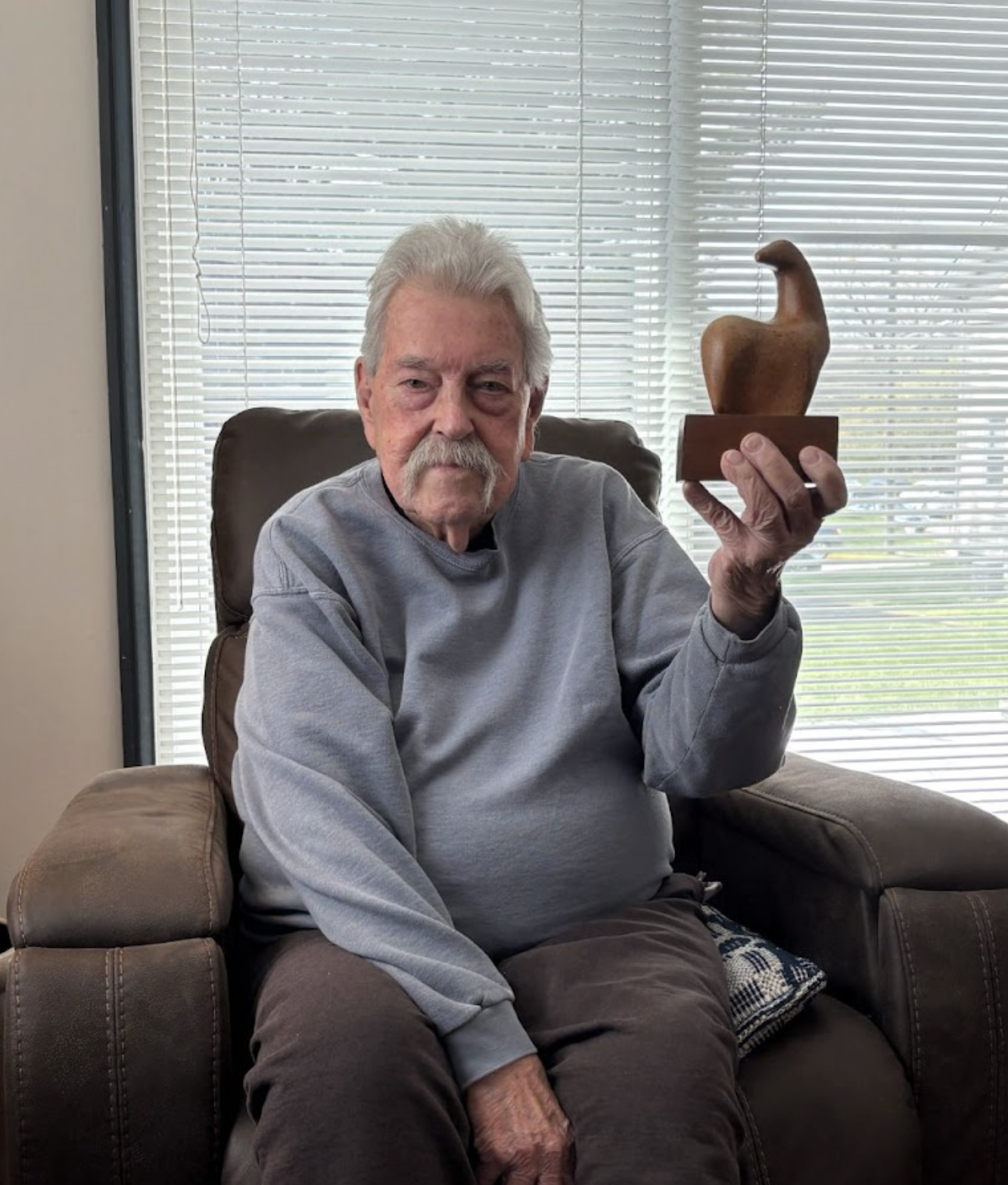
From there I got into contact with Chris about another interview, which he gladly accepted. All the while I was trying a different research route through my fellow intern Austin Pawar when he was to interview Margaret Farmer Planton, Walter Farmer’s daughter, but she couldn’t remember ever meeting Miss Webster. Once I was able to have a delightful chat with Chris, however, I gained much more information than I was originally betting on. Chris’ parents, Mik and Betty Stousland, had left him art pieces made by Orpha. Additionally, he provided me with more previously unknown photos of Orpha that I am still incredibly grateful for. Both Chris Stousland and Don Fritz had mentioned that Professor Emeritus Robert (Bob) Wolfe, who had founded Miami’s Printmaking program, was always closer with Orpha Webster back in the day. Yet we had been unable to get in contact with him until April. From there, I moved on to my final and most fruitful lead.
My conversation with Bob Wolfe proved not only to be the most useful but also the most touching. He spoke of his mentor, teaching colleague, and close friend Orpha with such palpable adoration, it nearly brought me to tears. How she had remembered teaching him at the McGuffey Lab School when he was a child in the 1930s, how they talked of their past when he had her as an art professor, how close they became once he too became an art professor at Miami, and how he and other former students banded with her to form what would become the Miami Art Museum Committee. There were countless stories of their work, cocktail parties, and even a trip to the Cincinnati Opera. He even showed me a piece he had made in 1948 as a freshman, in Orpha’s own ‘Fundamentals of Art’ class. His interview was the cherry on top for my research, as it gave me so much more to add to the small Orpha Webster File, and it was an absolute pleasure to learn more about her from his perspective. For this was more than just an interview for research purposes, it was a chat about his beloved old friend. It is my sincerest hope that what I was able to compile about the life of the incredible artist, educator, mentor, and friend known as Orpha M. Webster, helps her memory stand the test of time a little bit longer.

Carson Brown is a History Major and American Studies Minor. A museum and history lover, Carson hopes to one day work in Archival Research after her expected graduation in May of 2027. In Spring 2025, Carson worked as a History Project Intern at RCCAM where she assembled, reviewed, and digitized primary and secondary sources related to Orpha Webster.
SUPPORT US
Please visit the Art Museum Giving Page and consider becoming a sustaining member or making a donation to support RCCAM’s exhibitions, programs, and collections.
FOLLOW US ONLINE
Access all of our online social media accounts here.