Research

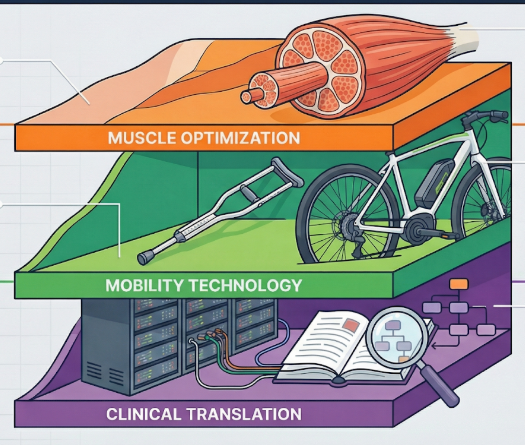
Our 3 Research Pillars

Early Life Inactivity & Muscle Quality

Pillar 2

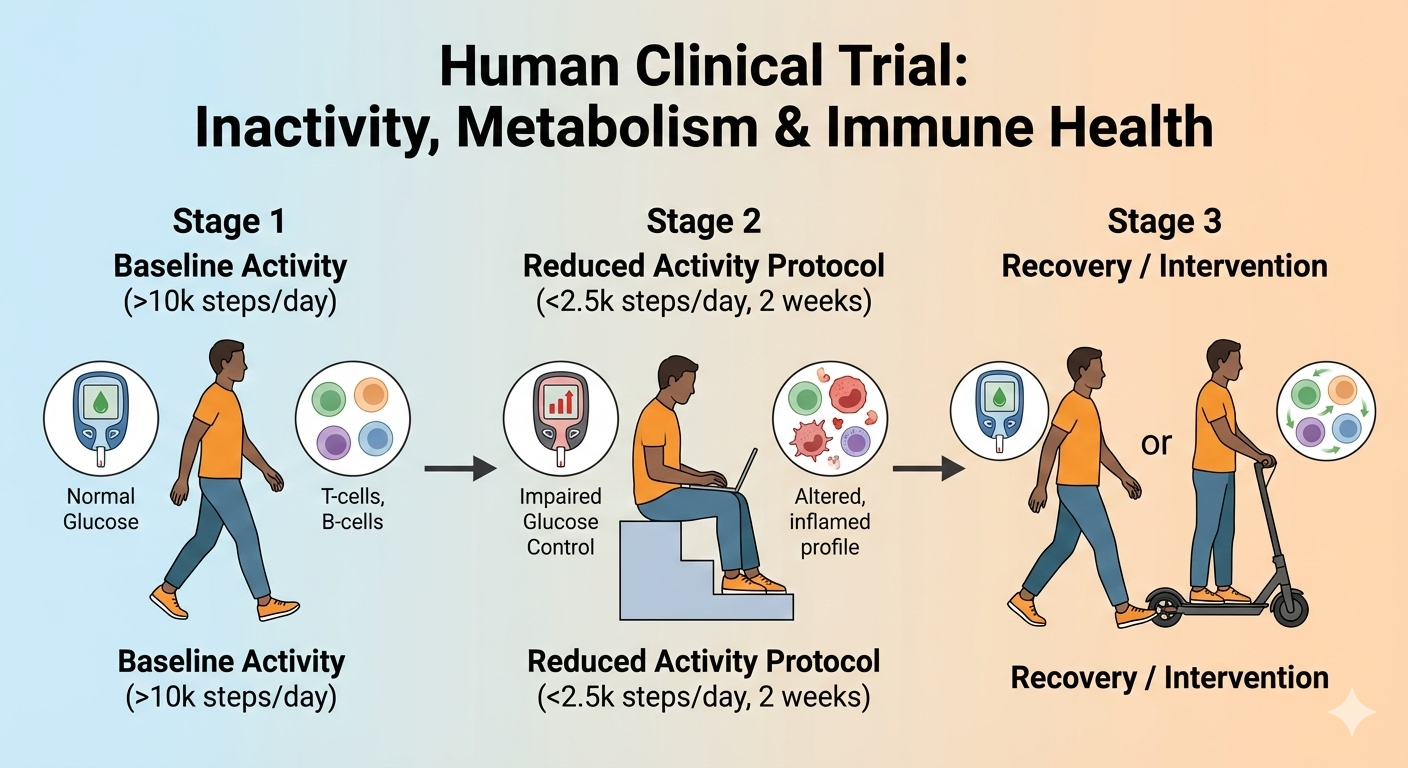
Inactivity, Metabolism & Immune Health

Pillar 3

Specialized Research & Collaboration

Pillar 1

Pre-Clinical Studies

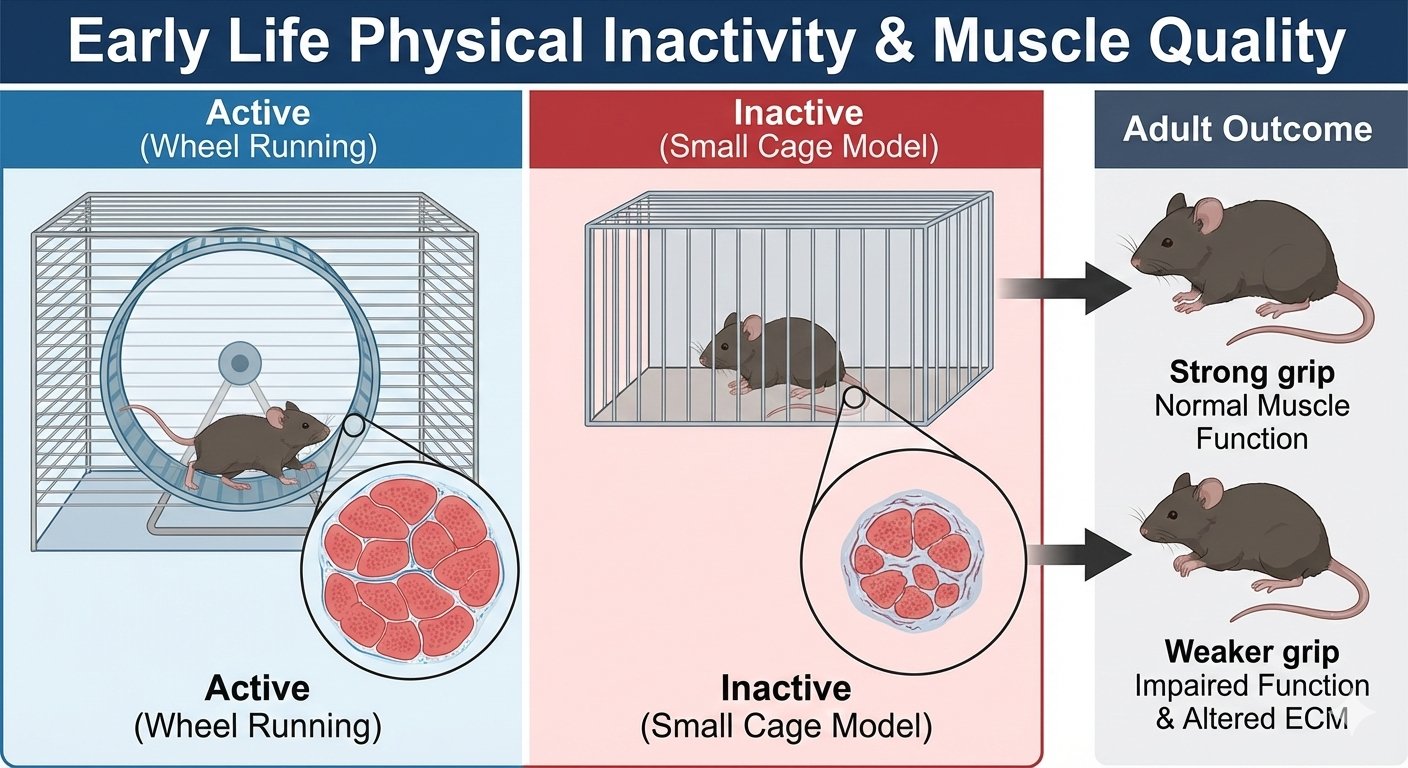
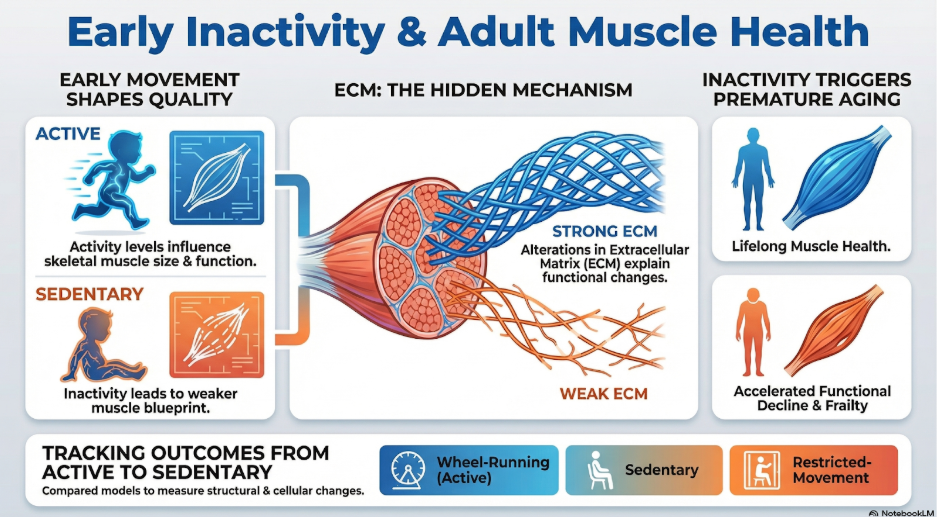
Early Life Inactivity & Muscle Quality

This pillar investigates the long-term, programmed effects of physical inactivity during critical developmental periods.

Project 1.1: Early Life Physical Inactivity and Adult Muscle Quality
Goal

To determine how changes in physical activity level during early postnatal growth influence skeletal muscle size/function, structural quality of muscle in adulthood and development of premature aging via accelerated functional decline (frailty? lifespan /healthspan?).  

Focus

We have recently discovered a potential mechanism involving extracellular matrix (ECM) alteration that may explain functional changes that occur later in life. This NIH-funded work is focused on characterizing these structural and cellular changes.

Model

Novel mouse models of varying levels of physical inactivity ranging from stress and inactivity (HU) to moderate movement reduction (small-cage model and sedentary cage) to active wheel running mice .

Key Techniques

Mouse welfare and tissue dissection, tissue sectioning, microscopy, muscle image processing and analysis, Immunohistochemistry/Immunofluorescence (for muscle structure and ECM), gene expression analysis (PCR), metabolic assessment,  Muscle functional assessment (grip strength, balance/coordination, aerobic endurance, muscle endurance) In-vivo muscle testing, and behavior testing.

Status: Active NIH R15 Grant (NIAMS)

National Institute of Arthritis and Musculoskeletal and Skin Diseases (PI: Reidy).

Representative Publications: Reidy PT et al. J Appl Physiol, 2023.
Project 2.1: Physical Inactivity, Impaired Glucose Control, and Vascular Health
Goal

To examine how quickly symptoms of metabolic dysfunction (like pre-diabetes) develop following periods of reduced activity (step-reduction model in humans) and how factors like cardiorespiratory fitness and adiposity modulate recovery.

Model

Human clinical trial using carefully controlled, time-restricted reduction of daily physical activity.

Key Techniques

Clinical Coordination, Participant Screening, Blood Draws, Sample Collection, Metabolic Measurements.

Status: Active NIH R15 Grant (NHLBI)

National Heart, Lung, and Blood Institute (PI: Ballard, Co-PI: Reidy).

Project 2.2: The Longitudinal Effect of Physical Inactivity on Immune Health
Goal

To phenotype immune cells and assess immune system function in response to physical inactivity and recovery, exploring if inflammation links inactivity to metabolic dysfunction.

Model

Human clinical trial (integrated with Project 2.1 participants).

Key Techniques

Blood sample analysis, Flow Cytometry (for immune cell phenotyping), collaboration with Microbiology specialists.

Status: Funded by the Miami University Faculty Research Grants Program (FRGP).
Pillar 2
Pillar 2.1
Pillar 2.2

Clinical Studies

Inactivity, Metabolism & Immune Health

This pillar addresses the rapid, detrimental health effects of reduced physical activity in human subjects and the potential for recovery.

Pillar 3

Specialized Research & Collaboration

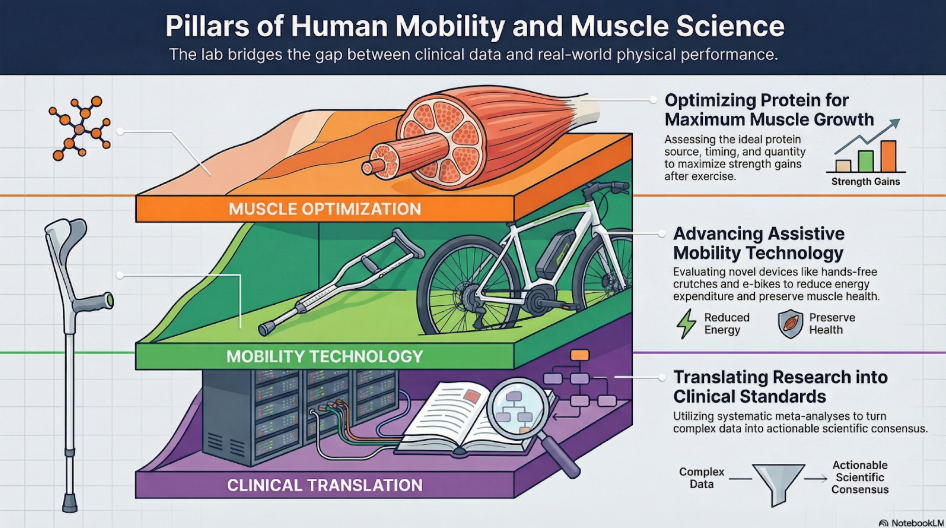
This pillar highlights high-profile applied projects and collaborative efforts that broaden the lab’s impact.

Project 3.1: Protein Nutrition, Skeletal Muscle, and Exercise Adaptation
Goal

To challenge and refine the “dogma” of sports nutrition by definitively assessing the optimal protein sources, timing, and quantity required to maximize muscle size and strength gains following various types of exercise.

Focus

Translating evidence from extensive clinical trials and meta-analyses into actionable scientific consensus for the field.

Model

Systematic reviews, meta-analyses, and collaboration on comprehensive literature reviews.

Key Contribution

Invited landmark review in the Journal of Nutrition and comprehensive review in progress for Physiological Reviews.

Project 3.2: Applied Rehabilitation and Novel Interventions
Goal

To provide evidence-based solutions for individuals experiencing mobility challenges.

Focus

Assessing the effectiveness of novel assistive devices (e.g., hands-free crutches) on energy expenditure, ease of ambulation, and the preservation of muscle health compared to traditional methods.

Partners

Collaboration with iWalk Corporation; Collaboration on e-bike studies (Dr. Alessio).

Located at 

Phillips Hall 26D

P.I. Dr Paul Reidy

[email protected]

All Rights Reserved. Copyright 2026. Design by Simply Spun LLC