
Blue and white Chinese porcelain often dominates the Western imagination of export ware from East Asia. By the late 19th century, Imari ware from Japan, usually recognized by the underglaze blue and intense overglaze of red and gold, was dominant in America and Europe. Imari originated in Japan in the early 1600s to fill a gap in the market of Chinese export ware to the West and was popular throughout international and domestic markets.
Japanese Imari borrows popular Jingdezhen Chinese styles and was imitated in China and Europe. At the same time in China, the Ming Dynasty (1368-1644) was focused on increasing the commodity economy. The stylized heron Imari dish here is marked with the date 1856, just three years after Admiral Perry’s first visit. It is thus representative of some of the first porcelain exchanged between Japan and the West after the opening of trade. Through an official sanctioned trade, Japan became a large overseas market for these wares. The Imari platter is not specifically dated, though it most likely was made during the late Edo or early Meiji period due. This is assessed by the similarity in style to other pieces known as “old imari” made for export at the time. The first documented European purchase of Imari (145 pieces) was by the Dutch East India company in 1650. By 1659, the Dutch were purchasing 56,700 Imari pieces a year. -Written by Jane Widder
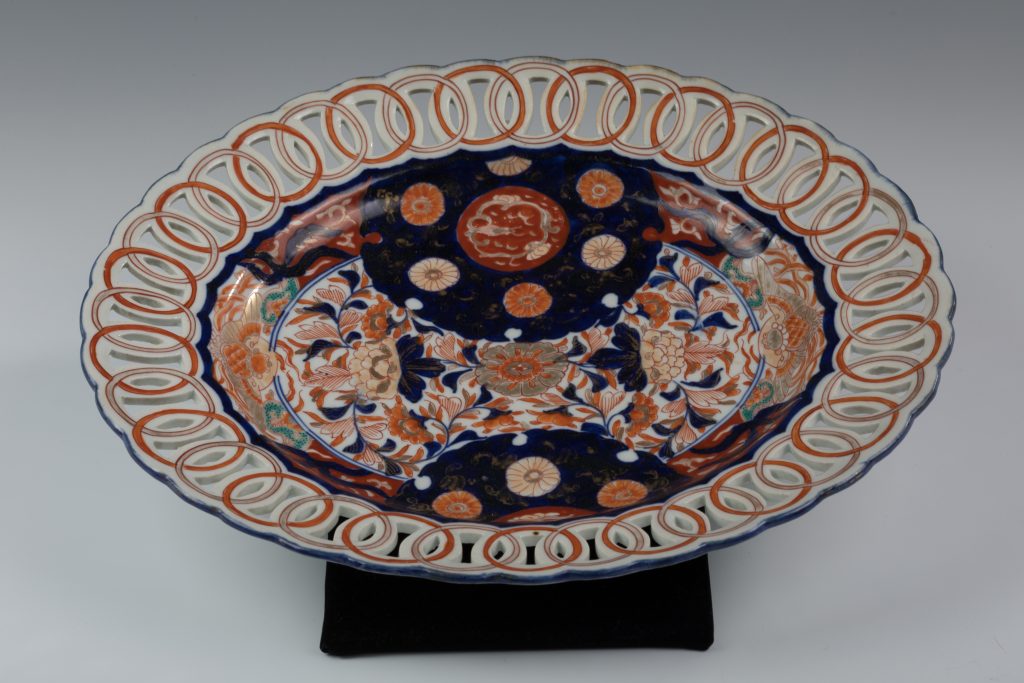
Platter, Imari ware, 19th century
Ceramic with underglaze blue and overglaze enamel
Gift of Eva J. Hexter
1989.117

Dish with Immortal Riding on a Heron, 1856
Imari porcelain with overglaze enamel
Gift of Mrs. Charles Burton Fahs in memory of Dr. Charles Burton Fahs
1983.11
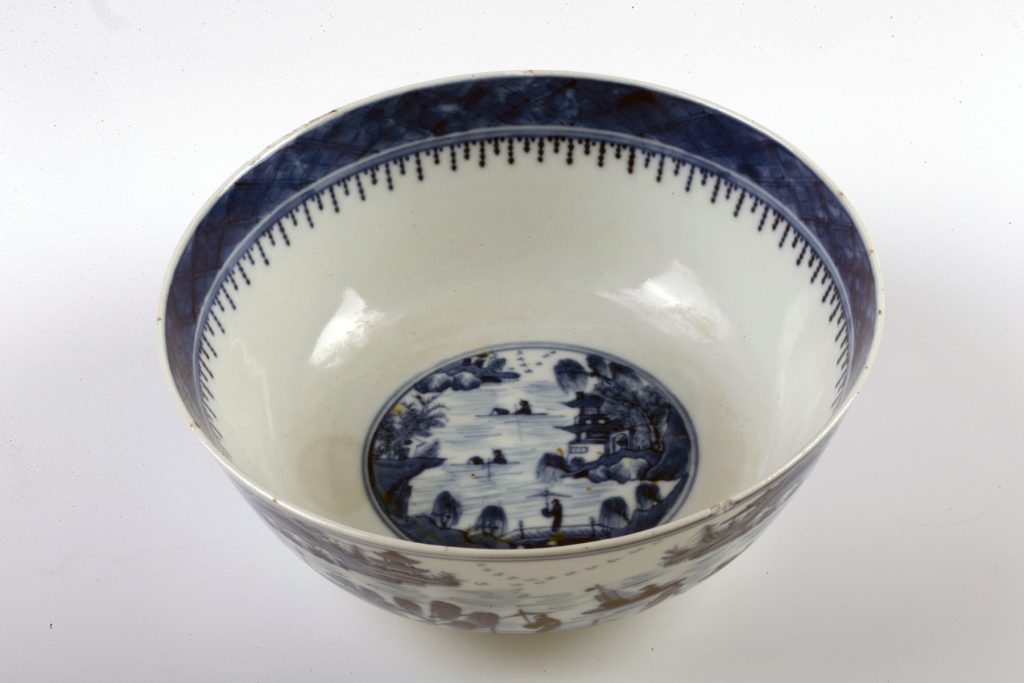
Blue and white Porcelain bowl, late 19th century
Porcelain with underglaze blue
Gift of Gregory M. Bishop and Jeffrey B. Bishop
2014. B.E.L.3
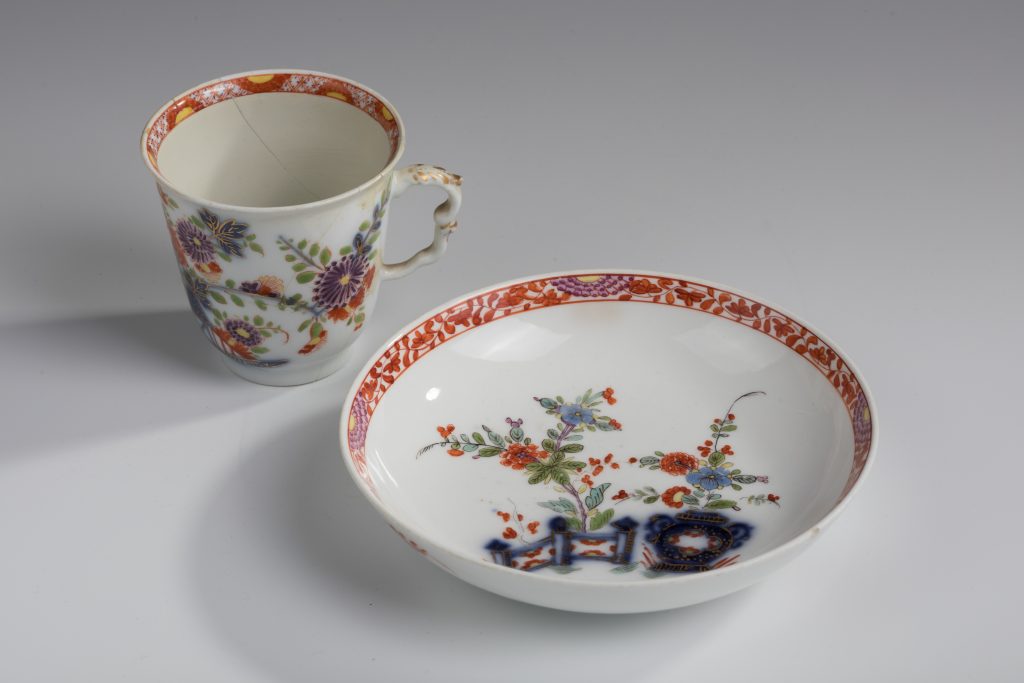
Cup and saucer, Meissen copy of Imari ware, 18th century
Ceramic with overglaze enamel
Gift of Eva J. Hexter
1989.102