
By Maureen Wilson —
Something unique about the Middletown campus is how green it is, in terms of different tree species and other abundant flora. Recently, Janelle Allen took a step back to appreciate the trees many students pass by and recontextualize their purpose in our society.
Prof. Allen first reviewed what she discussed in her last talk about the importance of trees. “Remember, trees are the longest living organisms on Earth,” she stated, before elaborating on how trees balance our ecosystem and set a precedent for growth. Allen then mentioned how the planting and maintenance of trees in our society can slow climate change down. Becoming aware of the role humans have in the environment is key for creating a sustainable and enjoyable life for generations to come.
Trees planted around homes can also save money, given how they can filter and cool air, as well as improve property value. Lastly, Allen mentioned a concept known as “forest bathing,” rooted in the Japanese practice of shinrin-yoku, where immersing oneself in nature can drastically improve the mind and body.
Tulip poplar (Liriodendron tulipifera) trees are one of the largest native species of eastern North America. On the Middletown campus, these trees can be found down Forest Hill Drive near Thesken Hall. Tulip trees can be easily identified by their nectar-producing light green or yellow flowers. Allen remarked that healthy, “happy” leaves and flowers indicate a positive status for its tree. The bark is bitter and has a pleasant smell, while Native Americans in the past have used it for its healing properties. The wood comes in a brown to light yellow color.
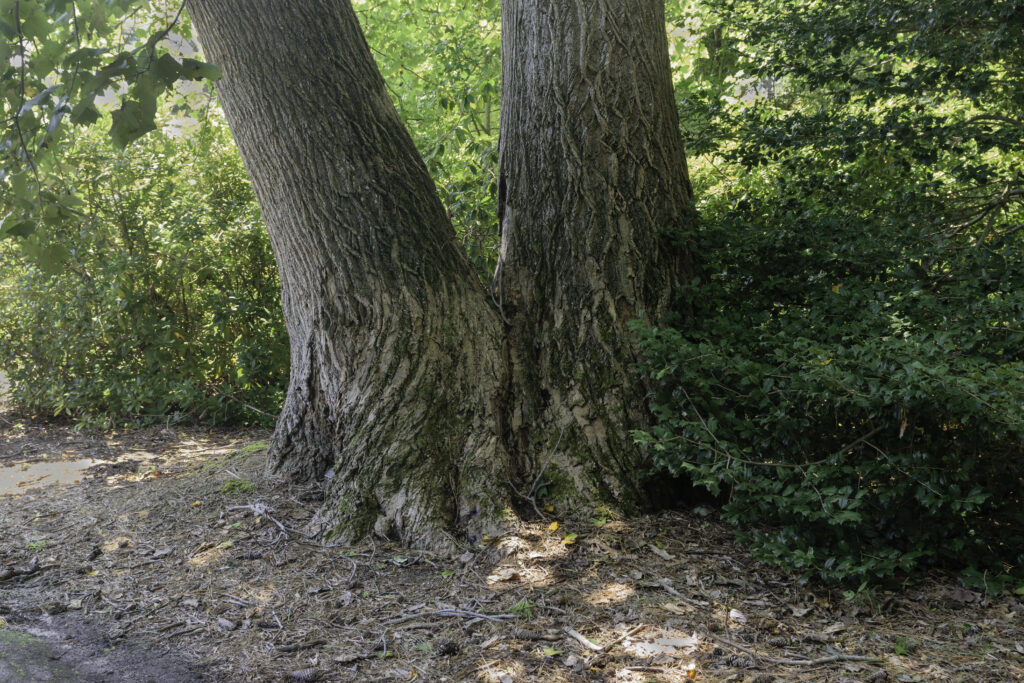
Before discussing the next tree, Allen made a general statement about not moving the leaves that fall from trees this time of year, since they provide a natural source of nutrients to the soil in that area.
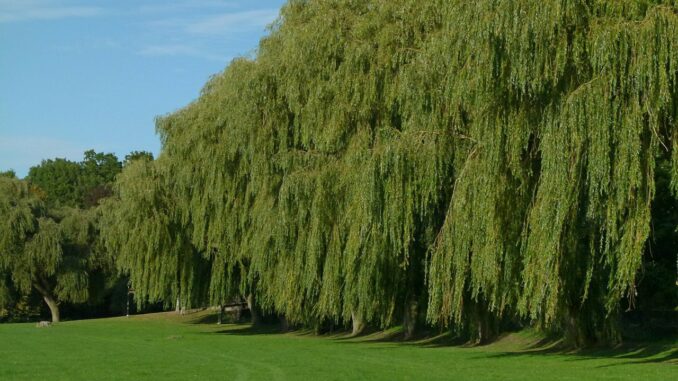
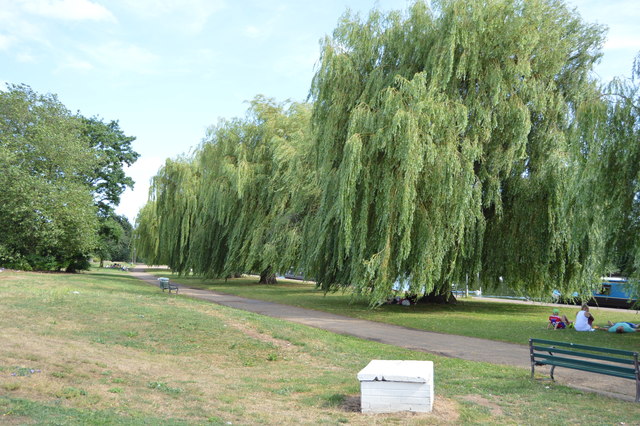
Weeping willows (Salix babylonica) are a dioecious species with both male and female catkins that usually thrive in more boggy areas. These trees can be found near the tennis courts on the Middletown campus. Prof. Allen suggested that weeping willows can provide a solution to people who are looking to fix a wetland portion of their land, as they grow quickly but have a short lifespan of 40 to 70 years. While primarily considered an ornamental tree, the species can be grown for its wood production and to serve as a shelterbelt: a type of windbreak created through the linear planting of trees.
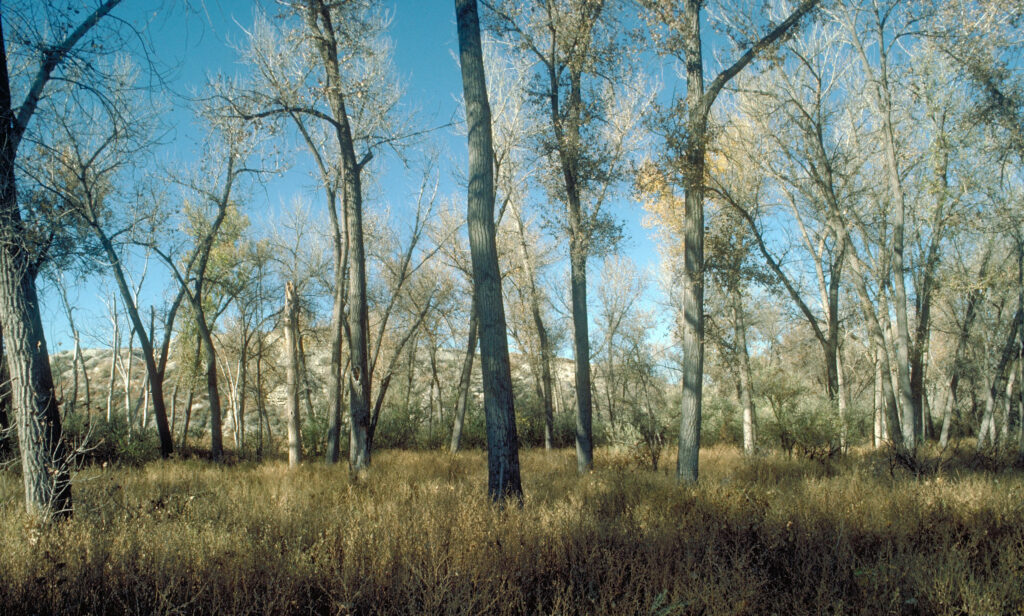
Eastern cottonwood (Populus deltoides) trees are considered one of the fastest and largest hardwood species in North America. They also can be found along the tennis courts. Cottonwoods often have a reputation of being an annoyance to the general public due to their frequent, fluffy droppings that can create a mess and irritate allergies. “Where wind and water flows, things go,” Allen said regarding the pollen count associated with dioecious species, such as the cottonwood. It’s best to be considerate of how planting certain trees can affect your neighborhood.
Near the North Breiel Boulevard entrance, you can find shagbark hickory (Carya ovata) trees with their distinctive, exposed strips bark. They are a species popular in the Eastern United States and some parts of Canada. Their fruit are drupes with hard and bony shells, which led Prof. Allen to recall how Native Americans utilized it as food. Shagbarks are relatively ecosystem-friendly due to the nutrients they provide, and are monoecious, resulting in their staminate and pistillate flowers.
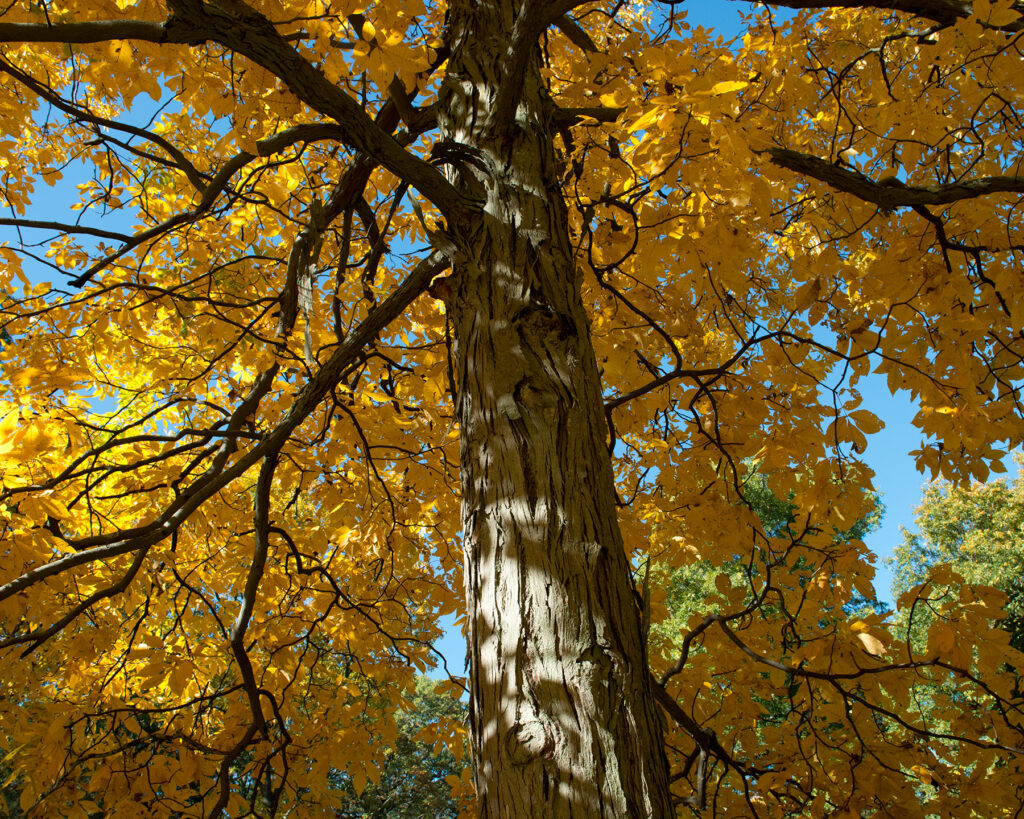
In the area between Johnston Hall, Levy Hall, and the Gardner-Harvey Library is where honey locusts (Gleditsia triacanthos) have been planted, going back to the sixties. While they grow rapidly, they actually have a moderate lifespan of around 125 years. As a deciduous species, honey locusts have green leaves in the summer and turn yellow during the fall. They have strongly scented flowers that appear in the late spring as small greenish-yellow or greenish-white clusters. Their fruit are legumes.
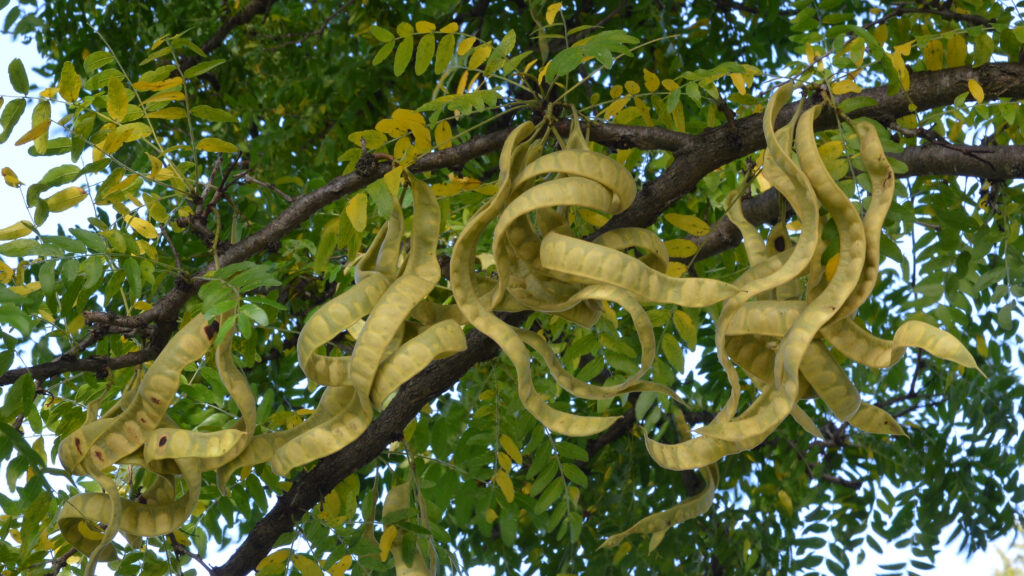
American arborvitae (Thuja occidentalis) trees, also referred to as the northern white cedar, are typically found in the northern United States and southern regions of eastern Canada. On campus, they’re visible on some of the trails. Like the weeping willow, this species enjoys more wet land, but can exist on cliffs as well, due to their adaptability. Arborvitae wood is frequently used as lumber for posts, poles, fences, and even log cabins. Their essential oils are versatile and can be used in anything from insecticides to soap.
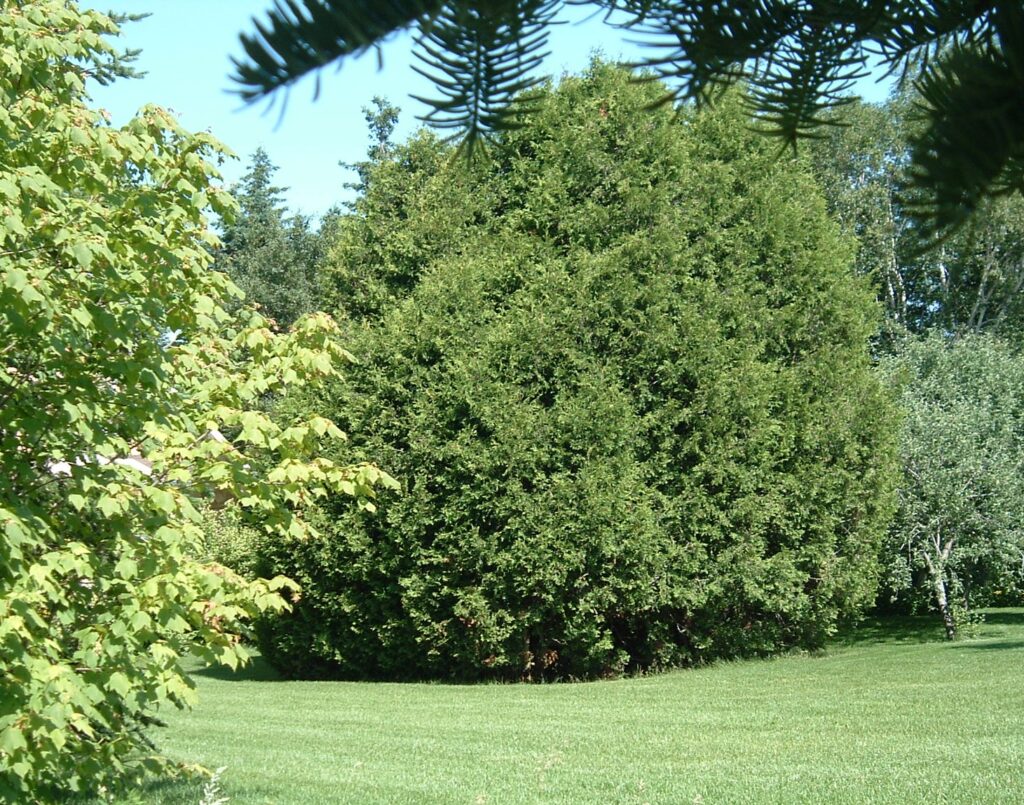
Tree of heaven (Ailanthus altissima) is a species that has caused issues around Thesken Hall.
“How could the tree of heaven be such a pain?” Prof. Allen reflected. Despite their beautiful appearance, this species is invasive to Europe and North America and a noxious weed. It’s native to China and Taiwan, in temperate climates. Tree of heaven, while fast growing, caps its height at 50 feet within 25 years during its short lifespan of 50 to 100 years. But, it does have its perks inside the context of Chinese medicine and as a host plant of the silk moth, assisting in silk production.
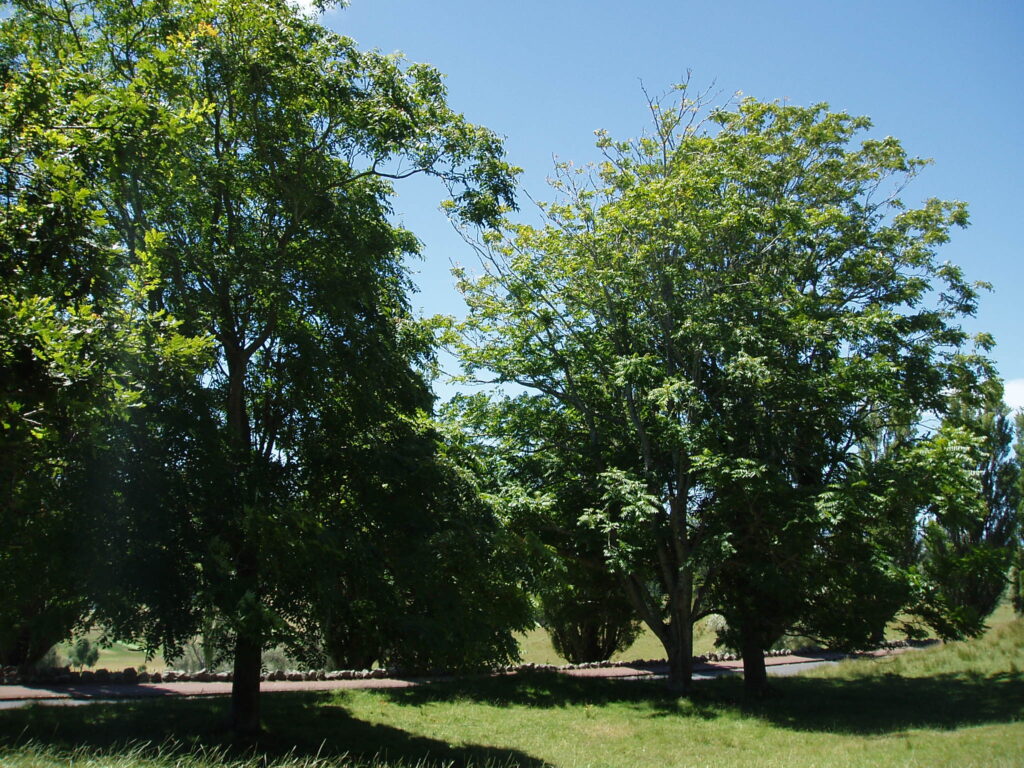
To wrap up her presentation, Janelle Allen expanded on the vast benefits of planting trees. First, trees have immense significant regarding the water cycle, and how they process and purify our air. They also mitigate the effects of climate change. Secondly, they support wildlife with shelter and food, further spreading biodiversity. On campus, they regulate temperature and protect areas from flooding, runoff, and soil erosion. For all these reasons, Prof. Allen concluded: “We want to make sure we’re partnering with our trees in our community to maintain the integrity of the soil and our areas.”
As usual, Prof. Allen took questions after her talk. The first question had to do with a tree that Ms. Allen will never forget, to which she replied, “I’ll have to go with the catalpa. Not to sound goofy, but I love this broad-leaf tree. I love the little flowers. I think they’re more prevalent and more colorful than many trees.” She also appreciated their legume-like beans. The second question touched on what makes the dendrology [the study of trees] of Ohio so unique. Allen responded, “I would say it’s pretty diverse. We have various zones. Our state is very long, with a wide variety of woody plants.” She then recommended the companion guide from the OSU extension about the dendrology of the area.
This is the second installment of her “The Secret Life of Trees” series for this semester. It occurs every first Wednesday of the month. The next lecture will be about the trees on the Hamilton campus on November 5th, from 4 to 5 p.m.