
By Noah Neeley—
Miami Hamilton’s geese have taken center stage yet again this semester. What’s their future on campus and how will Miami handle it?
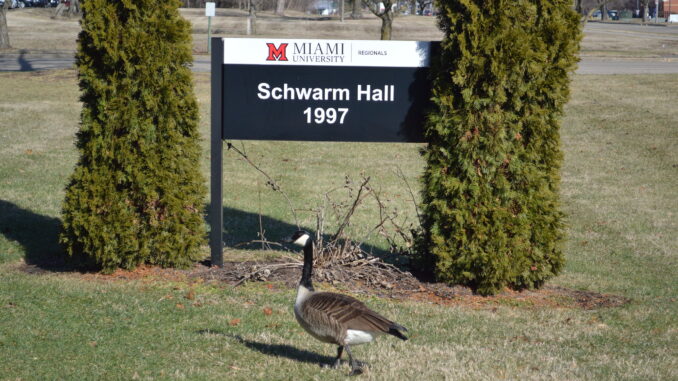
After winter break ended and the spring semester began at the Miami Hamilton campus, something changed. A new presence was felt, as Canada geese took up residence in the middle of the campus. Staff and students alike immediately took notice, and it’s often a common point of discussion around campus.
Geese, as well as turkeys, have been spotted around the Hamilton campus year round, but only in recent months have the geese taken such an active role in campus life. Students have reported being chased by geese on their ways to and from classes. For now, rerouting to avoid the geese has become a part of campus life, so what can be done about them?
In short, Miami does not have many options when it comes to handling this occasional nuisance. When asked about whether RSG (Regional Student Government) had any plans for handling the geese, Hamilton Vice President Amaunie Wilson said that there is not much that can be done. “For events like cleaning up the butterfly garden, all we could do was have the people who do the lawns blow their poop away,” she said. She clarified, “We’re not going to harm the birds, we’re not cruel, we’re not animals, so we kind of just work around them.” It seems the geese will continue to live on campus until they decide to leave, and Miami will just work around them.
The geese aren’t just protected by Miami; they’re protected by law as well. The federal Migratory Bird Treaty Act, and Ohio Law, protect Canada Geese, as well as almost all other native bird species in the United States. Physically harming geese can result in fines of up to $250 or even potential jail time. The best course of action is just to simply not engage with the geese, not even in a well-meaning attempt to broker some sort of peace.
Additionally, trying to bribe the geese with food is ill advised, as the Ohio Department of Natural Resources states. “Geese that are fed will lose their fear of humans and attack adults, children, and pets during the nesting season.” While it might seem intuitive that feeding the geese could help reduce their aggression, it actually makes them more comfortable with attacking humans, who they no longer see as a threat.
The common consensus on campus is that the geese are a nuisance that only serve to terrorize the student body, but student Aidan Oglesbee has a more optimistic view. “I love the geese,” he says. “I think they can smell fear, though, so you just have to walk confidently and they’ll leave you alone.” When Oglesbee was asked whether he thought the geese were malicious, he responded, “No. I really think they’re just being playful. I don’t think they mean any harm to anyone.” While nobody can know for certain how the geese feel about Miami students, research indicates that their recent mischievous behavior can be attributed to their nesting habits.
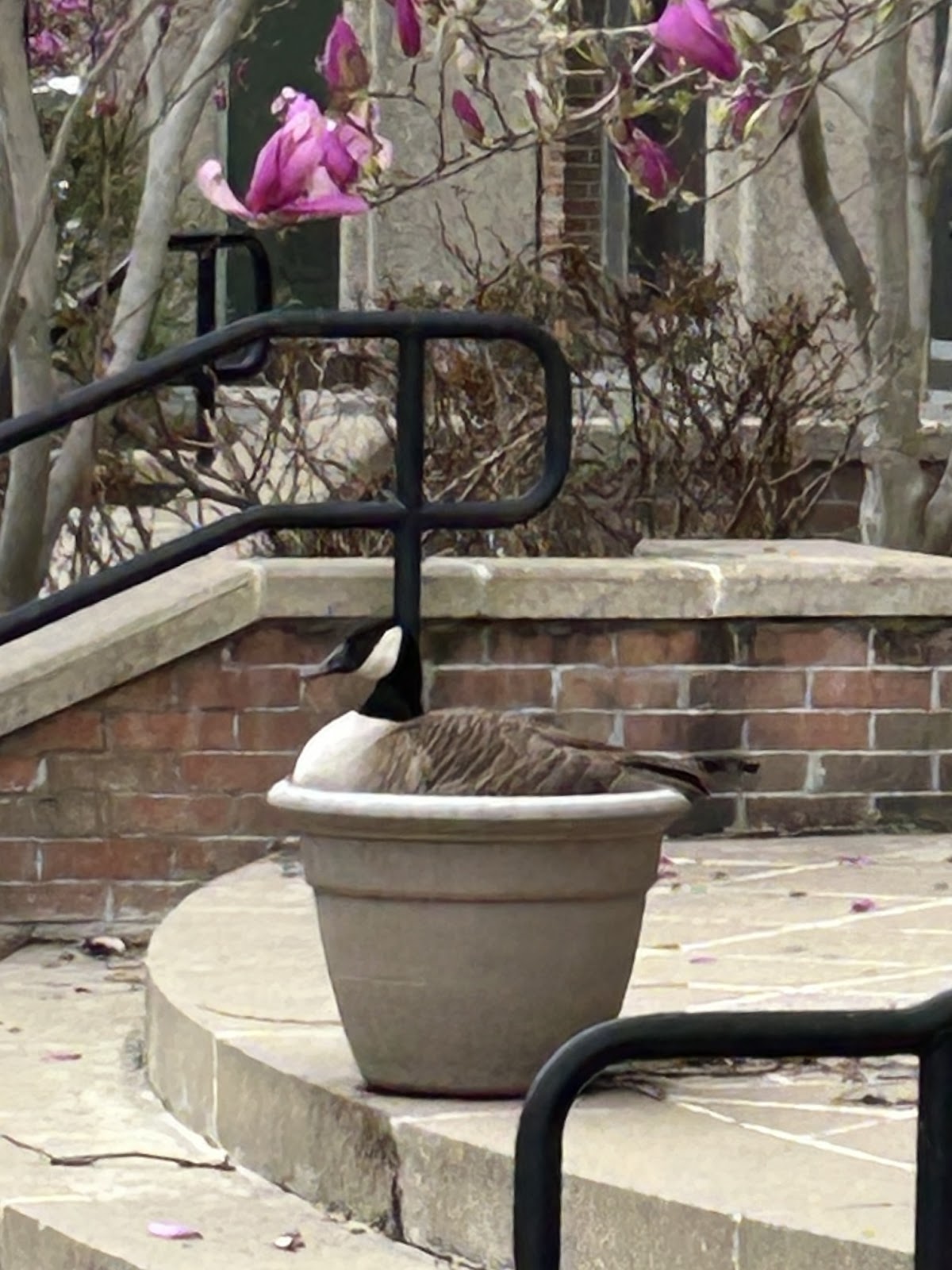
During the nesting season of March through June, Canada geese are far more aggressive while they defend their eggs. According to the Indiana Department of Natural Resources, they like to set up their nests near water, especially in vegetation or flowerbeds. The Hamilton Campus’ proximity to the Great Miami River, paired with Miami’s many flowerbeds and pots, make it no surprise that the geese have taken up residence. Once nesting season is over, the geese are likely to expand their horizons and have a much smaller presence on campus without eggs or goslings to protect.
Miami Hamilton’s Canada geese have had a somewhat startling presence since the start of the spring semester, but as it comes to a close, they are likely to keep their distance until the next nesting season. Whether they’re beings of hate or if they’re just playful birds is up to personal opinion, but it can’t be denied that they add a special piece of personality to the Hamilton campus.