
By Noah Neeley —
In the second to last iteration of Forum Unscripted for the semester, staff and students alike had a great deal to say about self-discipline.
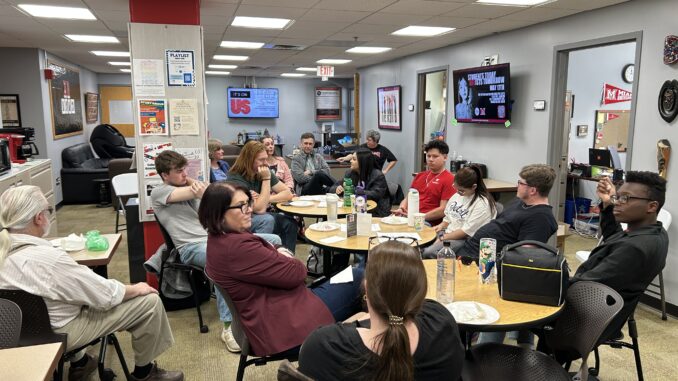
On April 16th, staff and students gathered in the Center for Student Empowerment and Engagement to discuss practicing self-discipline and staying on track with goals. Student Jarrett Large led much of the discussion, guiding participants through the many ways of staying disciplined and sticking to a routine.
So, what exactly is “discipline” as it relates to academics? Students found that the best way to describe this concept is a sort of motivation that is persistent. It helps good habits stick, they said. Large added, “Discipline is showing up every day to accomplish your goals, even if you only take a few steps towards them some days.” A former Miami employee said that “discipline, especially in Christianity, is also about not doing things. It’s about standing by your beliefs even if you aren’t encouraged to do so.”
The participants also discussed how good habits can be built and maintained. The common consensus was that for a goal to stick, it has to be realistic. Setting a goal that doesn’t fit your life is a recipe for failure. Adapting goals and ambitions to fit your schedules and preferences makes them less daunting and less stressful to maintain.
Along with goals being realistic, there need to be fail-safes put in place for when “low effort days” can occur. Creating tasks and steps towards greater goal dynamics can help maintain a habit even during periods of stress or sickness. “Missing goals makes you develop distrust with yourself,” Large noted, stressing the importance of setting different expectations for high and low energy days so goals can be met.
Sticking with goals can be especially difficult when there are distractions. Technology, students said, was a frequent distraction that got in the way of achieving their aspirations. Smartphones offer a great deal of utility, with helpful productivity apps that can keep you motivated and accountable. On the other hand, they also provide entertainment, putting you just a few swipes and taps away from an endless stream of distractions. Keeping productivity and entertainment on separate devices is a helpful step to distancing yourself from distractions and staying out of the dopamine loops that are so easy to fall into.
Another important part of staying on track is celebrating the smaller accomplishments. Students found that focusing on the end result of their improvement efforts made them feel demoralized by a lack of progress. Setting smaller goals along the way helps make progress feel more consistent and worth it in the moment.
Additionally, completely depriving themselves of things such as candy or other junk foods was cited as a reason for getting off track. “If I tell myself I can’t have something, it just makes me want it more,” one faculty member said. The forum agreed that having cheat days was important for sustaining habits long-term.
Regarding self-improvement, being in an environment that facilitates staying on track is a high priority. Working on goals with others, or having friends keep us accountable, helps students stay on track. Not only does working with others help with accountability, but it makes it more enjoyable to do the mundane or unpleasant tasks. “Misery loves company,” joked Professor Emeritus Dan Gladish.
Staying on track isn’t always easy, so having the skills to maintain a healthy self-discipline is highly important. Setting big goals can be daunting, so be sure to cut yourself some slack, take it one step at a time, and remember that you’re always making progress.