
By Tricia Cherry —
For many students, college is a time of opportunity and growth. However, it’s also a period marked by significant stress, uncertainty, and heavy personal adjustments. A new level of academic pressure, financial concerns, social expectations, and major life transitions often converge during this stage, making mental health a central part of the college experience. Mental health affects nearly every aspect of student life.
When students are mentally well, they are more likely to perform academically, maintain focus, and build meaningful social connections. When mental health is neglected, however, the effects can be equally wide-ranging. This can include declining academic performance, social withdrawal, and in severe cases, interruption of studies altogether. Younger students, right out of high school, are particularly vulnerable because they are often managing independence while balancing coursework, employment, and new responsibilities—all for the first time.

Although public understanding of mental health has improved significantly over time, the stigma has not fully disappeared. In earlier decades, particularly during the mid-20th century, mental health struggles were often minimized or kept private. While awareness began to grow in the early 2000s, it is only in recent years that open discussion has become more common, especially among younger generations. Still, many students hesitate to seek help due to concerns about judgment, misunderstanding, or uncertainty about available services.
In response to these challenges, Miami Hamilton has developed a range of mental health resources aimed at supporting students. The campus offers free access to qualified on-campus counselors who provide confidential support and can connect students with additional professional services when needed.
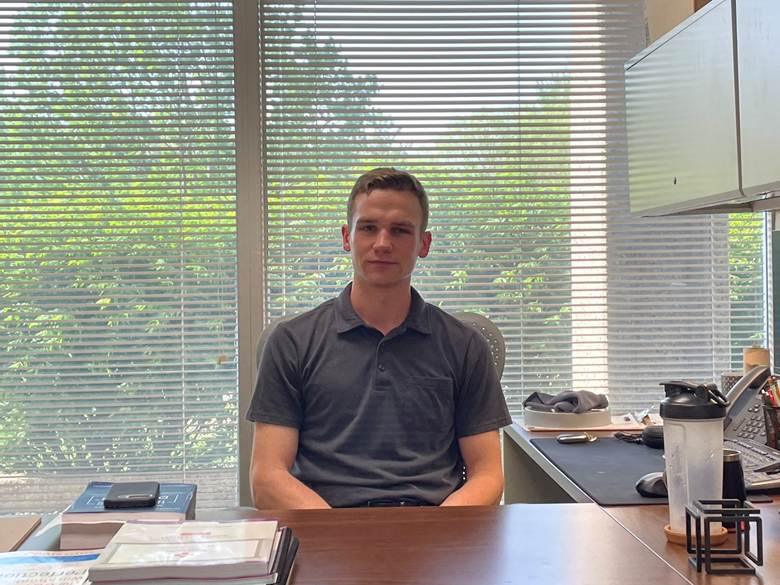
When asked for an interview, counselor Micheal McGovern was very accommodating. He sat down to a Q&A session with The Pulse.
Q: What are the most common mental health concerns you see among students right now, and have those changed in recent years?
A: I wouldn’t say that there’s one singular concern. I think we see clusters or patterns of concerns. Common ones would include things like anxiety, depression, or life transition stress. There are a lot of changes that happen in the students’ lives during their time in college and we see a lot of those problems.
In terms of changes over recent years, to an extent there has always been an issue, but we see a lot of stress in terms of greater world events: political decisions, policy decisions, wars, and things like that. I do see student concerns either revolving around or impacted by the troubles of the world today, especially when it comes to anxiety and depression.
Q: How do academic pressures like workload, deadlines, and expectations typically affect students’ mental health?
A: I think those pressures add to the overall load. If you’re already balancing tasks such as groceries and bills, adding all these tasks on top of it just adds to student’s stress. I’ve seen patterns around that; maybe at the beginning of the semester, that workload isn’t as high, but as, say, midterms come up, the load gets heavier for students. Overall, I think it just adds to those stressors and shows cracks in mental health treatment.
Q: In your experience, are campus mental health resources sufficient to meet student demand? Where do you see gaps?
Sufficient to the extent of what would be appropriate for us. We’re open about the fact that we can’t treat everyone. We have some students who have needs beyond what our center can provide. We are a Regional university campus counseling center; we focus on general issues and are not a specialist center that can offer specialized treatment. We’re not a crisis center; we just help students as best we can.
However, we do partner with a lot of community organizations. We stay very aware of the resources and specialty hospitals for various concerns, and we do sometimes refer students to treatment centers who are more equipped to handle their concerns.
Q: What warning signs should professors, staff, or even other students look for if someone may be in distress?
A: Changes in behavior is often a big one. If we’re noticing students’ emotions suddenly becoming more volatile or changing more rapidly—say, a typically quiet student suddenly becomes more outspoken, or if the usually outspoken student goes silent. Changes in behavior often indicate a change in [his or her] life. That doesn’t necessarily mean it’s a mental health crisis, but I think those are observable things that people can look for.
Q: What coping strategies or habits tend to be most effective for students trying to manage stress and anxiety?
A: Again, I don’t think there is one singular. It comes down to a wholistic approach to management strategies. Everything from managing basic self-care needs; drinking water, eating right, prioritizing sleep, doing tasks that “refill” you. I think it’s very easy these days to do things that disconnect us, like if we scroll on TikTok for hours or get lost in a task. I’m not saying those things are necessarily bad, but finding connecting activities such as walking and talking with friends or doing a passion project are most beneficial to students.
Q: What is one thing you wish more students understood about mental health or seeking help?
A: That it’s a process and a commitment. It takes time, it takes effort, and that the work you do outside matters in terms of the therapeutic approach. I meet with students for an hour each week. The hours that they spend outside of therapy, I would say, are more important than the hour we spend together in therapy, because that’s where all the work gets applied, that’s living their lives. It is difficult, but change is possible, help is available, and people are willing to help you push through barriers that may be present.
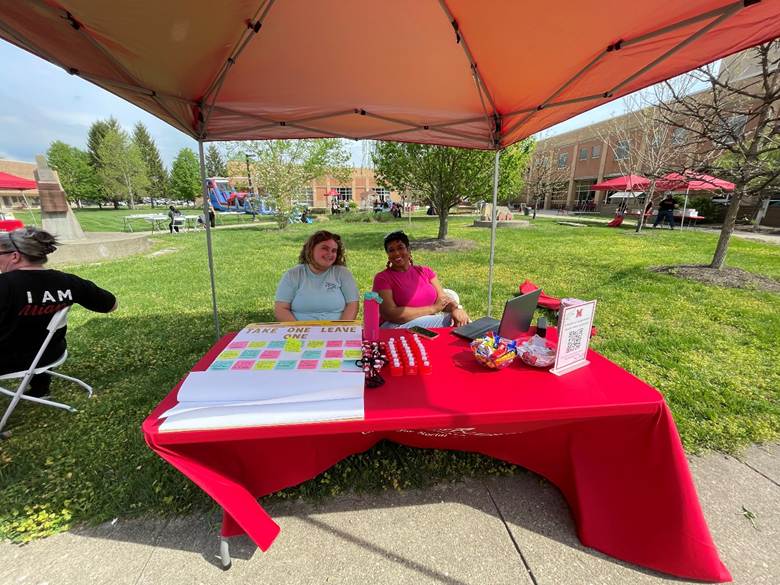
Beyond counseling, the university also works to normalize conversations around mental health through educational initiatives and programming. The occasional on-campus workshop such as Mental Health First Aid (MHFA) training help students better understand how to recognize and respond to mental health concerns, both in themselves and others. These programs are free to students and are often held outside of class hours.
Mental health is also increasingly being incorporated into academic spaces. Dr. Dee Kinney is a physical activity and wellness professor at Miami Hamilton and her course, KNH 118, leans heavily on the importance of mental health. One of the reoccurring themes of her class is how all dimensions of health—mental, physical and beyond—are all connected. The final of her class involves using course material to plan on improvements to a student’s own health after the class has ended.
I managed to book an interview with Professor Kinney on the subject.
Q: You teach about the “eight dimensions of wellness” in your class. Can you give a brief explanation about the dimensions?
A: Health is more than just the absence of illness; it’s multi-dimensional. The eight dimensions of wellness represent the different areas that influence our overall well- being, including physical, emotional, social, intellectual, spiritual, environmental, occupational, and financial health. While they’re often discussed separately, I like to think of them as connected cogs in a system. When one cog moves, it affects the others. That’s why it’s important to be mindful of all dimensions, because true wellness depends on balance across the whole system.
Q: From your experience in the classroom, what are the most common mental health challenges your students are facing?
A: The most common mental health challenges students face are stress, anxiety, and feeling overwhelmed. Over the years, especially since COVID, I’ve seen a noticeable decline in student engagement, both with one another and in the learning environment. What I see most is not just isolated mental health issues, but a ripple effect across multiple areas of life. When one area is out of balance, it impacts everything else. As a result, many students are not just stressed—they’re stretched thin.
Q: In your opinion, how does the Miami Hamilton campus do at assisting students who may need help with their health.
A: Miami Hamilton offers a wide range of support for student health and well-being. There are many valuable resources available, including free and confidential counseling, academic support through the Learning Center, student engagement opportunities through ROSA, and welcoming spaces like the library. Faculty and staff also genuinely care about students and often serve as important sources of support.
That said, one of the biggest challenges is awareness and utilization. Many students are not fully aware of the resources available, or they hesitate to use them. In some cases, students wait until they are in crisis before seeking help, rather than accessing support earlier. Overall, the support is there, but continuing to increase awareness and encourage early use of these resources is key to helping students fully benefit from them.
Q: What are some common misconceptions students have about mental health or “being healthy” overall?
A: One common misconception is that students need to “go it alone” as they figure things out and establish their independence. While independence is important, support is a key part of healthy development.
Another misconception is that counseling is only for those in crisis or who need significant help. In reality, counseling can be beneficial before things reach that point. It can provide a supportive space to talk, help students build coping skills, and connect them to helpful resources.
Q: How do factors like sleep, nutrition, and physical activity influence students’ mental health more than they might realize?
A: Sleep, nutrition, and physical activity are foundational to mental health, far more than many students realize. I often say that sleep is the bedrock of all wellness. When students are sleep-deprived, it impacts mood, focus, stress levels, and even decision-making.
Nutrition plays a key role as well. What we eat affects how our brain functions, including energy levels, concentration, and emotional regulation. And physical activity is one of the most effective, yet underutilized, tools for improving mental health; it can reduce stress, improve mood, and increase overall resilience.
The challenge is that when students are busy and overwhelmed, these are often the first things to go. But in reality, these habits aren’t extras—they’re essential. When students take care of their bodies, they’re also taking care of their minds.
Q: If a student is overwhelmed and doesn’t know where to start, what is one small, practical step you would recommend they take right away?
A: If a student is feeling overwhelmed, the most important first step is to reach out to someone. If it feels more serious or like it could be a crisis, I recommend contacting the Regional campus counseling center at 513-727-3431 or calling the H.O.P.E. Line at 855-249-5649 for immediate support.
For more day-to-day stress, start small. Step away from what you’re doing and do something that helps you reset. That might be stopping by the Regional Office of Student Activities (ROSA) on the Hamilton (Schwarm 120/122) or Middletown (Johnston 129) campuses to connect with others, taking a short walk while listening to your favorite music, or visiting the Hamilton campus gymnasium or the Bennett Rec Center on the Middletown campus.
The key is not to stay stuck. Even a small step can make a meaningful difference. You can’t always think your way out of feeling overwhelmed; you have to take action and connect with people and resources. You are not alone.
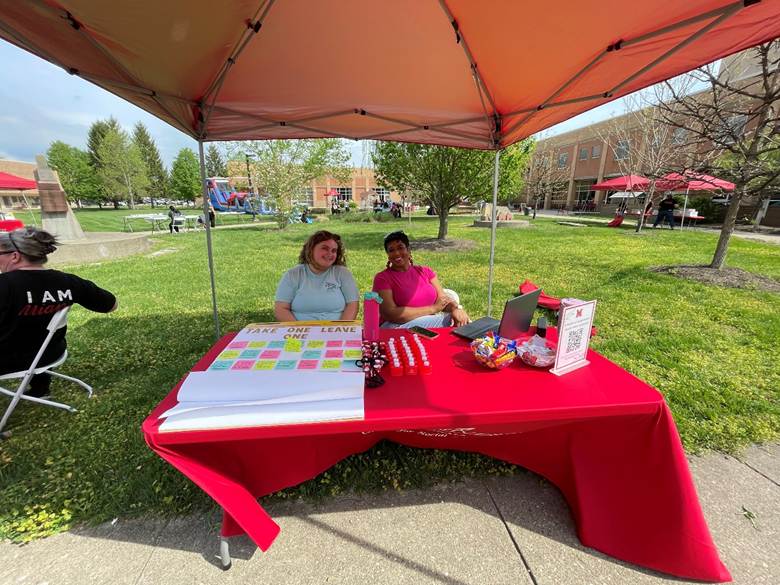
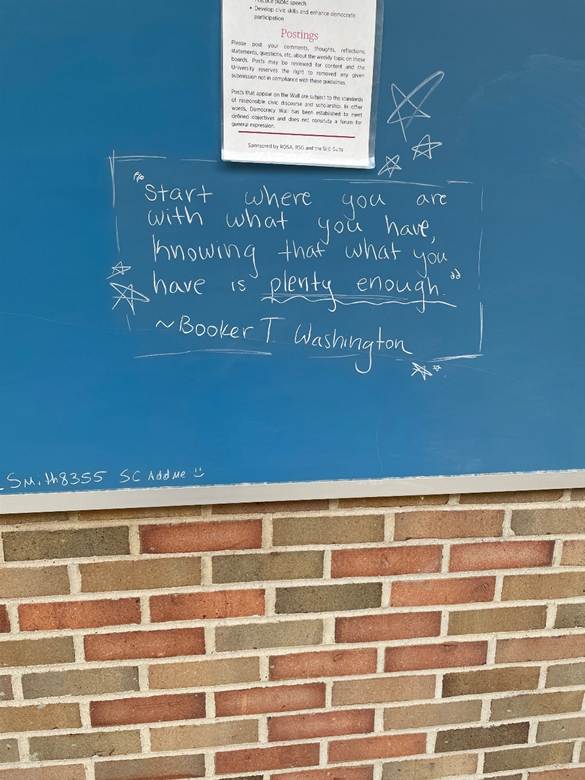
The Hamilton campus has many smaller outlets to escape from the stress of academics. For instance, a double blackboard stands outside Rentschler Hall, bordering the quad, called the Democracy Wall. Students are encouraged to write or draw playfully and many leave affirming messages for their fellow students.
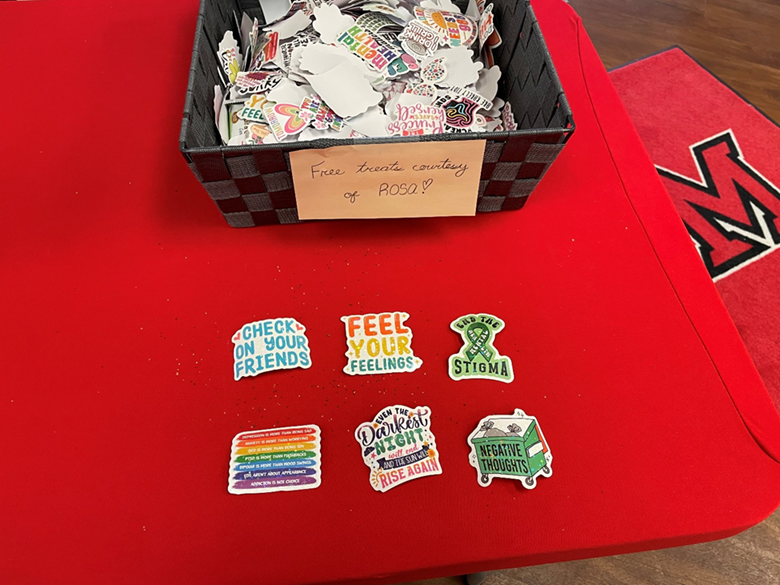
The gymnasium includes a quiet room where students are always welcome, full of comfortable chairs, kind messages, and occasionally free comfort food such as donuts. Places like this are sprinkled throughout the campus, many offering comforts such as hot tea and snacks.
In addition, campus organizations such as Rosa, Playlist, and the Illuminati provide low-pressure environments and events where students can form connections and build supportive networks, which play an important role in maintaining emotional well-being. Toward the end of a typical semester, many organizations will search for activities open to all students, to ease their nerves with the approach of finals and final grades.
Despite these efforts, challenges remain. High demand for counseling services can sometimes result in delays, and many students are still unaware of the support available to them. Others may continue to avoid seeking help because of lingering stigma. These gaps highlight the ongoing need for universities not only to expand resources, but also to strengthen outreach and continue fostering a culture where mental health is openly acknowledged and supported.
As Miami, as well as other colleges, continues to evolve, mental health support is becoming an essential part of the student experience, rather than an optional service. While Miami Regionals and similar institutions have made meaningful progress, the ongoing challenge lies in ensuring that support is both accessible and actively utilized by the students who need it most.
Leave a Reply