
By Tricia Cherry —
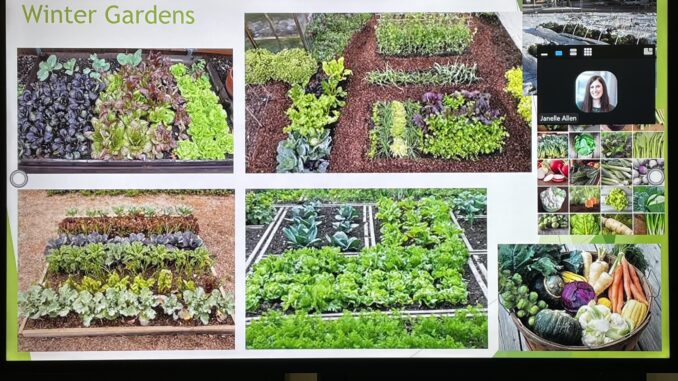
The recent “What Grows in a Winter Garden” lecture was held via Zoom and led by Professor Janelle Allan, a biology instructor at Miami University. The event took place at the Downtown Hamilton Center.
Professor Allan began by noting that southwestern Ohio offers excellent soil for farms and gardens. However, when planning for the colder months, the first frost date is an essential consideration.
Preparation for winter planting, typically done in November and early December, includes general garden maintenance. Gardeners should clear beds of fallen leaves, remove old crop residue such as roots and stems, and till the soil in preparation for spring. Frosted leaves can be crushed and used as natural mulch. Sensitive plants that cannot survive freezing temperatures should be moved and cared for indoors. Late-season planting is still possible at this time, especially for hardy winter crops and spring bulbs.
Among the vegetables that thrive in winter are beets, carrots, broccoli, turnips, cabbage, kale, parsley, radishes, and sage.
For lawns, November is the time to give grass a final mow before the first hard freeze, and to water deeply so roots can establish before winter. Applying compost or dormant fertilizer before the freeze helps ensure a greener, healthier lawn in spring. Perennials, including young trees and shrubs, benefit from a thick layer of mulch for root protection, and November is also a good time to plant new trees.
Professor Allan also addressed common issues such as deer, which are moving closer to suburban areas as their habitats shrink; in these cases, repellents may be useful where deer are present. Outdoor fountains should be drained, cleaned, and turned off to prevent ice damage.
A short Q&A concluded the event. When asked about the care of indoor herbs like parsley, thyme, and basil, Allan emphasized repotting them into larger containers soon after purchase, as store containers are far too small for long-term growth, and are only included for the store’s convenience. She concluded with four recommended YouTube resources, including Growfully with Jenna, The Garden Family, and episodes from Growing a Greener World and The Soil Food Web Movement.