
By Maureen Wilson —
As the main building of Miami University’s Middletown location, Johnston Hall is often at the heart of the campus. It was the first building to be constructed, and continues to be a hub of activity. From the Tutoring and Learning Center to Hawk Haven, students roam the hallways, but is there much attention given to what lines our campus walls? Let’s take a deeper look at the background and history of the art you might pass every day on Miami University Middletown.
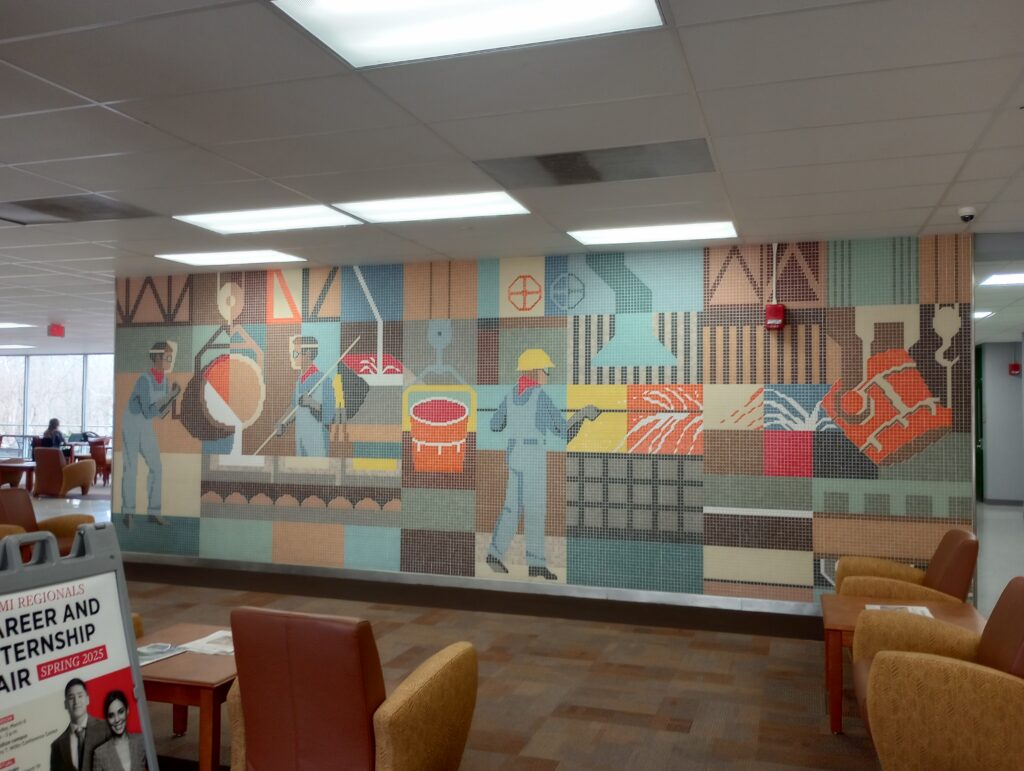
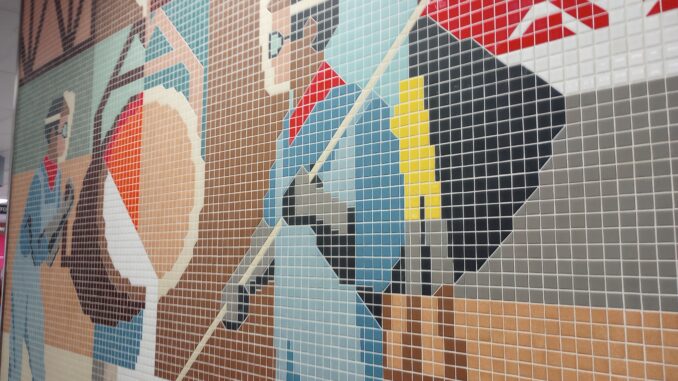
The origins of this mosaic can be traced back to the campus’ inception, existing as long as Johnston Hall has been around. But, it wasn’t without controversy. In 1969, a student wrote to the university paper, protesting the mosaic’s purpose and apparent placement in the lobby: “Why then, does our lobby have a beautiful mosaic, not of books, not of scholars, not even of Dr. Shriver, but of a scenic view of men pouring steel!” Earl V. Thesken, then the Dean of Educational Services, did not hesitate to respond with an open letter addressing that issue, citing Armco’s (better known as AK Steel) involvement as representative of the hard work and sacrifice necessary to guarantee the next generation a good education. The workers in the mosaic were based on real people who contributed to the building’s construction; in fact, some who viewed the art installation later claimed to recognize specific persons in the scene. Still, it remains a testament to the Middletown campus’s longevity as its tiles remained untouched after years of renovations.
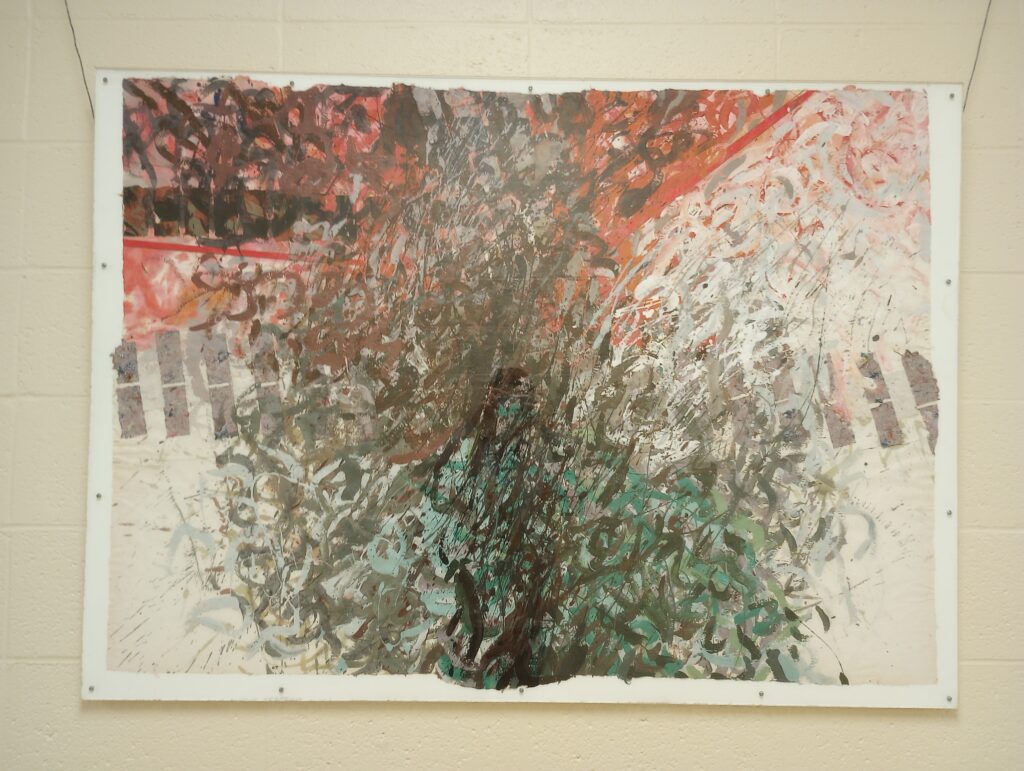
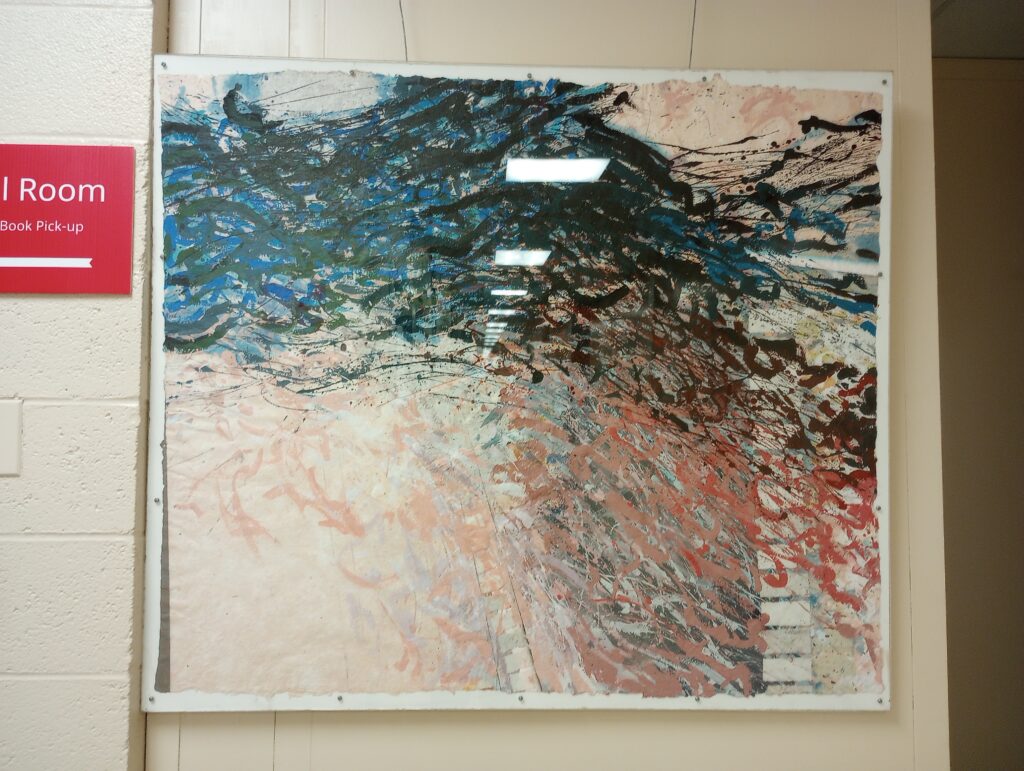
Near the art classes and the mailroom, there are two distinctive paintings completed in a similar style. These two pieces are by Gary Wheeler, a former art professor, Associate Executive Director, and faculty advisor of the art club in Middletown. He also served as the Head of Selection Committee for Light Rapids, the sculpture located between Johnston, Levey, and the library, in 2001. Wheeler retired in 2005.
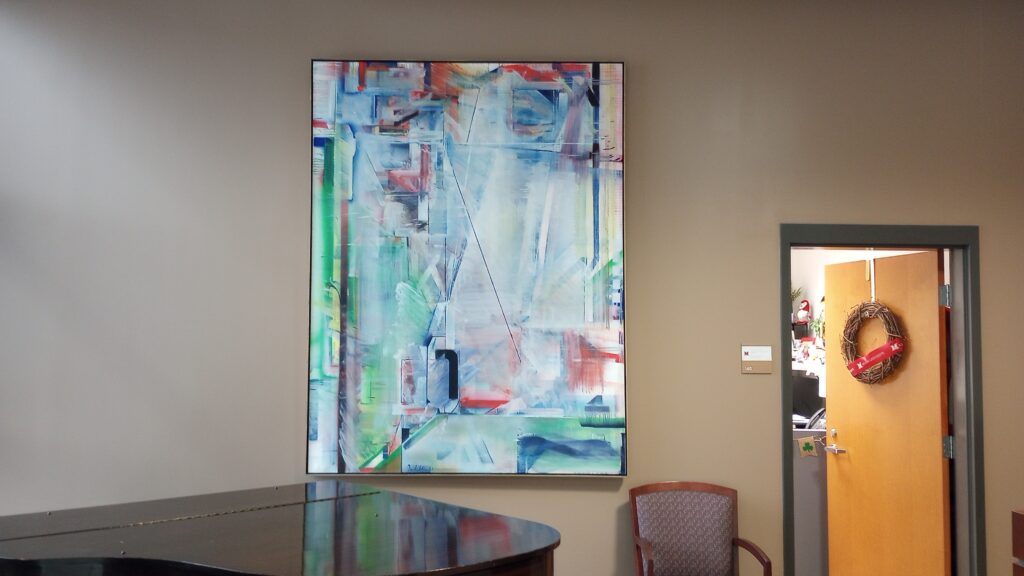
Alex McKibbin, another former art professor at Miami, is responsible for this massive artwork that hangs alongside the piano in the Galleria. From local to international levels, his work has been reproduced in twenty-five book publications and featured in over two hundred exhibitions. McKibbin is a self-identified abstract impressionist, with particular mastery and passion for the watercolor and oil mediums (the latter shown here), ever since starting his art career in 1957.
The Galleria wasn’t always a part of Johnston Hall, only taking on its current form after a 2006 renovation. Nonetheless, the space continues to live up to its name, often featuring exhibitions in collaboration with the Middletown Arts Center. Currently, the Galleria houses two exhibits.
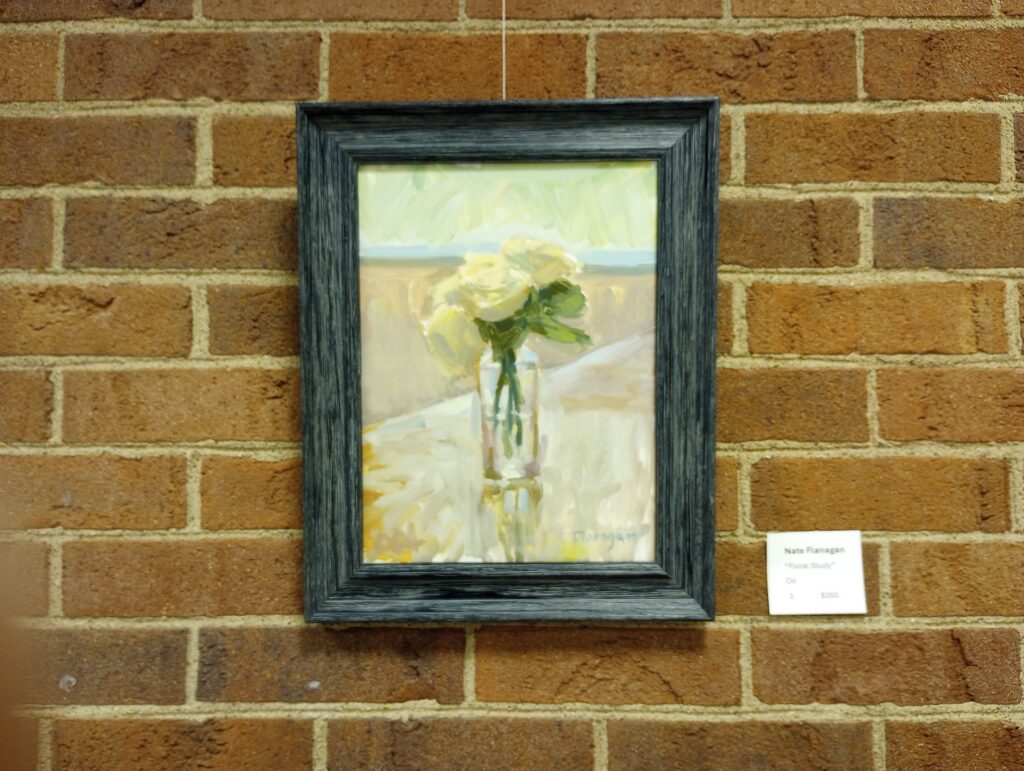
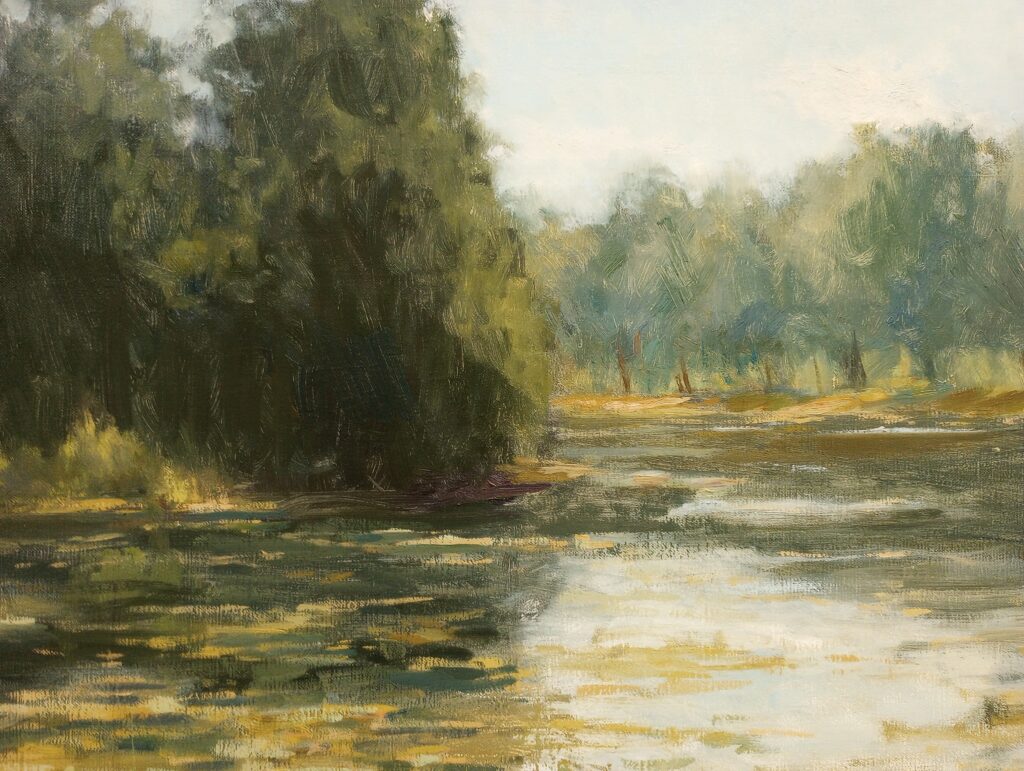
One is Nate Flanagan’s show “Observations: A Delicate Impression,” a collection of oil paintings depicting nature reinterpreted in a precisely beautiful way. Many of the pieces are based on the landscapes found in Ohio, and are distinguished by familiarity within faceless figures. In his own words, as written on his artist statement, “I’ve always been intrigued by nature the way it can look or feel different just by the light, the colors, the air. It’s something I’m drawn to and always have been.” Though raised in Liberty Township, he’s currently based in Cincinnati, Ohio.
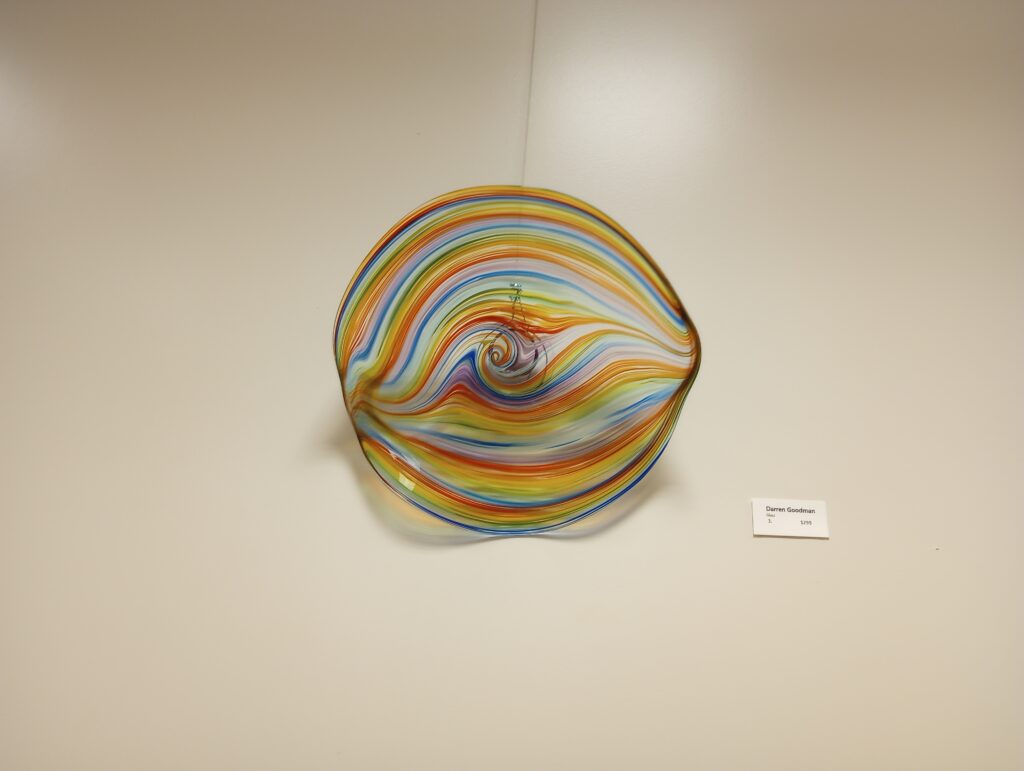
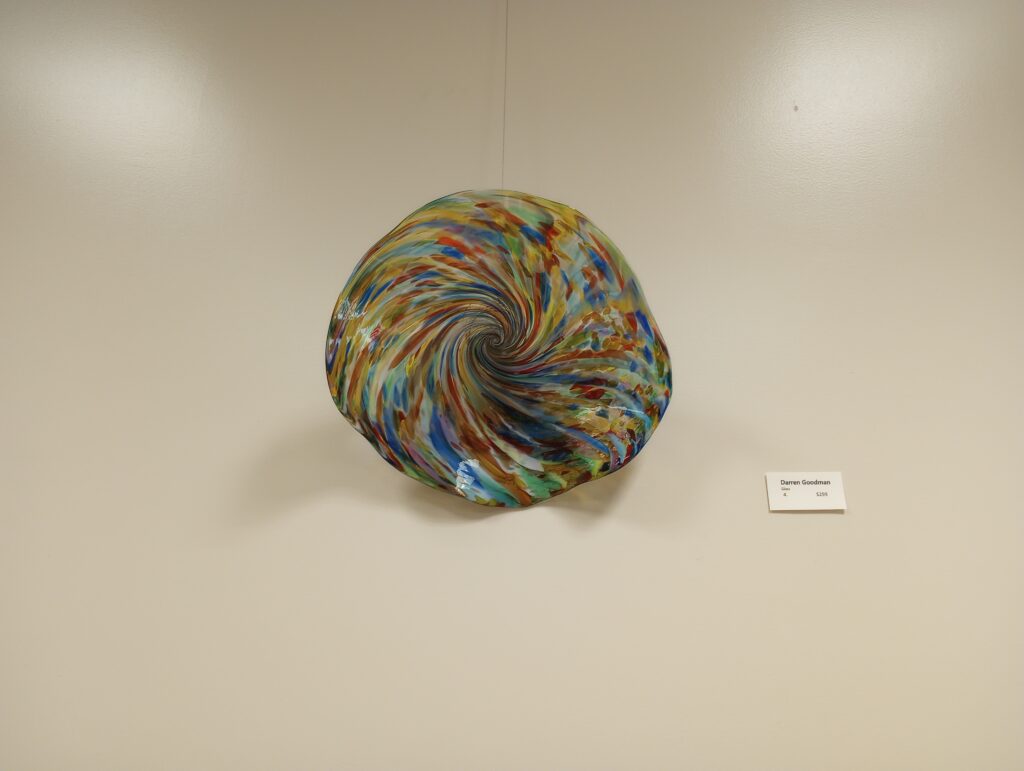
The second exhibit is “Glass: Through the Lenses of an Artist”–works by Darren Goodman. He has decades of experience with glasswork, studying with its respective masters like Davide Salvadore, Lino Tagliapietre, and Dante Marioni. In the past, Goodman has taught classes at the elementary and high school levels, and he remains committed to bringing awareness to the artform and its history. His upcoming show is being presented at the Middletown Arts Center from March 7th to May 15th.
So, the next time you find yourself on Miami Middletown’s campus with some extra time before or after class, make sure to stop by these pieces. It’s easy to write off what we become accustomed to, but it’s worthwhile to stop and appreciate the beauty and art that’s already right in front of us.
(Special thanks to John Burke and the Gardner-Harvey Library for assistance with this research.)