
By Maureen Wilson—
One undeniable feature of Miami’s Middletown campus is the various sculptures that dot the landscape. Most were constructed between 1972 and 1976 when the university was still relatively young, and they have remained undisturbed since then, shrouded by a thin veil of mystery. While students and alumni alike can recognize them, not many can tell you their names or why they’re there in the first place. Let’s examine the stories behind MUM’s biggest monuments.
Sky Link started construction in the fall of 1972 but experienced multiple delays before being unveiled in late November of 1973. It started with a $10,000 anonymous donation given to beautify the campus in the late 60s, before an art selection committee of students was formed. David Black, a professor from Ohio State and renowned sculptor, ended up leading the project. The piece was received positively at its inception with moderate speculation of its meaning. Black himself would eventually say of the piece: “Each person must determine for himself what this sculpture represents.” However, this statement wouldn’t age well with later generations, specifically in the 80s. Gary Wheeler, an assistant professor of art, argued it was a homage to technology, but viewed it as “removed and impersonal” to the student body. A headline in the KAOS student newspaper, referencing the piece, read “Art Product of the 60s,” the earliest published criticism of the sculpture. By the 90s, it took on a more humorous role as one student claimed it was an eyesore worse than a proposed smoke shelter, and the center of a contest where participants would guess what it resembled.
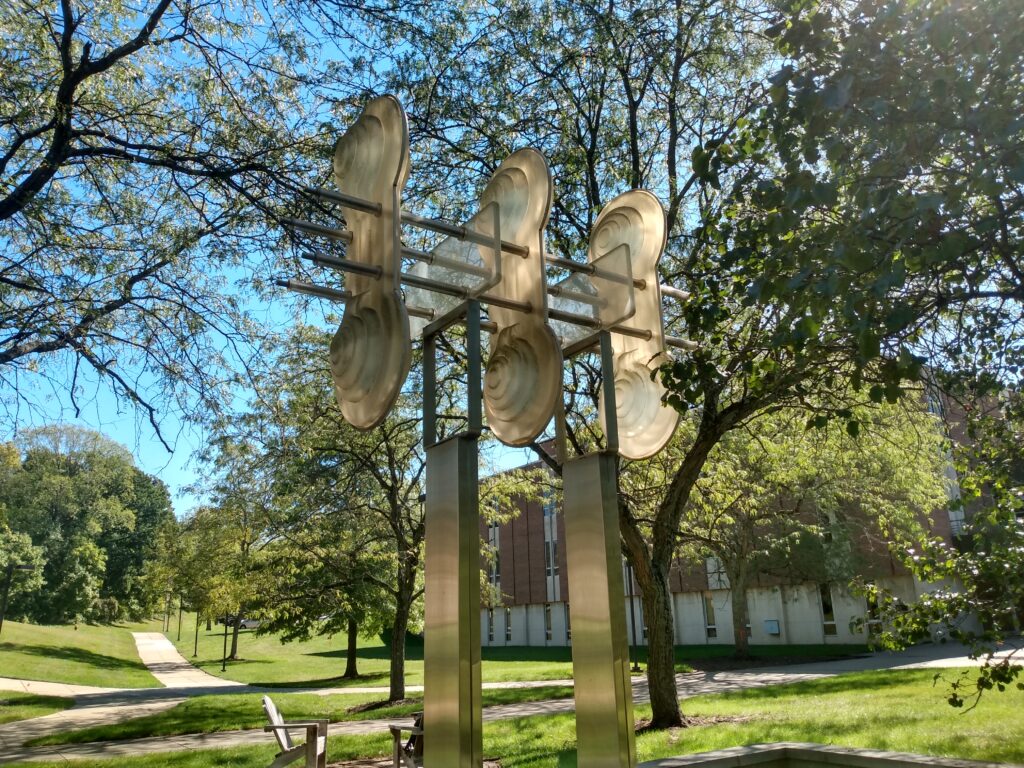
Sky Link itself is a modernistic, eighteen-foot tall abstract structure placed at the heart of the campus, between Johnston Hall and Gardner-Harvey Library. Surrounded by a graveled area and a concrete ledged border, its two nine-foot support columns hold three molded, polycarbonate bi-lobed forms stacked vertically, with two rectangular plexiglass sheets equally spaced between them. The bulb-like plastic forms were once rumored to actually function and emit light, but this is unfounded, along with the belief that the graveled area was once a reflected basin. David Black, who unfortunately passed away last year, was known as a pioneering spirit of the avant-garde art world, but even this piece remains unknown to outsiders.

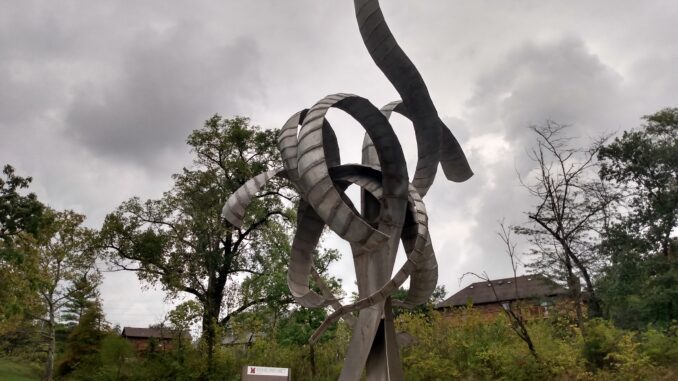
Another sculpture called Tree of Life was announced in the spring of 1974, commissioned by Gladys Finkleman, in memory of her husband, Dave Finkelman, the namesake of the campus auditorium. She wanted something that would spruce up the fountain that was already there, along with some slight additions to the waterworks and lights. In order to make this happen, she donated $8,000 while Armco (now known as AK Steel) donated 15,000 pounds of high-grade stainless steel, itself worth $3,000. Elvin Winslow led the project, which soon became troubled with issues regarding how the steel bent. The 10-inch wide ribbons had to be divided into smaller sections before being melded together in order to match the curvature presented in the original blueprint. This ultimately left the leaves disproportionately larger than the tree.
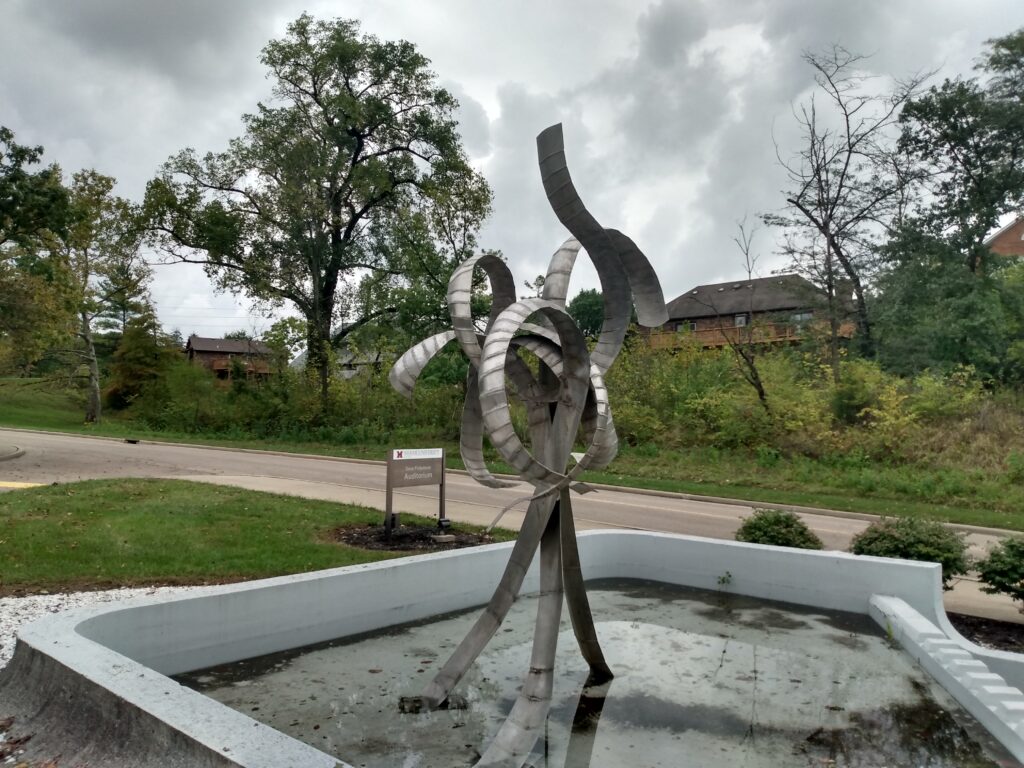
The reception was mixed when this sculpture was finished by May of 1975. Many felt disappointed or confused by the piece. Unfortunately, Mrs. Finkleman didn’t live to see the final product as she died in February of that year. The sculpture wasn’t exempt from further scrutiny when a Miami alumnus complained about it in 1980, commenting that it was a “disorganized and unhuman symbol,” before proposing that another statue of a young, poor boy reading be erected instead, to represent the academic roots of the campus. The sculpture was later nicknamed Nightcrawler Orgy by students in 1993.
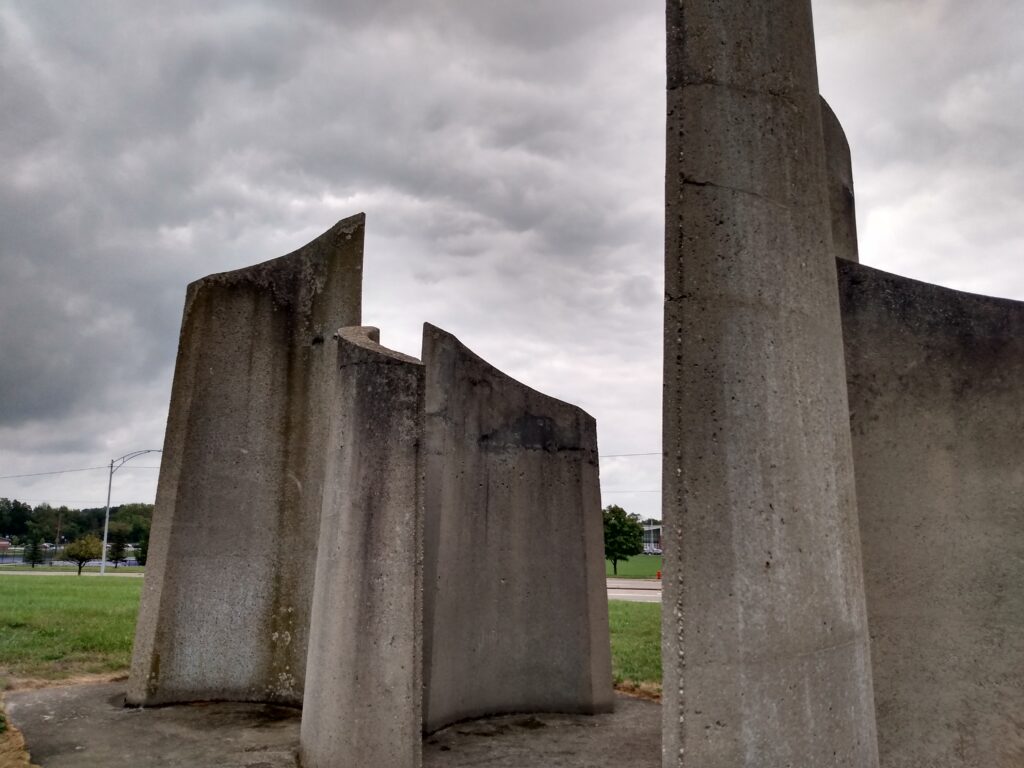
Guardians of the Path is a sculpture that originated from a grant from the Ohio Arts Council (OAC), a personal bequest by Louis McCalla who was a major supporter of the arts. The grant focused on beautifying Breiel Boulevard as a “constant visual reminder to area citizens of the contribution of education and culture to the community.” Robert Gaston, former fine arts instructor at Miami, worked on it, along with Larry Merriman, a 1976 Miami graduate in art. Plans were set in November of 1975 and the build was swiftly completed in September of the following year.
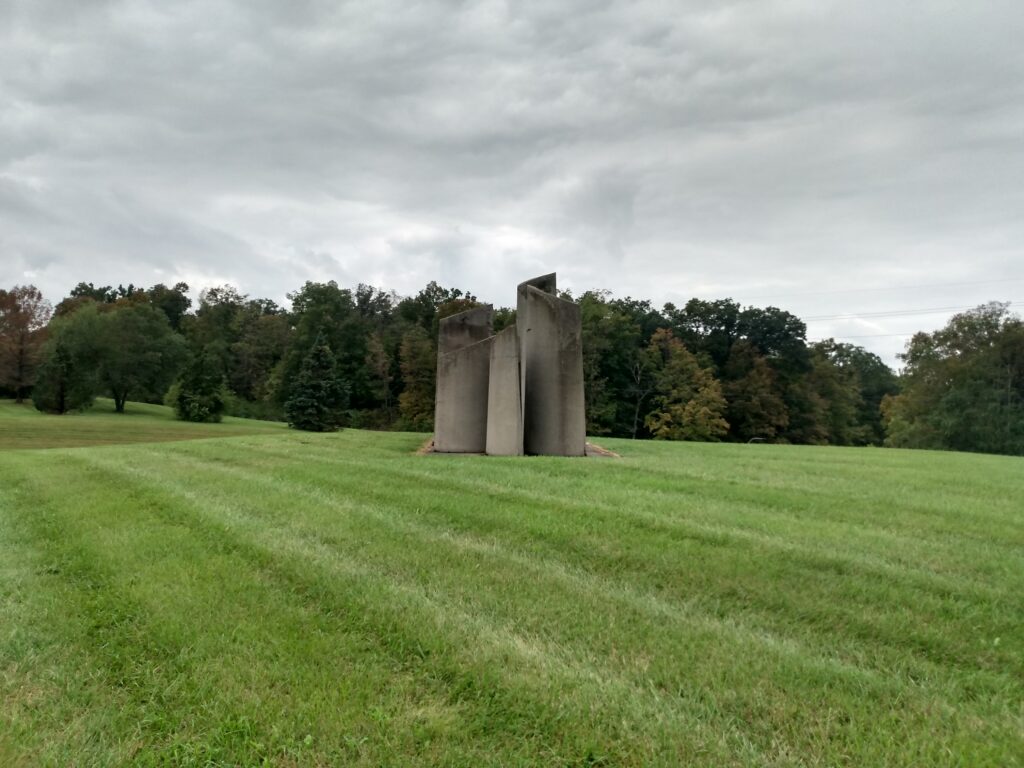
Located at the east entrance of the campus, the sculpture is made out of two tons of steel and 102 tons of poured concrete over fiberglass molds. Since the sculpture sits at the highest point of the Miami Valley, it overlooks the Ohio and Erie Canal. Students often affectionately refer to it as MUM-henge, a reference to the similarly arranged Stonehenge in Salisbury Plain, UK.
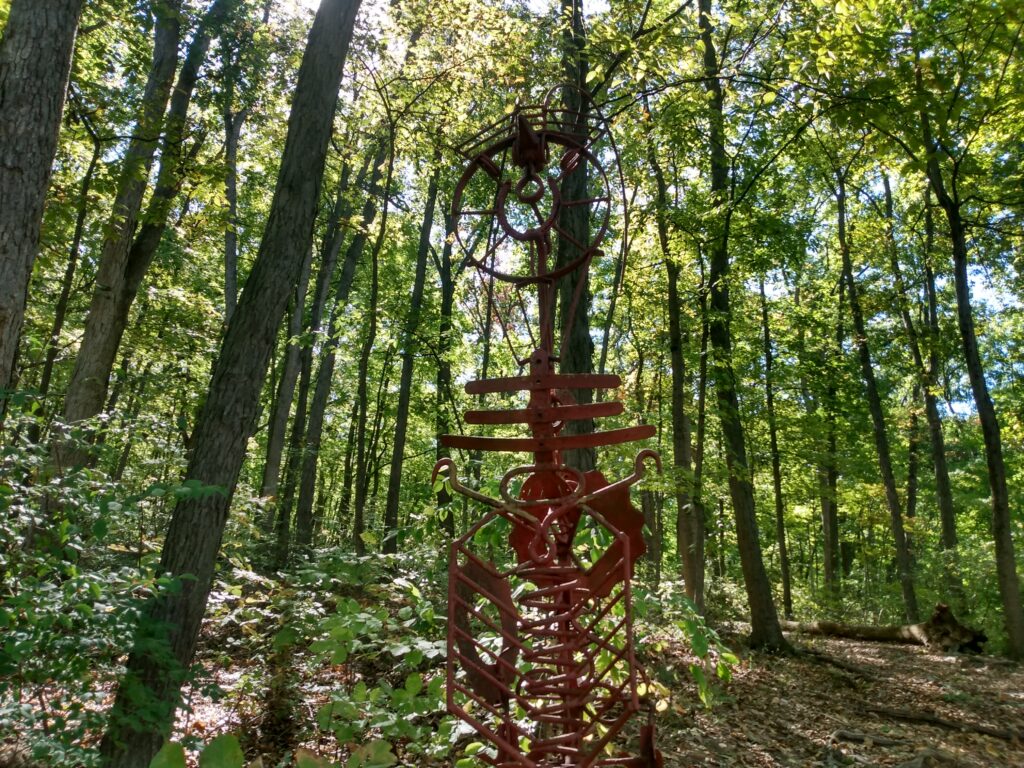
The final major sculpture on the Middletown campus is Bird, more commonly known as MUM Chicken or Big Red Bird. It was created in 1980 by Aka Pereyma and other students who were taking Mike Hieber’s Visual Fundamentals 171 3D Design class. Primarily composed out of agricultural tools and metal, Pereyma wanted to compliment the entrance of the trail and not detract from the natural beauty surrounding it. The piece also relies heavily on her Ukrainian heritage, with traditional folk imagery. She moved to the United States—Troy specifically—in 1950 and worked on another similar project in 2000: two bird benches located near the lower level of Thesken Hall, made with 100% recycled plastic and old, metal farm machinery.
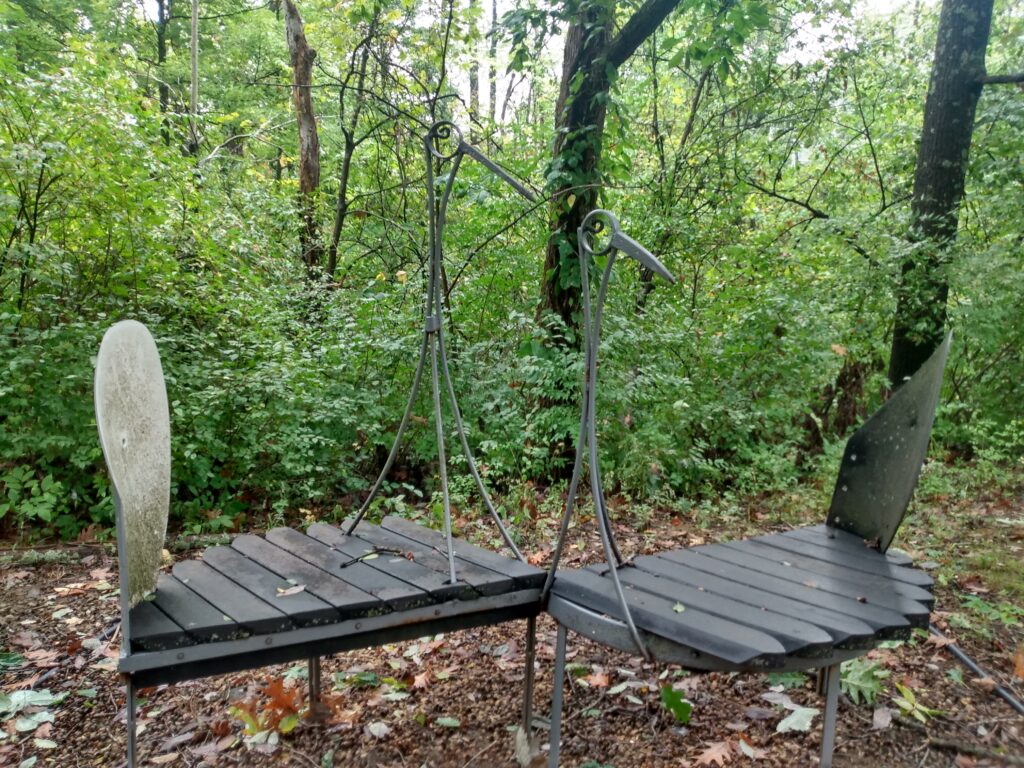
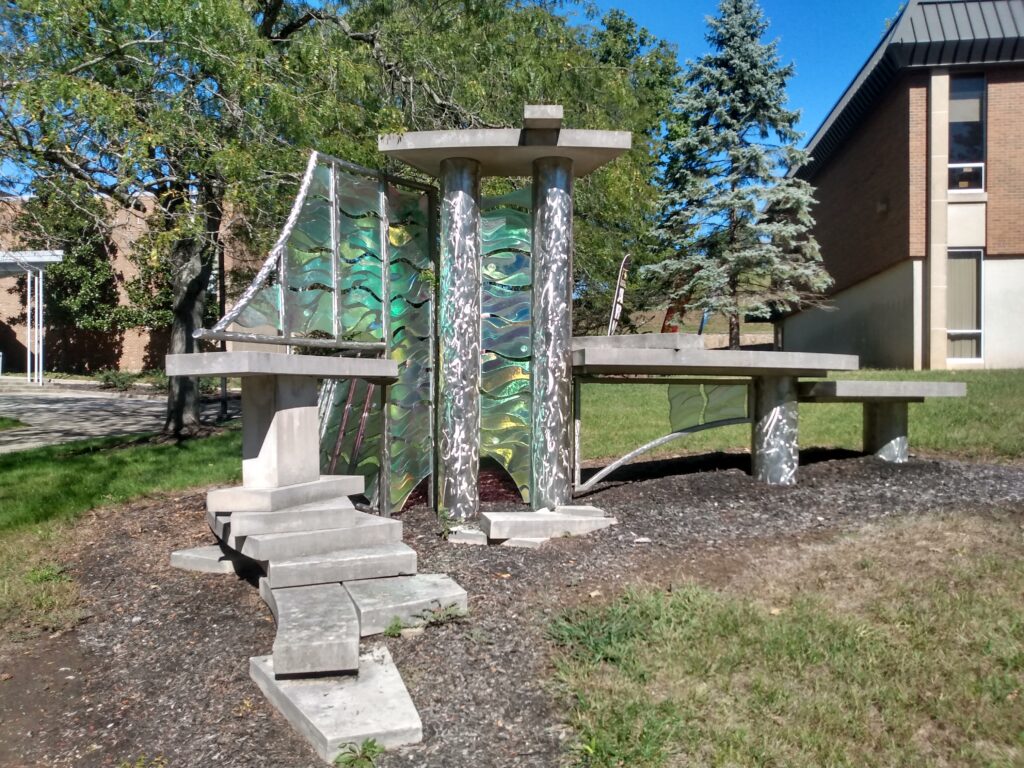
These aren’t the only installments visible on the campus. Light Rapids by Beverly Stucker Precious was finished in 2001. She does commissions across the country, typically working with stainless steel, oxidized steel, and fused dichroic glass. The sculpture can be found between Levey Hall and Gardner-Harvey Library.
Evidently, these sculptures hold plenty of significance on MUM’s campus and has offered a reflection of its student body throughout the years. They might not generate the buzz they used to but they’re not going away anytime soon. Finally, special thanks to John Burke, the campus Library Director, for providing the resources necessary to research this topic.