
By Avia Stoller—
Recently, The Outdoor Club from the Miami Regionals campuses held their inaugural event: a
hiking and cookout trip in Hueston Woods State Park. After the hike was complete, members of
the club, along with their friends and families, were invited to eat at a cookout hosted by the
club. The cookout included hamburgers, hotdogs, dessert, and salad. The club’s next planned
trip has already been announced; it’s sponsoring a horseback trail riding trip on December 14th
at Nation Road Horse Rental in Oxford, Ohio. After horseback riding, those who attend are
invited to eat smores and sip on hot chocolate, so if that sounds like something you readers
would be interested in, please contact the club at [email protected].
As a staff writer for The Pulse—and also an Outdoor Club member—I wanted to review my
recent Hueston Woods experience and the highlights of this trip.
The morning began with my close friend and I making the twenty-minute drive to Hueston
Woods. The long, hilly roads surrounded by autumn leaves from trees offered breathtaking
sights. When I arrived at the Nature Center in Hueston Woods, my friend and I walked outside
to meet the president of the club, Lexi Von Bargen. Lexi greeted us and told us the game plan,
which included waiting for the rest of the group and then heading out on the trails. In addition to
being The Outdoor Club’s president, she’s also a volunteer at the park, and she introduced us to
the various animals housed in the Nature Center. The red foxes cautiously looked at us, while
the bobcat lazily perused its enclosure.
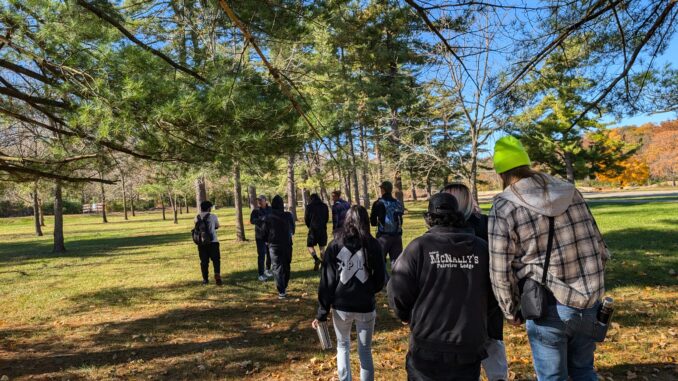
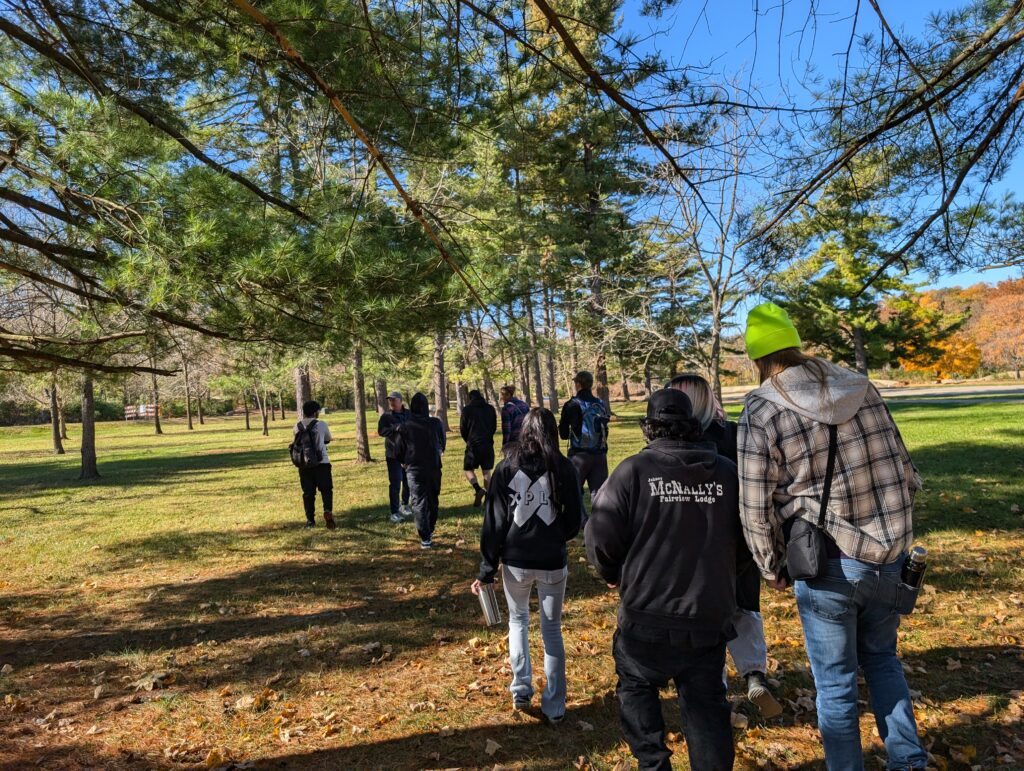
After glancing at all the different animals, the whole hiking group finally arrived. As this was the
first club meeting, I saw a many of new faces. The group circled up briefly to talk about the plan
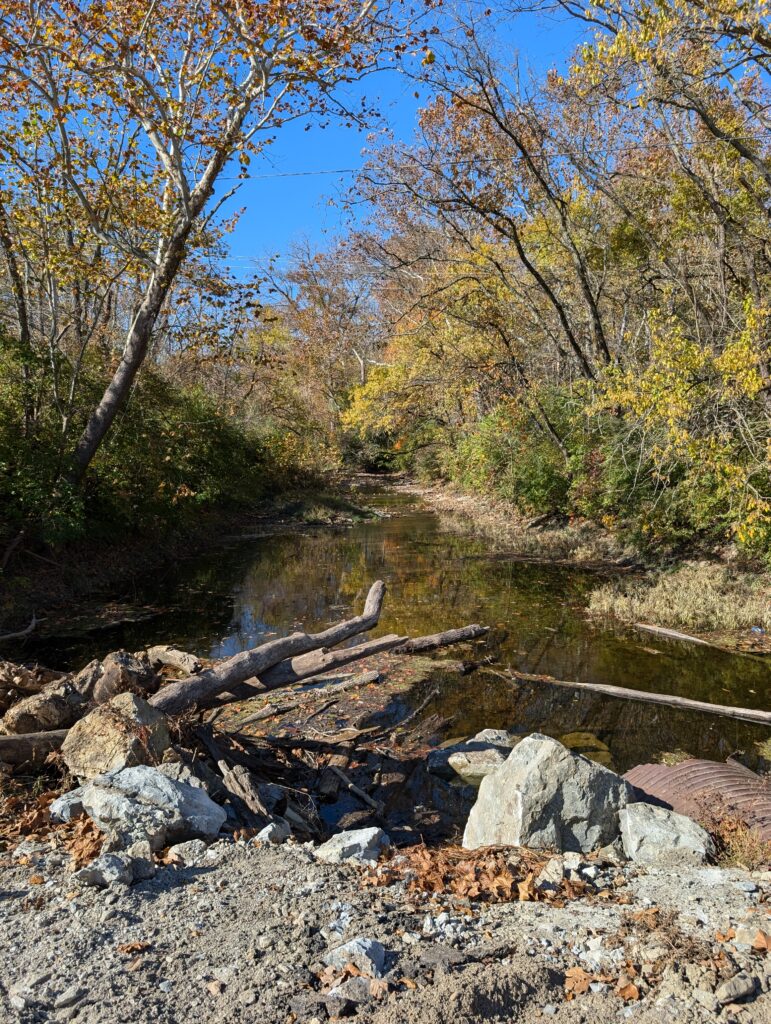
for the day, and then the hiking commenced. We quickly stumbled across a peaceful stream. I
found the scene of trickling water serene. We started off in an open spot with very few trees, but
soon journeyed to parts of the park that are heavily forested. Light perforated through the
leaves, and brisk winds created a symphony in the trees.
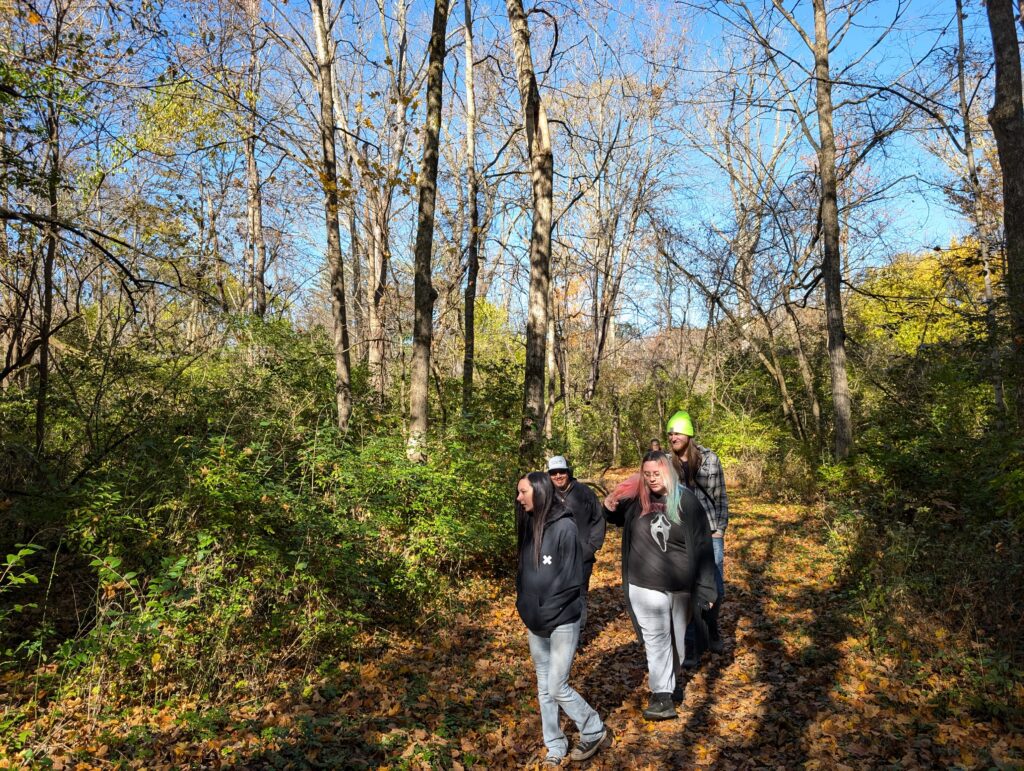
The group talked amongst themselves casually. First, the conversations separated along
individuals familiar with one another, but soon discussions expanded to other members as
people began to get acquainted. Lexi introduced the group to a strange plant called “monkey
brains,” and we all took a close look at the round, green fruit. The only interruptions to our
conversations were the crunch of the autumn leaves and the sounds of various bugs and birds.
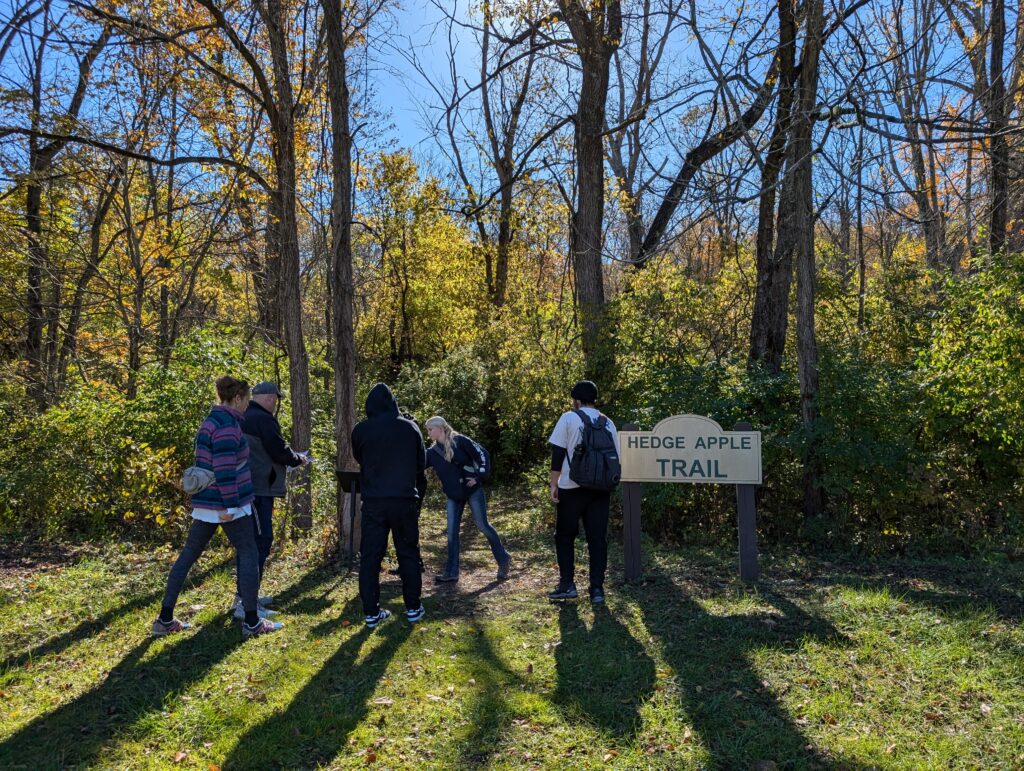
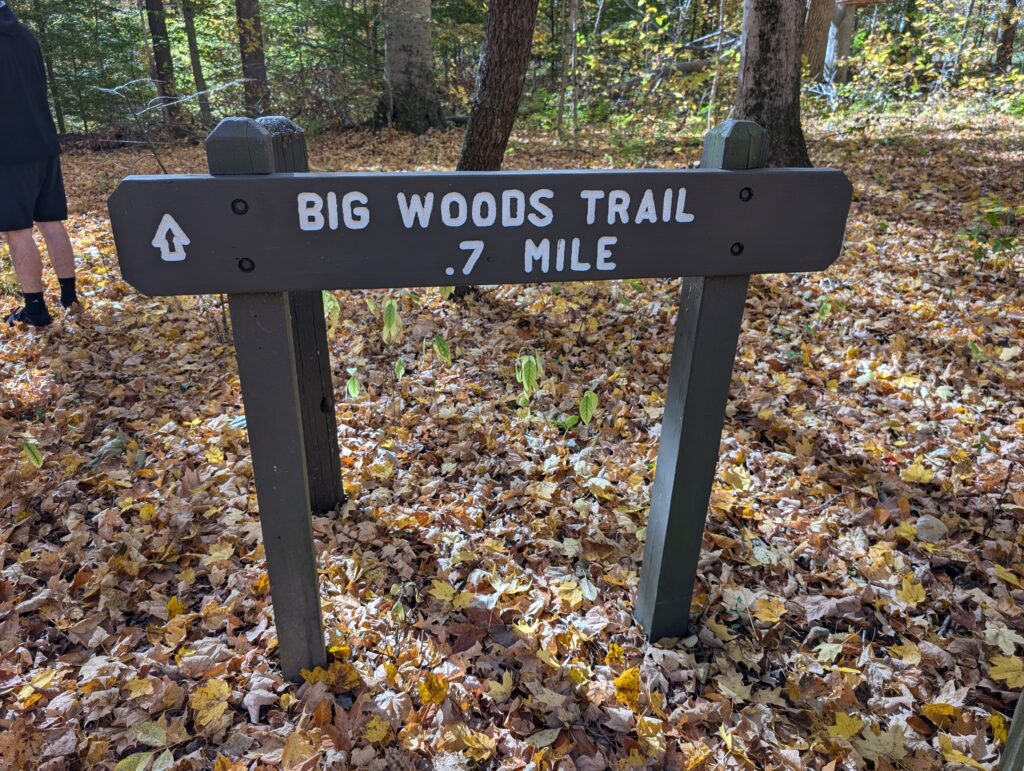
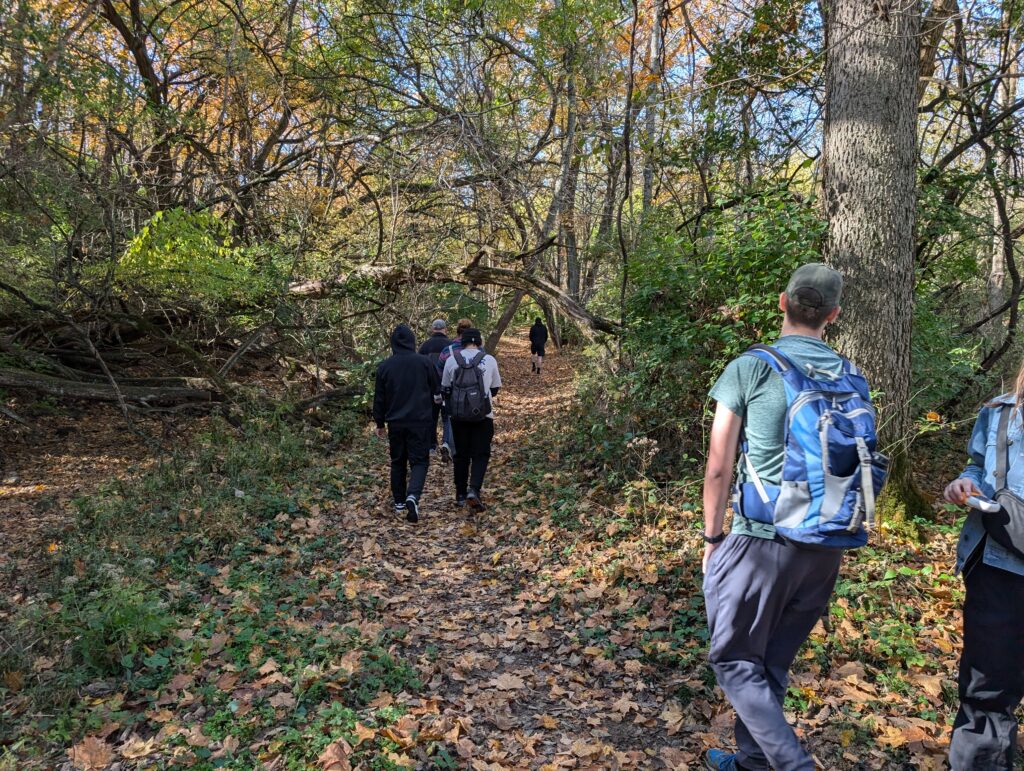
Before long, the group split off to various trails, and our smaller group reached the end of Hedge
Apple Trail. Several people from the group checked our trail map to find a new location to hike,
and we eventually stumbled across Big Woods Trail. We continued the hike, along with fun
conversations. Before I knew it, the group had completed a full circle and ended up where we
began.
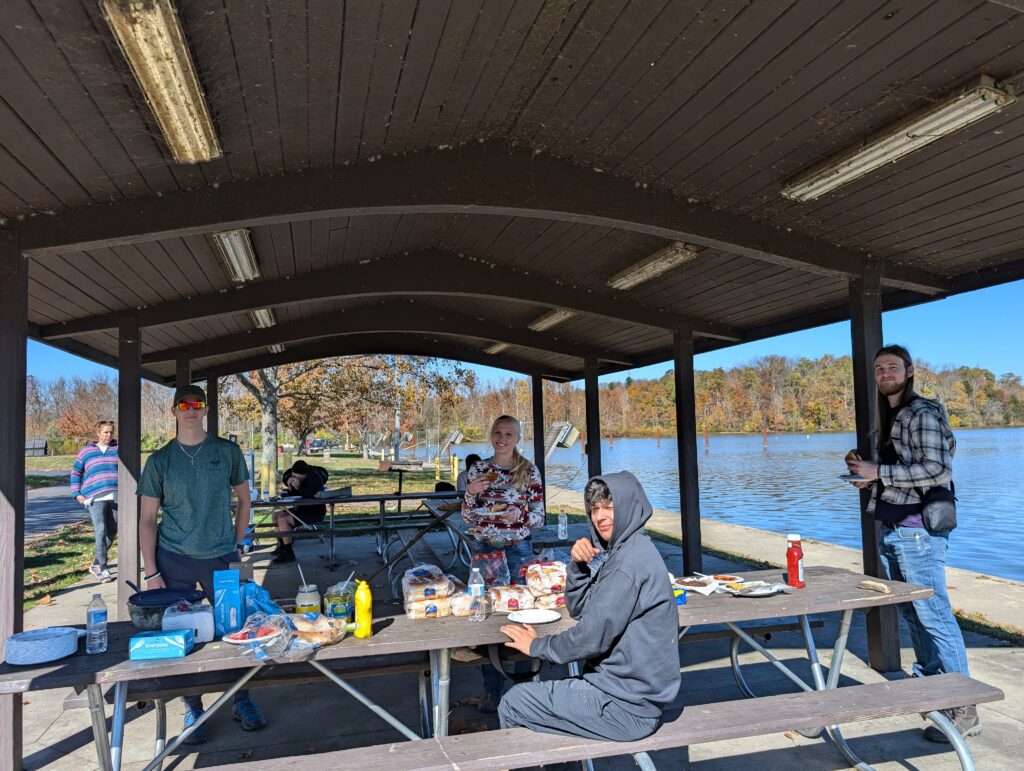
After most had returned from their hikes, the group split up to gather the materials needed for
the cookout. I walked down with my friend to reach the shaded pavilion that housed a couple of
tables. My friend and I opted to sit out in the warm sun, only briefly interrupted by some cool
breezes that were slowly picking up. I clearly remember feeling rejuvenated and refreshed.
Although the weather was a little breezy, the warm glow of the sun, along with the mild physical
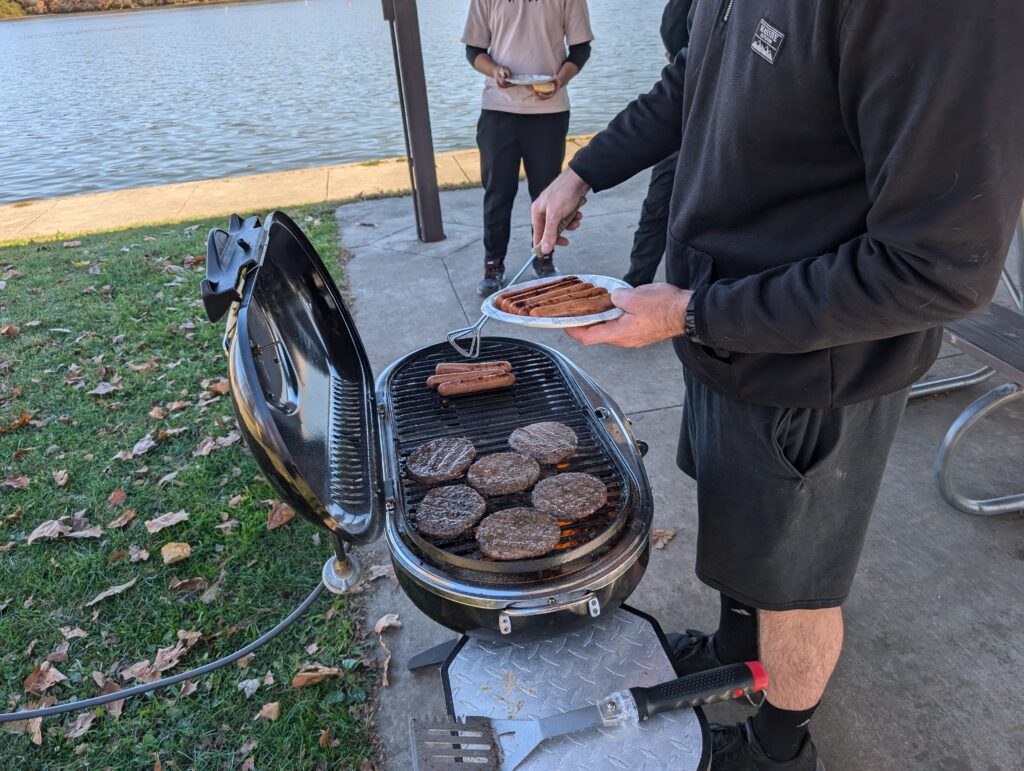
activity, kept me quite comfortable. Some of the group chipped in to prepare and cook the food,
and soon after we arrived at the shelter, the burgers and hotdogs were cooked, the table
prepared, and everything was ready to eat. More of the group that previously split off to explore
other trails trickled in, and everyone had their fill.
After my meal, my friend and I headed back to my car and headed out. We drove home on the
scenic route that had brought us to the park. I pointed out some vibrant trees to my friend, but
he was not as captivated by the scene as I was. At the end of the whole journey, I felt that the
trip was a perfect way to end my weekend activities.
What does Hueston Woods State Park have to offer? The park has a multitude of activities and
resources available for outdoor enthusiasts or those trying to find fun, new experiences. These
activities include hiking, bike trailing, golfing, disc golf, fishing at the Marina, boat and dock
rentals, swimming, bonfires, geocaching, and exploring the Nature Center. For those interested
in staying overnight, the park grounds include camping spots and the Hueston Lodge and
Conference Center, equipped with indoor and outdoor pools.
To highlight the trails, Hueston Woods State Park houses several hiking paths, many of which
connect to each other. According to OuterSpacial,the trails vary in length and difficulty; the
shortest is 0.7 miles and rated for beginners, and the longest 1.8 miles and rated as moderate.
Many of the trails include a scenic view of Lake Acton, a focus point of the park. Mountain biking
trails are another feature of the park, with the largest of the trails about 10.1 miles long. For
further details on each trial, OuterSpacial provides a map linked here:
https://www.outerspatial.com/communities/ohio/explore?selectedFeatureId=98641&selectedFea
tureType=Area#-84.784505/39.536761/-84.715380/39.609785. For more information about
Hueston Woods State Park, go to their website: https://www.huestonwoodslodge.com/.
But, why the focus on nature? This trip, like others that will be hosted by The Outdoor Club, is
designed to help people reconnect with their natural surroundings, while also establishing bonds
with fellow club members and attendees. One particular reason a person may consider joining
the club is to avoid “Nature Deficit Disorder.” The term Nature Deficit Disorder (NDD) was
coined in 2005 by Richard Louv in a publication titled Last Child in the Woods. The disorder
highlights the disconnection humans experience from nature, as technology—and subsequently,
screen time—increases. Richard Louv focused specifically on the effect of NDD on
adolescence; however, the term has been adopted to explain symptoms experienced by many
other demographics.
Much recent research has been focused on this phenomenon—how a poor connection with
nature can impact an individual’s psychological state. One such study conducted by Egner et al.
in a National Library of Medicine publication found that nature, and symbols of nature, had a
relaxing effect on people. “The relaxing experiences of and in nature are conditioned with nature
itself, which gives emergence to the same relaxation when exposed to nature, as well as items
that represent nature.” Another notable study authored by Wang et al. in the publication Current
Psychology also focused on Nature Deficit Disorder, and it attempted to locate the
intersectional between phone usage and lack of connection to the outdoors. The study indeed
concluded that phone usage was linked to NDD, as those who spent a greater time on their
phones had less contact with nature. All in all, although research into NDD and its effects are
new, continued research has clearly demonstrated the positive effects of exposure to nature.
But, what can be done to counter the effects of Nature Deficit Disorder? In one example found
on the National Institutes of Health’s website, the National League of Cities partnered with the
Children and Nature Network to create an initiative called “Nature Everywhere Communities.”
The goal of this partnership is to provide cities with an action plan, along with resources to find
ways to connect their communities with nature. “Nature therapy” as a treatment for mental
health has also seen a rise in popularity.
Cleary, this phenomenon has sparked a great deal of interest among professional researchers
and community leaders, as they seek to demonstrate the significant positive impact exposure to
nature has on people’s psychological state. The good news is that there is a simple and
effective treatment available to fortify against NDD—one that is readily available to all, and that
is virtually free: exposure to nature. And luckily, this interaction with nature can involve nearly
any activity outdoors, from a quick walk to a match of pickleball with friends or family—or,
joining like-minded individuals on trips such as the ones sponsored by The Outdoor Club. So, if
you are looking to get connected to students on the Regional campuses and cure yourself of
Nature Deficit Disorder, step outside, get reconnected with nature herself, and join others in
outdoor pursuits. Your mental health will thank you.
Leave a Reply