By Maureen Wilson —
Some may argue that humans have an instinctive joy of creation, either bred by creativity as an evolutionary response or a keen fascination with imitations of our life. The latter is a watered-down definition of an automata, or automaton: a machine that functions with a set of coded instructions for different circumstances. In this workshop hosted by John Burke, Library Director and Principal Librarian of the Middletown campus, participants can experience just that.

This event, held on October 2nd from 2 to 4 p.m., was of particular interest to Burke, who expressed a curiosity about the intricate processes of everyday objects, the creativity behind them, and the manmade magic of bringing objects to life. An example he discussed was the Mechanical Turk, also known as the Automaton Chess Player. It was exhibited as an automated chess-playing machine that could compete against human opponents for eighty-four years before being destroyed in a fire in 1854. It was soon revealed afterwards how the device truly functioned—as a combination of complicated cogs and an expertly hidden, skilled human operator directing all the moves. Still, it was a technical marvel for its time and even beat the likes of Napoleon Bonaparte and Benjamin Franklin.
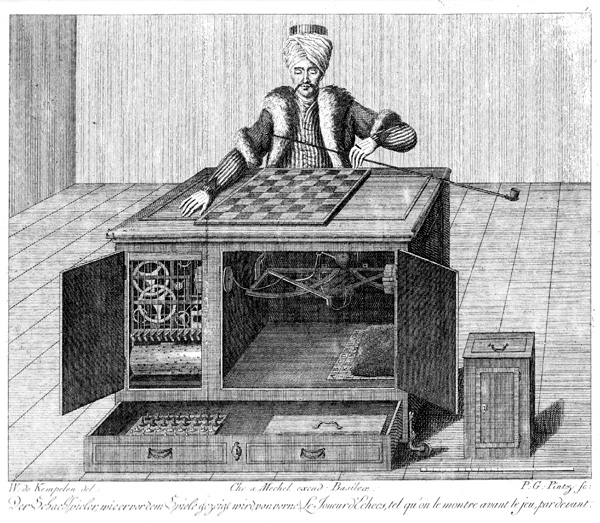
Pictured above: Türkischen Schachspielers by Wolfgang von Kempelen
In the TEC Lab, there was a wide array of automatons one could make that would mimic the illusion of the Turk, ranging from a basic model to more complicated sequences. The primary mechanic of the evening was the “cam,” a mechanical device that enables the reciprocating movement and inputs it to the cam follower. Specific to this build, a radial/disk cam functions with its axis perpendicular to motion of the follower, causing a sort of bobbing effect as an egg-shaped disk pushes the follower up at different heights.
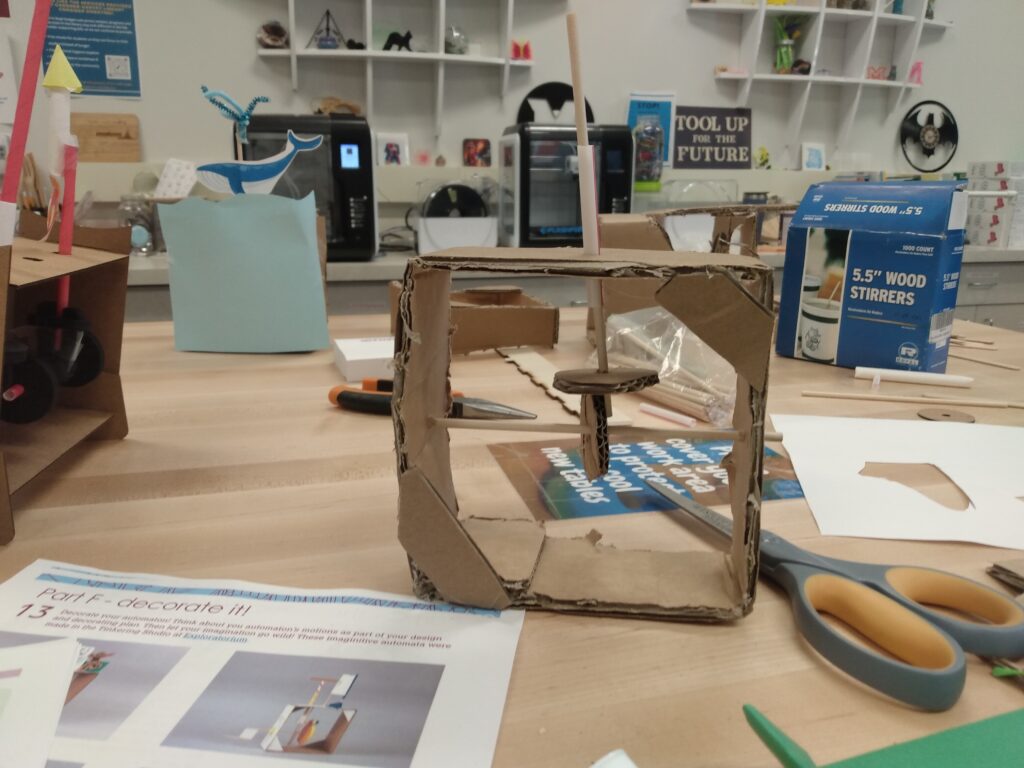
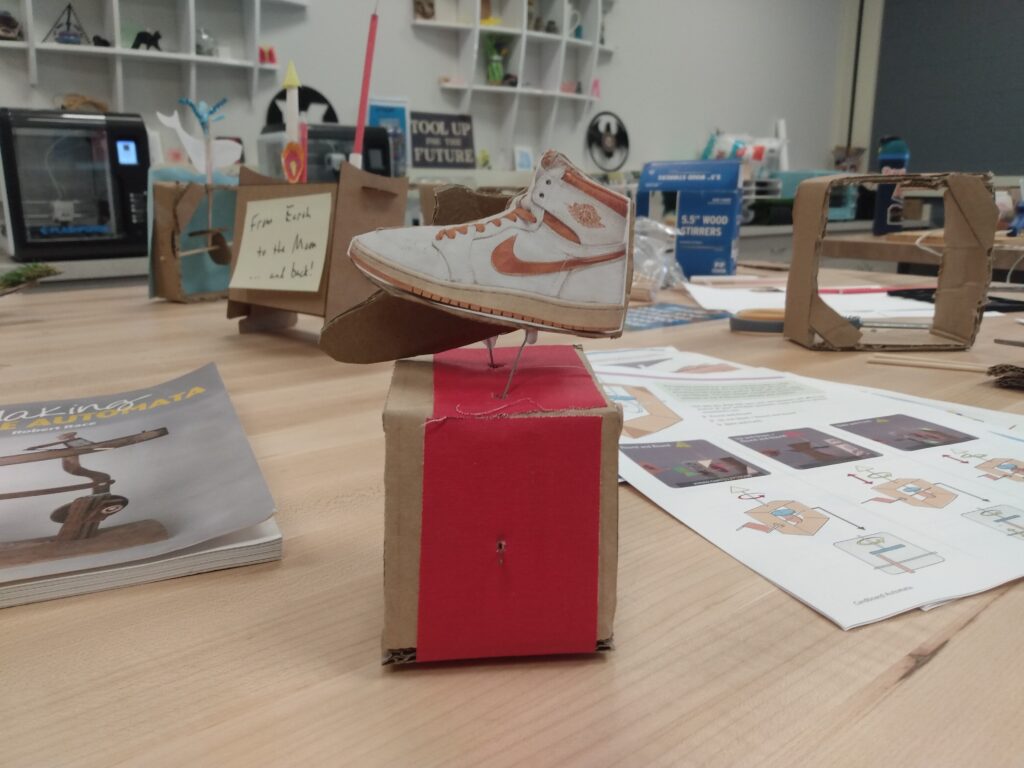
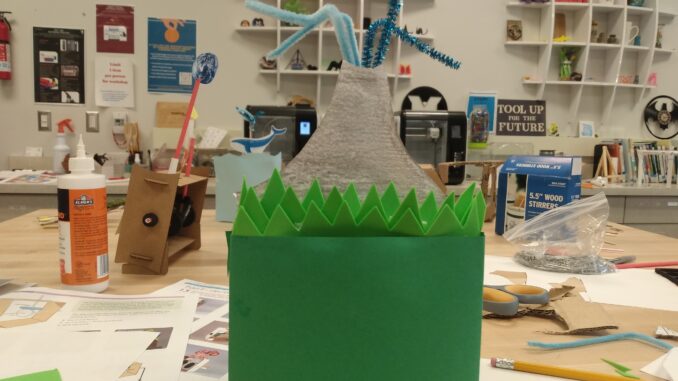
Multiple examples of this were displayed in the Makerspace with the visuals and design unique to the motion, like a pair of running shoes or a rocket blasting off. Participants were provided with spare cardboard and other various craft materials, free to create their own scenes with a crank of a hand.