
By Ana Diaz —
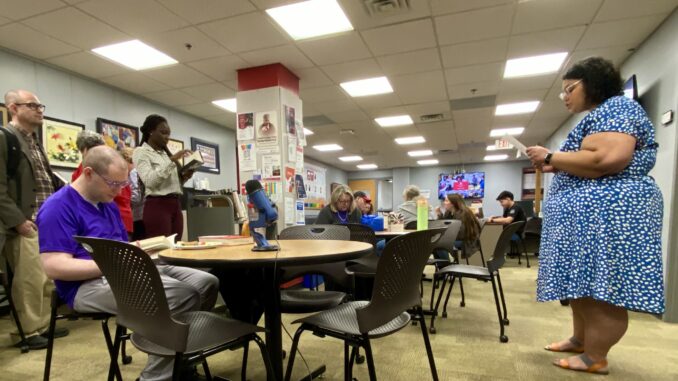
On the afternoon of Tuesday, March 5, a small and passionate group of Miami faculty and students gathered in a room in Rentschler Hall to participate in a read-in for Women’s History Month. Participants were encouraged to bring a piece of writing by their favorite female author. Miami also provided a cart with a selection of materials from the library for folks to choose from as well. Then, everyone took turns reading aloud excerpts from their selections.
The materials shared at the read-in included prose, poetry, and essays by women authors, including Alice Walker, Linda Hogan, Sarah Ahmed, Ijeoma Oluo, and Octavia Butler. Though the pieces ranged across different subject matters, genres and styles, there were some common themes among them as well.
One such theme was that of anger at all forms of injustice and prejudice. One excerpt shared from feminist writer and scholar Sara Ahmed’s Living a Feminist Life discussed how women are often dismissed when pointing out sexism, racism, or other injustices. They are made to be “oversensitive,” or else joke about it or otherwise distance themselves from addressing the issue. And, in an excerpt shared from Ijeoma Oluo’s essay “We women can be anything. But can we be angry?” Oluo discusses the dismissive response women often get when they express anger or other strong emotions. But this anger, Oluo says, is important because it means we care deeply. As both contemporary women and those from history know all too well it has been crucial to not become complacent when it comes to injustice.
Women have often taken radical positions in history and played critical roles in important historical movements. One participant illustrated this by sharing an excerpt from a letter written by Abigail Adams in March 1776. She had written to her husband just a few short months before the United States would declare independence from Britain. In her letter, she urged him to “remember the ladies,” and asked him to protect women’s rights when drafting laws for the new nation.
The excerpts shared also highlighted the fact that struggles for women’s rights are not over, in the United States or many other places in the world. One poem shared, written by Palestinian-American poet Noor Hindi, emphasized the widespread suffering and grief of Palestinians. Though the essay was written four years ago, it is more relevant than ever against the backdrop of the escalated, ongoing crisis in Gaza during the last several months.
Throughout it all, women authors emplore us not to lose our tenderness, though much of life will include struggle against the systems that would try to contain or control them. Remaining tender while persevering through inevitable barriers is essential to building the world we know everybody deserves. We were reminded through this read-in of the importance of women in the past, present, and future as we move to an uncertain destiny. Women are a crucial force in shaping a more just, balanced, and caring world.