
By Kara Reedy —
Before moving further, it is important to mention that Dr. Tammie Gerke dedicated the final talk of the semester to her colleagues and friends, Dr. Bill Monaghan and Dr. Chris Peebles. Dr. Gerke wanted to recognize them for their support and encouragement of her work as an archaeologist.
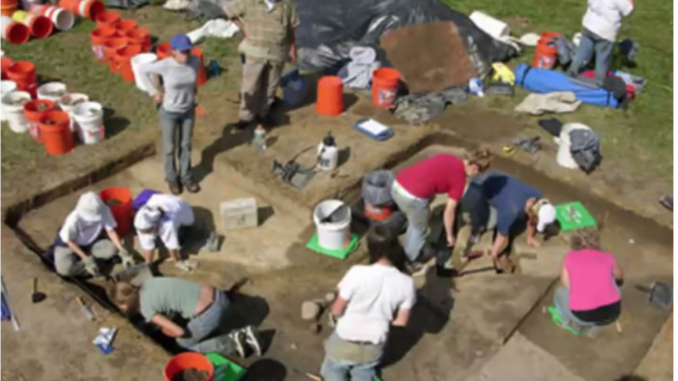
In the third and final edition of the Spring 2023 National Parks Talk Series, Dr. Gerke discussed her work as an archaeologist. She focused on her time analyzing ceramics found in the Southernmost tip of Indiana–Evansville–in a place that has served as a practice ground for up-and-coming archaeologists: Angel Mounds. The region of Angel Mounds was home to Indigenous peoples of the Mississippian Culture, which thrived as a civilization from approximately 800 to 1600 C.E. Archaeologists have been researching the mounds using careful analysis since 1939. Angel Mounds is a particularly fascinating archaeological center due to its abundance of ceramics, which is Dr. Gerke’s personal interest and specialty in archaeology.
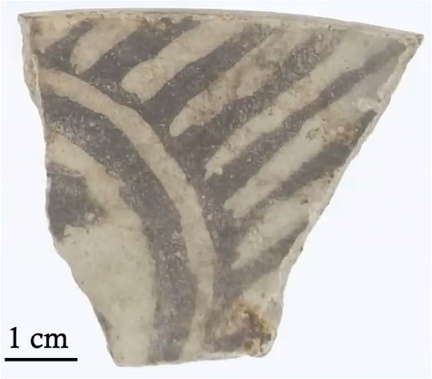
The types of ceramics found in and around Angel Mounds and near any former location of Mississippian Culture are complex in their design and development. The ceramics from Angel Mounds are particularly interesting to the archaeology community due to the existence of a “Potter’s House,” which hints at the beginning of potter specialties in Mississippian communities. Archaeologists use special methods to analyze the ceramics found in archaeological dig sites that are even more complicated than what one might imagine, with many steps being taken to ensure the preservation of the found objects. On a more hands-on or macroscopic level, archaeologists observe ceramics using the naked eye, photography, microscopes, and general tools, such as scales and trowels. Investigations go deeper as the microscopic, molecular, and atomic levels of the ceramics are also analyzed using a multitude of machines that are intended to collect vital data on the excavated objects.
In order for archaeologists to understand the microscopic level of the ceramic pieces, they need to use a Petrographic Scope–general microscope–and a Scanning Electron Microscope. Both scopes work to provide imaging of a piece of ceramic material, allowing archaeologists to have a closer look at the visible aspects of the pieces they find. Other tests are run specifically to learn about the molecular structure or mineral composition of the ceramics using an X-ray Diffraction machine which provides a deeper look into the development of the ceramics. Analyses of the atomic or chemical structure of the excavated wares are far more involved than any other stage of the investigation. Dr. Gerke was able to use the equipment at the Argonne National Laboratory in Argonne, Illinois, which allowed her to visualize the chemical makeup of the ceramics from Angel Mounds using intense X-ray machines powered by massive amounts of photons that would be dangerous to humans but vital to understanding the deeper parts of the ceramics that Mississippian Culture has become known for.
The ceramics have two primary components: “paste” and “temper.” Like any other type of ceramic, the excavated wares are composed of crushed-up materials that have been conditioned into specific shapes according to the potter’s design. Many different materials are used to create the paste that is then turned into a disk or pot, most of which are mineral-rich soil. The material used for the tempering is arguably more fascinating, especially considering Dr. Gerke’s discovery of the materials used to temper the ceramics found at Angel Mounds.
Temper materials appear to have been a mixture of many organic compounds, including mollusk shells and other sources that would have been available to the surrounding community, such as ash. Dr. Gerke found another source for tempering the ceramic wares, one that caused a high rate of phosphorus to appear within the ceramic wares. The mystery temper material was bone. Bone used in ceramics is not extremely uncommon as there is still a form of it used in the creation of bone china, which was developed in 1797 after the Mississippians from Angel Mounds had begun using bone in their ceramics. Archaeology allows us to learn about parts of the past that have since been lost to us; without the study of archaeologists, our understanding of history would be only partially correct and skewed towards one side of the story rather than inclusive of all pieces. The work of Dr. Gerke is valuable and provides opportunities to answer questions we never knew we had.
This semester’s talk series was very different from what Dr. Gerke has done in the past, but it was an exciting change to witness. She currently has no set theme for next semester’s series, though she wholeheartedly intends to continue her sessions for the foreseeable future. Dr. Gerke’s National Parks Talk Series is produced by the librarians at the Gardner-Harvey Library, and if you have any further questions concerning the future of the talk series or any other upcoming events, then please locate the contact information below; they would be happy to assist you in any way.
Contact Information
- Dr. Tammie L. Gerke: [email protected]
- John Burke: [email protected]
- Jessie Long: [email protected]