

By Shari Okada’s Second-Grade Class, Lihikai School, Kahului, Hawaii
Editor’s Note: This post is a gem from our Dragonfly Magazine archives, originally published in Dragonfly Magazine in the September/October 1997 issue. It showcases how a classroom of young researchers can use simple observations to uncover powerful evolutionary truths.
The Spark
Whether you are hiding or seeking, a lot depends on your feet. We wanted to know more about feet, and the unique tracks they leave behind. To kick off our investigation, we read books and examined pictures of tracks left on the beach.
We brainstormed everything we already knew about tracks, and our teacher mapped out all our thoughts into a large web drawing on a poster board. After looking at six different types of bird feet—grasping, scratching, swimming, perching, running, and climbing—we decided to turn our attention to our own home state.
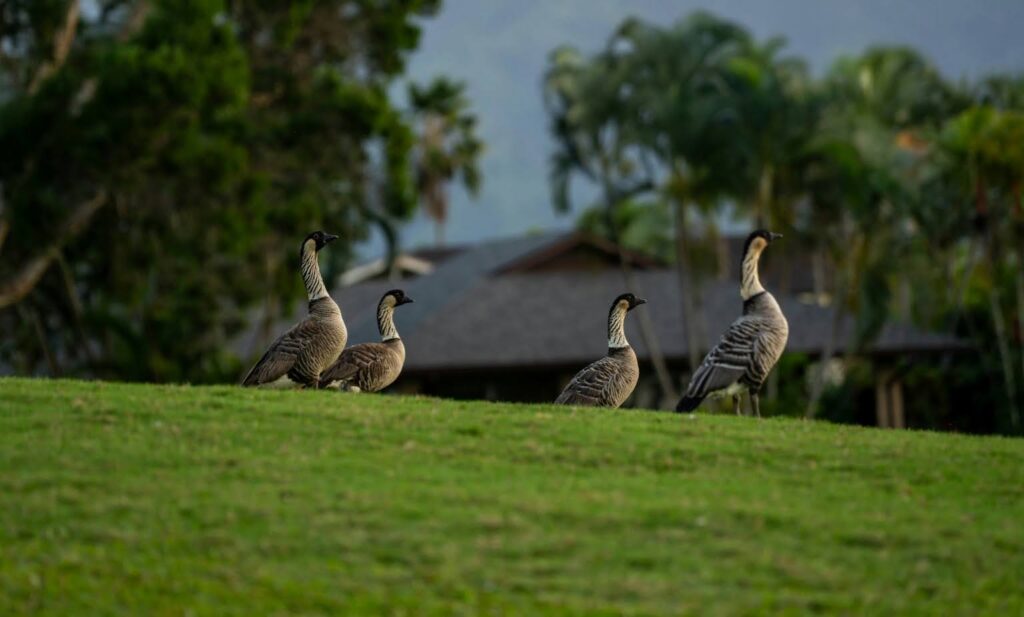
We live on the island of Maui in Hawaii, so we knew the tracks here might look very different from the tracks where you live. We decided to investigate Hawaii’s state bird: the nene goose. The nene is endemic to the Hawaiian islands, meaning it lives here and absolutely nowhere else on Earth.
This goose lives high up on the mountaintop of Haleakala on Maui. Up there, there are no ponds or lakes—only rough terrain covered in sharp lava rocks and gravelly ground. Looking at its rocky home, we asked ourselves a big question: What type of feet does the nene goose actually have?
The Prediction
Because the nene is a goose, you might expect it to have standard swimming feet. But our class had a lot of different ideas based on where the nene lives:
- Ricky thought the nene would have running feet so it could sprint away from hunters.
- Stephanie predicted swimming feet because she felt the other foot types just didn’t match the rest of the nene’s goose body
- Thomas guessed grasping feet because nene spend their time living on rugged rocks.
- Naomi guessed scratching feet because they have to scratch for food in the volcanic soil.
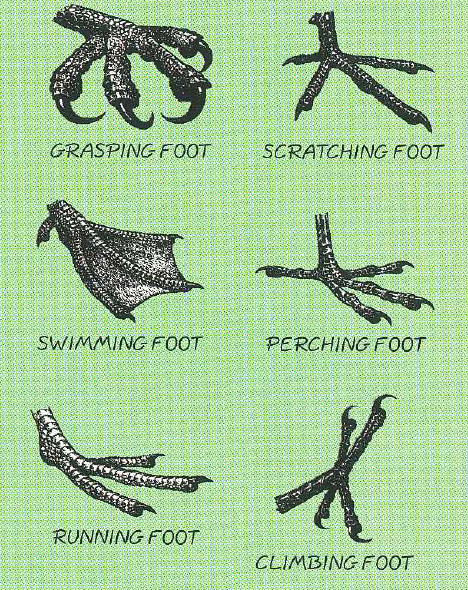
We took a vote and graphed our guesses on a big chart. Most of our class predicted that the nene would have either running or swimming feet.
How We Investigated
First, we practiced our tracking skills by taking a walk around our schoolyard to see what types of tracks we could find in our local environment. Then, we dug into wildlife data to find an actual image of a real nene goose foot to see which of our predictions held true.
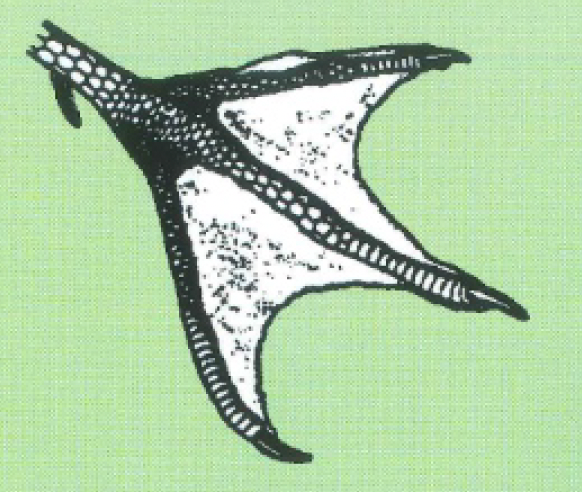
We carefully analyzed the structure of the foot, looking at the arrangement of the toes and the presence of webbing to see how it compared to standard waterfowl.
What We Found
When we looked at the real nene foot, we discovered something amazing: it looks like it was designed for both running and swimming!
The foot has three toes in the front and one toe in the back. It does have webbing between its toes, but it is noticeably shorter than the webbing you find on other types of geese.
Based on our research, we believe the nene moved up to the mountainside long ago to get away from predators and people. Because people prefer to live where it is warm, they build homes down by ocean beaches instead of the cold mountaintop. High up on the mountain, there are also fewer introduced animals like cats, dogs, mongooses, and horses. This means horses won’t accidentally trample the nene’s nests, and there are fewer predators to eat the young goslings.
The mountainside became the safest place for the nene to survive, even though it meant giving up swimming in open water. Over time, the foot of the nene goose changed and adapted to its new, rocky environment—losing much of its webbing so it could walk easily on lava rocks without tripping!
Now we have a new question: what do you think the nene goose’s feet will look like in another 1,000 years? Will they stay the same, or will they change even more?
Go Wild: Your Turn!
Feet tell amazing stories about how and where an animal lives. We challenge you to become a wildlife detective in your own neighborhood!
- Go on a Foot Safari: Step outside and look for tracks or animals in your backyard, schoolyard, or local park. Look for insects, birds, and mammals.
- Spot the Patterns: Do the feet of all climbing animals you see have something in common? What about digging animals or running animals?
- Start a Foot Book: Keep a journal of drawings, photos, or clay molds of the tracks you find. Make a prediction about how that animal’s foot helps it survive before you look up the answer!
The Field Guide (Educator Sidebar)
Subject & Grade Level
- Life Science / Environmental Science
- Grade Level: 1st – 4th Grade
Inquiry Focus
- Observation & Classification: Identifying anatomical structures from tracks and images.
- Hypothesis Testing: Formulating predictions based on environmental constraints and graphing collective data.
- Form and Function: Connecting physical traits to an organism’s survival strategy and habitat.
The Science Behind It
The Hawaiian nene (Branta sandvicensis) is an incredible textbook example of adaptive evolution and allopatric isolation. Descended from ancestral Canada geese that blew off course millions of years ago, the nene adapted to life on isolated volcanic fields rather than wetlands. Over generations, natural selection favored individuals with reduced webbing and stronger, more padded toes, allowing them to navigate rugged, abrasive lava rock without tearing their feet. This structural adaptation represents a trade-off: reduced aquatic efficiency for drastically increased terrestrial agility.
Standards Connection (NGSS)
- 3-LS3-2: Use evidence to support the explanation that traits can be influenced by the environment.
- 3-LS4-2: Use evidence to construct an explanation on how the variations in characteristics among individuals of the same species provide advantages in surviving, finding mates, and reproducing.
- Science & Engineering Practices: Analyzing and Interpreting Data; Engaging in Argument from Evidence.
Materials Needed
- Images or replicas of various bird foot types (swimming, grasping, scratching)
- Graph paper or a chart to log student predictions
- Field journals or drawing paper for a “Foot Book”
- Access to an outdoor area (playground, park, or trail) to search for local tracks