
The last trip that I took before the pandemic hit was to the Westboro Baptist Church. I remember driving to the airport on a frigid Wisconsin morning before the sun had risen, thinking to myself, “I guess today’s a great day to meet some Westboro Baptists.” On my nearly empty connecting flight to Kansas City, I ended up seated a few rows away from a fellow trip member, and we exchanged anxious chit chat as we completed our journey. After a productive, exhausting, frustrating, exhilarating, week in Topeka, I returned to the East Coast for my second semester of graduate school in January 2020, not knowing my time at the Westboro Baptist Church that winter would stick with me for more reasons than one.
…
I’ve been involved in the Empathy and the Religious “Enemy” project for the past six years, and people always ask me why. Why did you join in the first place? Why go back time and again? I don’t have a well-contained answer to these questions, but I think that my actions speak to a possible conclusion. Although I wasn’t able to attend the most recent Westboro trip in June of 2022, my absence wasn’t for lack of interest; I have a strong feeling that my future may hold a fourth trip to the Westboro Baptist Church.
To dig into an explanation a little deeper, I think that what fascinates me the most about experiences like the one that the Empathy and the Religious “Enemy” provides is the opportunity to move past the surface level of a dominant societal narrative and investigate how its subjects defy—and reinforce—that narrative. In addition, I like to joke that because I’ve talked with the Westboro Baptist Church, I can talk to anyone. My ability to sit in conflict and investigate its origins without fleeing from the tension that those situations inevitably produce has increased at least tenfold. Ultimately, my work with the Empathy and the Religious “Enemy” project has taught me that everyone contains moral contradictions, and what we do with the ethical discomfort that those contradictions provide is what determines the effectiveness of our advocacy.
However, the most valuable aspect of my past six years with this project has, hands down, been the relationships that I’ve cultivated with the dozens of fellow researchers and collaborators with whom I’ve worked. Traveling with my peers and witnessing how they engage with interviewees and with other members of the team has made me a more thoughtful questioner, a more engaged listener, and (hopefully) a more generous team member, and I am a better person for having spent time doing fieldwork with these colleagues-turned-friends.
Throughout the years, I’ve seen the Empathy and the Religious “Enemy” project change, and I’ve seen the Westboro Baptist Church change, too. I’ve witnessed the ebb and flow of membership rates as people have left and joined both the project and the church, and I’ve watched both institutions grapple with the enormous changes brought on by the pandemic. Even prior to the pandemic, Westboro had begun adopting a gentler set of messaging (yet still intensely homophobic, transphobic, and antisemitic, to be clear), particularly within their picketing signs. By mid-2022, both non-Westboro Topekans and Westboro members themselves noted Westboro’s decreased picketing presence. In other words, the pandemic has offered Westboro an opportunity to travel less both locally and nationally to spread their picketing message, and they have seized that opportunity to be less public-facing in this particular moment.
So, too has the Empathy and the Religious “Enemy” taken a changed approach that was brought on in part by the pandemic. After embarking on a year-and-a-half-long hiatus at the beginning of the pandemic, the Empathy and the Religious “Enemy” project has effectively rebooted and is slowly rebuilding its team and refocusing its mission. As the need for good public scholarship has, at once, been sharply highlighted and sharply denigrated by higher education budget cuts, right-wing attacks on schools at all levels, and decreased bandwidth from both faculty and students brought on by pandemic burnout, the Empathy and the Religious “Enemy” project is attempting to rise to meet that challenge. The trip to Westboro this past June was only the first step of many in achieving those ends.
Going forward, I can only anticipate what the Empathy and the Religious “Enemy” will accomplish as its members deepen research connections to the Westboro Baptist Church and Neturei Karta and develop new ones with other oppositional religious groups. As the United States continues to navigate the incredibly fraught social and political climate that we currently find ourselves in, I have no doubt that the work of the Empathy and the Religious “Enemy” project will continue to resonate strongly with an ever-growing audience.
…
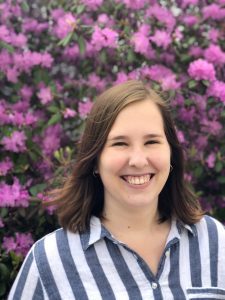
Margaret joined the Empathy and the Religious “Enemy” project in 2017 and has traveled to the Westboro Baptist Church three times, in 2017, 2018, and 2020. She is a graduate of Harvard Divinity School (2021) and Miami University (2019).