
By Kara Reedy —
What is archaeology, and why is it important?
Dr. Tammie Gerke’s National Parks Talk Series has become a beloved mainstay on the Middletown Regionals Campus, thanks to Dr. Gerke’s devotion to educating her listeners about the beauty of nature that surrounds us. Dr. Gerke has primarily focused on the geology of the national parks here in the United States, but this semester, she decided to add a spin on things. The lecture held on the last day of February in the Gardner-Harvey Library co-op space brought in a few community members and Miami staff to celebrate the start of the new semester with a new topic, which Dr. Gerke lovingly named the “Accidental Archaeologist” series. She intends to bring a sharper focus to archaeology in the national parks while continuing to inspire passion for geology and conservation with her lecture series.
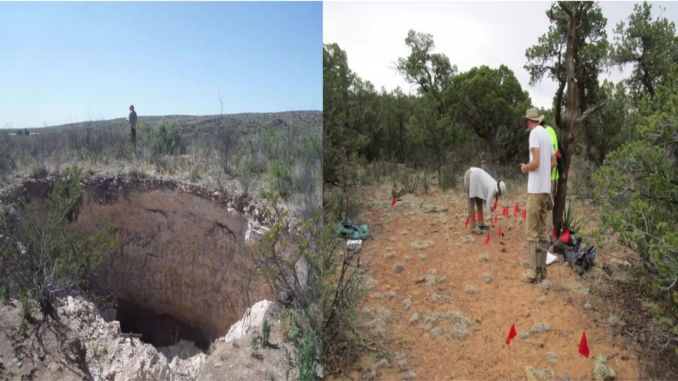
Last night’s lecture provided an overview of what it’s like working as an archaeologist, which Dr. Gerke assured is about “as far away from Indiana Jones as you can get.” Far away from the tumbling boulders and pits of snakes–though snakes are still a genuine concern–actual archaeology is far more complicated and scientific than the movies make it out to be. A lot of work goes into finding artifacts, mostly in the realm of sifting through soil and terrain to locate potential spots that might have something hidden inside. Dr. Gerke thoroughly explained the typical process of hunting for artifacts, beginning with, as a good deal of outside work does, a shovel.
Shovel testing is the first step in almost every archaeological survey on a surface area. Archaeologists dig shallow holes in a grid pattern for clues that an artifact might be nearby. Clues can be as obvious as shards of ceramic potting, but most of the time, surveyors must rely on soil samples that hint at possible habitation; there are always byproducts left over in surrounding areas, no matter how much time has passed. When a clue is found in a specific area, archaeologists excavate it, stripping off layers of soil very carefully to ensure that they aren’t harming the surrounding environment or potentially destroying an artifact. Every grain of dirt is put through a sieve, which is a wire-framed box that holds dirt that is then drowned in water. The dirt flows away, revealing whatever is hidden within.
Sometimes bigger equipment is needed, though only in certain circumstances. Backhoe testing is used for sifting through larger surface areas. Bulldozers and other massive machines are brought in to do all the heavy lifting, but archaeologists have to be right there, next to the machines, to keep an eye on everything happening; they want to avoid any destruction of artifacts, no matter what.
Archaeologists have special gear that is used while they are surveying possible dig sites. We’ve discussed the properties of the shovel, but there is a whole lot more that goes into excavating. Surveyors will often carry sieves with them and marking spikes that showcase where a potential digging area might be. Archaeologists need to wear special guards on their legs because of the dangerous landscape they march through. Aside from trying to avoid snake bites, they also wear these leg guards to keep their legs from being scratched up by spikey vegetation, which Dr. Gerke mentioned is far too plentiful, no matter where she is surveying. Archaeologists need to be prepared to spend hours out in rough conditions; snacks and water are necessary to keep safe in the middle of nature. Most importantly, researchers need to be aware of where they are at all times, usually with the aid of a GPS.
February’s introduction to this semester’s series was intended to provide a quick overview of archaeology and how the study of geology and history combine. Aside from explaining the process of work that goes into archaeology and the tools used, Dr. Gerke wanted to express her devotion to the field for its drive to conserve, especially where she is usually stationed.
Dr. Gerke has spent the past few years working out west near Carlsbad National Park, researching and analyzing the surrounding areas, and looking for artifacts that might be able to explain the area better. Dr. Gerke discovered that the desert was far more vulnerable to destruction than the heavily-vegetated areas she worked in at the beginning of her career. The desert is scarred, pocked by well-pads and pipelines that have drained the desert of its once pristine glory. What, at first glance, look like suburbs are water and chemical spouts that travel messily across miles of sand and dirt. Unlike forests, where vegetation always manages to flourish, the desert is barren, with only a small amount of plant life available to heal the environment. Dr. Gerke’s mission is to educate those who attend her lectures about the harm that is being done to the desert and the efforts of archaeologists to halt much of the damage that continues to be done.
The series will focus on conservation and salvation over the semester. The next installment of the talk series will take place on the 28th of March, and the subject will be Mesa Verde, a national park out in Colorado. Dr. Gerke will discuss Mesa Verde and all of the archaeology done in the park while also presenting information about the park’s geology. We will be reporting on this event and the third and final portion of the series, which is set to be in April. Keep an eye out for the next article on the talk series.
As with every event held in the Gardner-Harvey Library, everything was organized by the librarians, who work tirelessly to provide learning experiences to the Middletown community. Please use the following contact information to contact Dr. Gerke and the librarians at the Gardner-Harvey Library. Feel free to explore the Gardner-Harvey Library website for more information about upcoming events.
Contact Information
- Dr. Tammie L. Gerke: [email protected]
- John Burke: [email protected]
- Jessie Long: [email protected]