
By Kara Reedy —
In honor of the book that she assisted in the composition of, Dr. Tammie Gerke and the staff at the Gardner-Harvey Library decided to put together recently that covered some of the key points explained in further detail in A Sanctuary in the Hora of Illyrian Apollonia: Excavations at the Bonjakët Site. Working as the soul geoarchaeologist for the project—a combination of a geologist and an archaeologist—Dr. Gerke presided over the analysis of soil samples collected from an excavation site in Albania.
The area in what had once been a colony known as Apollonia was a temple filled with numerous artifacts from an age known as archaic: ancient. Dr. Gerke and a team of archaeologists searched through the site on a farm known as Bonjakët to the local inhabitants. The initial reason behind the decision to excavate the site was to ensure that the Albanian government wouldn’t accidentally hit any historical artifacts in creating a major bypass for traffic. The intended changes had to be reworked because archaeologists found evidence of Apollonia during a ground survey in 2002.
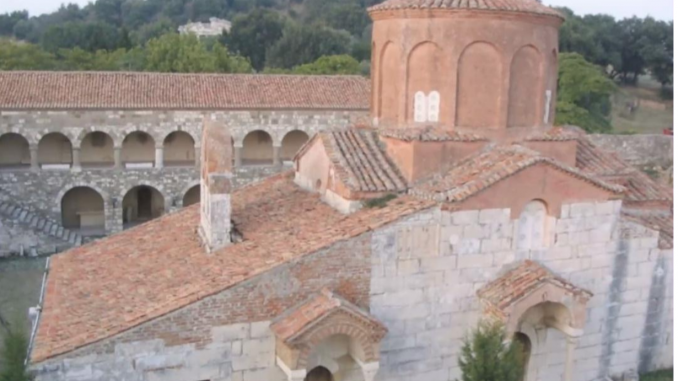
The region of Apollonia sprung up between 588 and 627 BCE in the country of Albania. Found thirteen miles from modern Fier Country, the Greek colony resided beside the Vjosë River. The city was named for the Greek God Apollo. Other religious Greek influences were found in the excavation of the Bonjakët site with the discovery of an artifact depicting the Goddess Artemis. Other artifacts were found on the premises of the farm, including rusted remains of metallic pieces, certain types of colored glass that would have been used in adornments, and ceramics of all sorts. Perhaps the most fascinating discoveries came in the form of figurines. Several such artistic creations were scattered throughout the site, all displaying unique displays of people and possible deities. Many of the artifacts recovered can be viewed today in the Sleeping Saint Mary Church and Museum in Albania.
The excavation process was intense, even with the large number of helpers who volunteered their time to the project. Around thirty experts worked together on the project, including Dr. Gerke. The team also received help from local volunteers wanting to get a look at what the group was doing. Machinery was not used at the site because they didn’t want to risk breaking anything valuable, so they were left with using just shovels to dig their way around the site. Interestingly enough, the base of the actual temple was only about a meter to a meter and a half down from the surface of the ground; that’s barely under five feet. The team carefully dug trenches into the soil, allowing them to analyze cross sections of the temple without causing any damage. They opened up seventeen channels and ensured that everything was well-documented and organized.
Aside from digging for artifacts and soil samples, the team occupied their time cleaning and analyzing their findings. Many of the objects discovered were covered with mud and dirt, so the group had to use a trick some might be familiar with. To separate the artifacts from the debris, the archaeologists set the objects in a sieve, which was a box with chicken wire stapled into the bottom. Water would be poured into the box, and once they’d shaken the crate enough, an artifact that had once been unrecognizable would become visible for sufficient analysis. Many hours were spent maintaining and organizing the countless artifacts found during the temple excavation; there was little downtime for any member of the group, who all worked tirelessly. Even on their final day, the team decided to work for as long as possible, keeping up their rigorous routine until nightfall.
The last thing they discovered was blue paint from Egypt, truly encapsulating trade capabilities in the ancient world. It isn’t easy to imagine such a world existed that was capable of trade across well over 1,000 miles, yet it happened. Perhaps that was because the purpose of the town itself was as a significant center of commerce in the 4th century BCE. Established mainly as a trade center for the Greeks, Apollonia played an essential role in the economic development of Rome later on when it became a part of the empire. The city would become a favorite location for scholars all over the territory. They even minted their own currency between 30 and 25 BCE.
Despite these significant advances, an earthquake in 234 CE ushered in the downfall of the colony. The geologic event resulted in swamplands forming, which became a breeding ground for malaria. The wetlands would be removed later in history to be used for farming. Still, the land remains waterlogged, serving as a roadblock during the excavation. The excavation group had to bail out their trenches every so often, sometimes spending entire days doing so, but always careful not to miss any dislodged artifacts in the process. Only 10% of what used to be Apollonia has been excavated since its discovery in 1921 by the French, who still play a significant role in the archaeological projects of the area. An archaeological park near the town of Pojan opened in 1963 and remains a public preservation site of Albanian history.
The site still has many mysteries attached to it, but archaeologists continue to excavate the surrounding pieces of Apollonia, searching for more on the area. The book that Dr. Gerke was instrumental in the creation of will be available in the Middletown Gardner-Harvey Library by this coming January. Keep an eye out for A Sanctuary in the Hora of Illyrian Apollonia: Excavations at the Bonjakët Site if you are interested in learning more about the archaeological project. Also, feel free to contact Dr. Gerke if you are curious about archaeology or want to learn more about her time excavating in Albania. The library assists Dr. Gerke in all her presentations. They have stated that we can look forward to more discussions about archaeology next semester, which will be reported on when the time comes, so keep an eye out for those articles. You can get a personal copy of the book through the publisher using the following link:
https://www.lockwoodpress.com/product-page/a-sanctuary-in-the-hora-of-illyrian-apollonia-excavations-at-the-bonjak%C3%ABt-site
Contact Information:
- Dr. Tammie L. Gerke: [email protected]
- John Burke: [email protected]
- Jessie Long: [email protected]
- Jennifer Hicks: [email protected]