
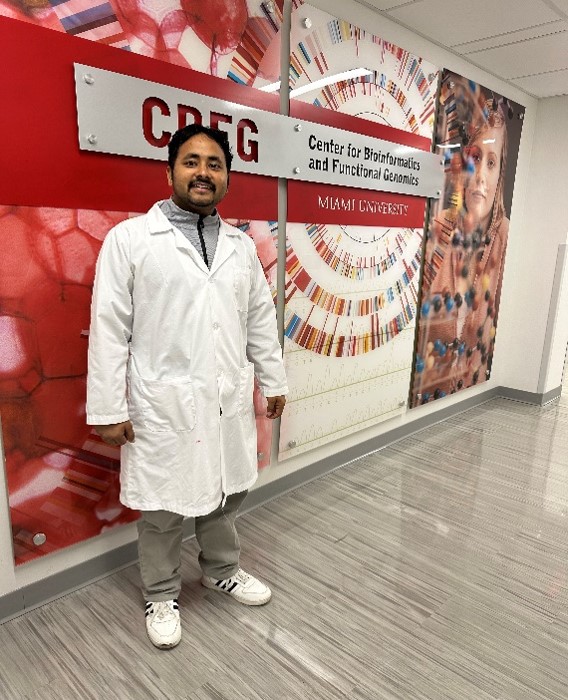
I am Bhuwan Singh Bist, a PhD student passionate about understanding how different evolutionary forces interact to drive genomic and phenomic variation in mammalian taxa. My research focuses on utilizing a powerful toolbox of bioinformatics, machine learning, and artificial intelligence to answer key questions in conservation genomics and evolutionary biology, particularly in the context of species survival. One of the primary chapters of my PhD focuses on studying the population genomics of the invasive nine-banded armadillo (Dasypus novemcinctus) in the southeastern United States. I aim to investigate how this species, native to warmer regions, survives in novel colder environments despite being a poor hibernator. To achieve this, I am employing next-generation sequencing technology (ddRADseq) to explore the mechanisms behind its range expansion and biological adaptation. This research will contribute to our understanding of how invasive species thrive and adapt to new environments, offering insights into broader mechanisms of invasion biology and adaptation. My other research interests include species delimitation, macrogenetics, ecological niche modeling, comparative genomics and science communication.
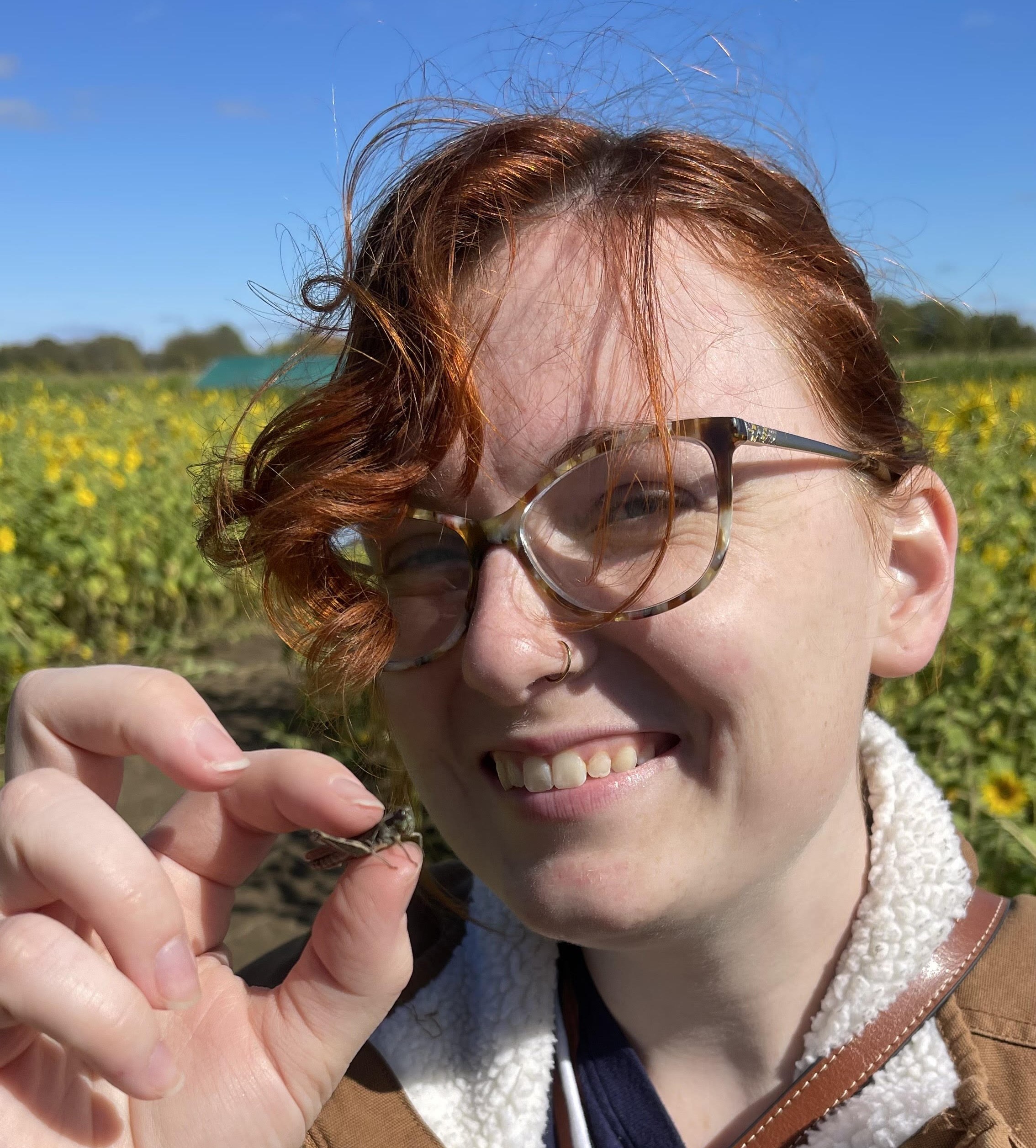
I’m Autumn Otto, a master’s student in the Jezkova lab studying phylogenetics and drivers of morphological divergence of grasshoppers in the subfamily Oedipodinae. My research involves generating genetic data using reduced genome sequencing techniques (ddRADseq) and applying bioinformatic principles for analysis. I work with the genera Pardalophora and Xanthippus and I am interested in investigating how the morphologically based taxonomy of these species compares to what the molecular data says about their evolutionary relationships.
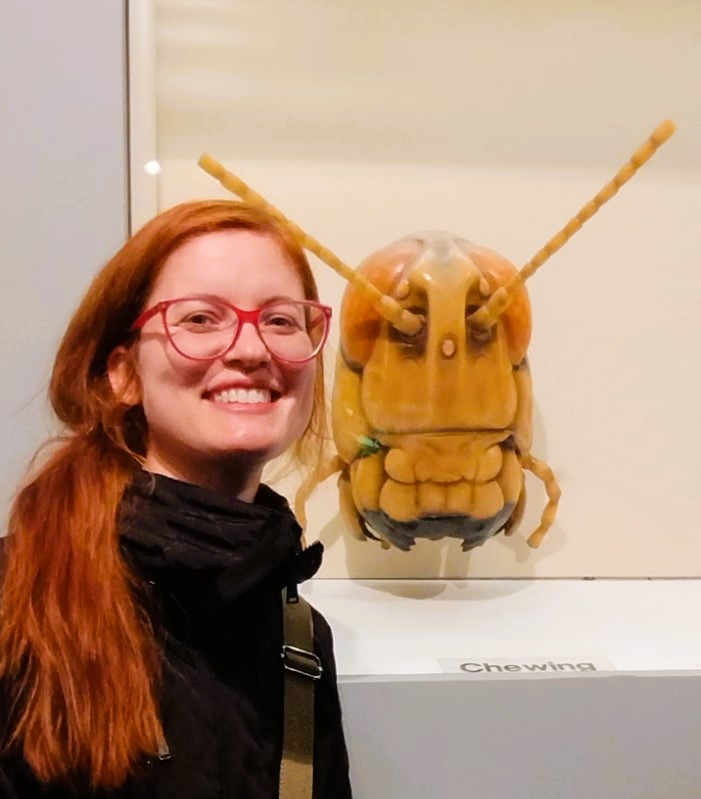
I’m Daniela, born and raised in Brazil, and I consider myself an Orthopterologist with a love for taxonomy, morphology, grasshopper management, and insects. I have always enjoyed spending my free time with insects, especially Orthoptera. My dream has always been to combine my studies of Orthoptera with field research and worldwide travel! I am now a postdoctoral researcher in the Biology Department at Miami University, and I’m focused on the study of band-winged grasshoppers (Oedipodinae). I am broadly interested in better understanding molecular genetics, next-generation sequencing technology (ddRADseq), hybridization, and biological adaptation. Here, my research seeks to understand traits that contribute to divergence between sister and congeneric Oedipodinae species pairs, and that are driven by reproductive character displacement (RCD). I’m also the founder of the Grasshoppers from Brazil research group (@gafanhotos_do_brasil), whose mission is to increase our understanding of the Brazilian grasshopper fauna by describing new species, obtaining new data, new reports, and gathering material for genetic studies.
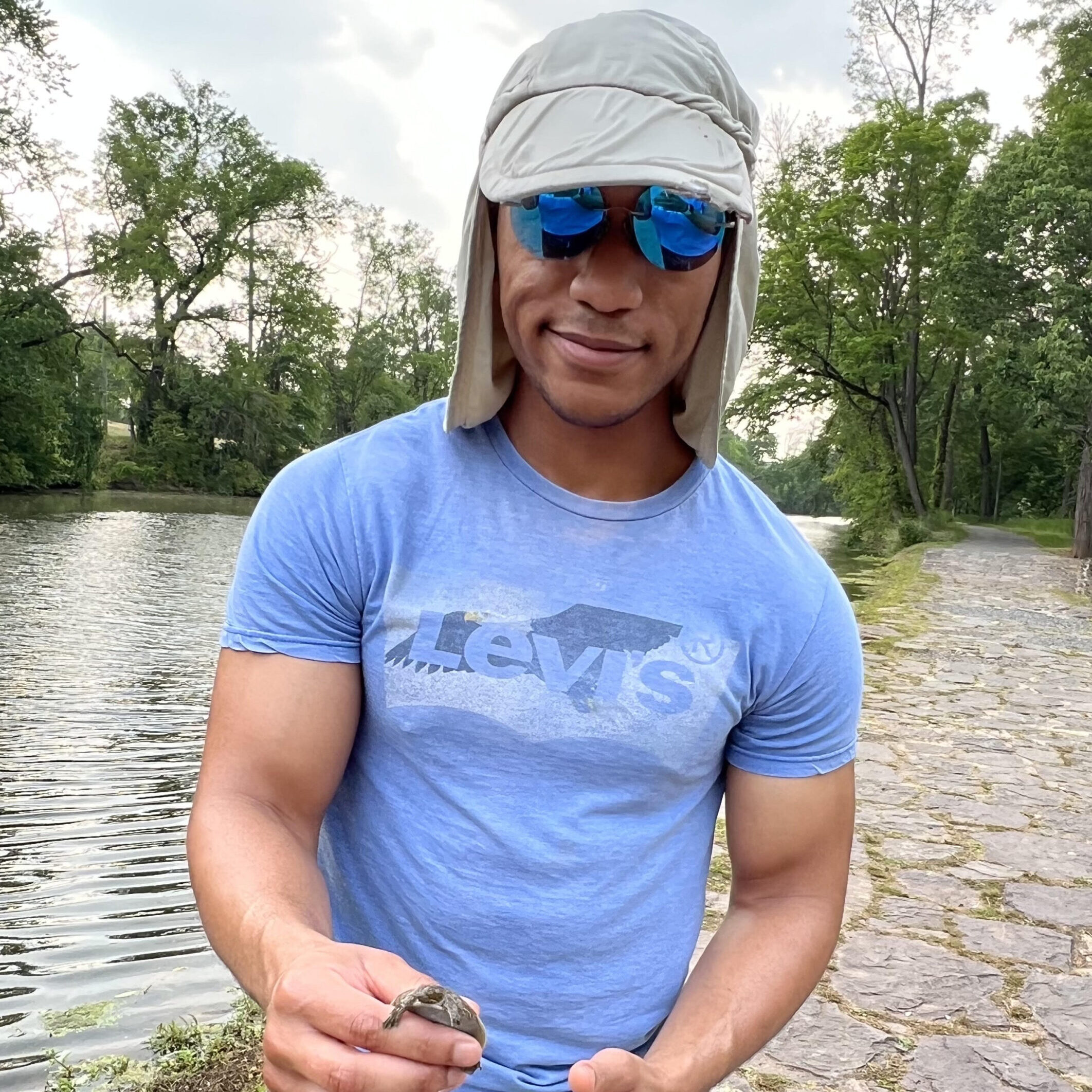
I am Morgan Wactor, a MS student and future herpetologist enthralled with ecology and evolutionary biology of herpetofauna. Therefore, there is little surprise that my research focuses on the outcomes of introgressive hybridization between the eastern and western smooth green snake (Opheodrys vernalis) clades. The eastern and western O. vernalis clades comprise two parapatric lineages that readily hybridize in Michigan and Ohio, however little is known of the evolutionary processes influencing their introgression. I seek to assess the genomic composition of the hybrids by characterizing patterns of differential introgression and various signatures of selection (i.e. Dobzhansky Muller incompatibilities) within the hybrid genomes. Furthermore, I will generate a genome-wide SNP dataset, utilizing ddRADseq, to be implemented into Bayesian genomic clines and genome-environmental association (GEA) approaches that will aid in interpreting hybrid fitness and exploring climate induced local adaptations. My research will provide a model for how selective forces influence differential introgression, improving our ability to recognize specific evolutionary processes driving local ancestry variation within admixed genomes. When I am not sitting behind a computer, I enjoy binge watching Korean horror movies and trekking through Ohio forests for native herpetofauna species.
I’m Alfredo. I completed my undergrad in Venezuela, and developed a background in experimental and marine ecology. I began my Ph.D. at Miami University in 2019 and have been deepening my knowledge of computational ecology and biostatistics, being able to become proficient in R and GIS tools. This has allowed me to collaborate in multiple projects encompassing population genetics, conservation, ecology, and theoretical ecology. One of my main projects in the lab relates to the development and application of a novel method to study ecological niche divergence, which we’ve termed the Niche Divergence Plane (NDP). Every species has a range of environmental conditions that allow for its populations to survive and reproduce. How different these conditions are between populations and species is a difficult question to answer, especially when different species seemingly coexist. Previous methods tend to collapse all potential ecological differences into a single number, omitting the fact that species responses to different ecological conditions can change in independent ways. The NDP allows researchers to observe the multiple ways species differ from each other in the context of their ecological niches. We are further applying this methodology to study speciation and evolution in salamanders, grasshoppers, and other organisms.
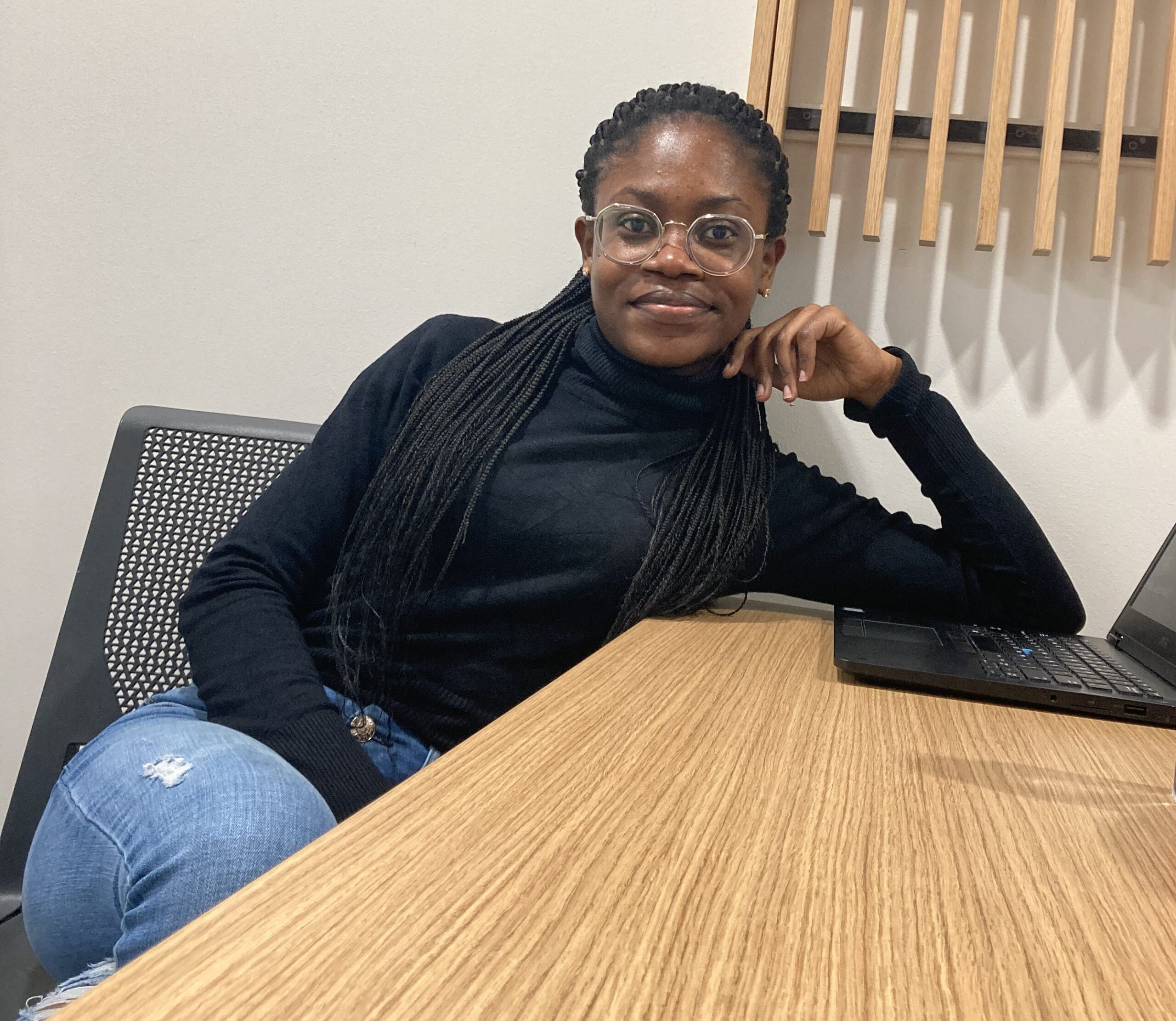
I am Pauline, a second year student who hails from Ghana a country in West Africa. As a rookie biologist and aspiring genomics scientist, I study the genetic structure of the salamanders Ambystoma barbouri and Ambystoma texanum through advanced computational biology analysis, primarily, utilizing R programming. My research focuses on understanding the genomic variations and evolutionary relationships within these species. By employing various bioinformatics tools and techniques, I analyze genetic data to uncover insights into their population dynamics, adaptation mechanisms, and overall biodiversity. This work not only contributes to the field of herpetology but also enhances our understanding of the ecological roles these salamanders play in their respective environments. Through my studies, I aim to provide a comprehensive view of the genetic landscape that shapes these fascinating amphibians.