
Below you can find information about Jason’s books, including answer keys, data sets, and book resources.
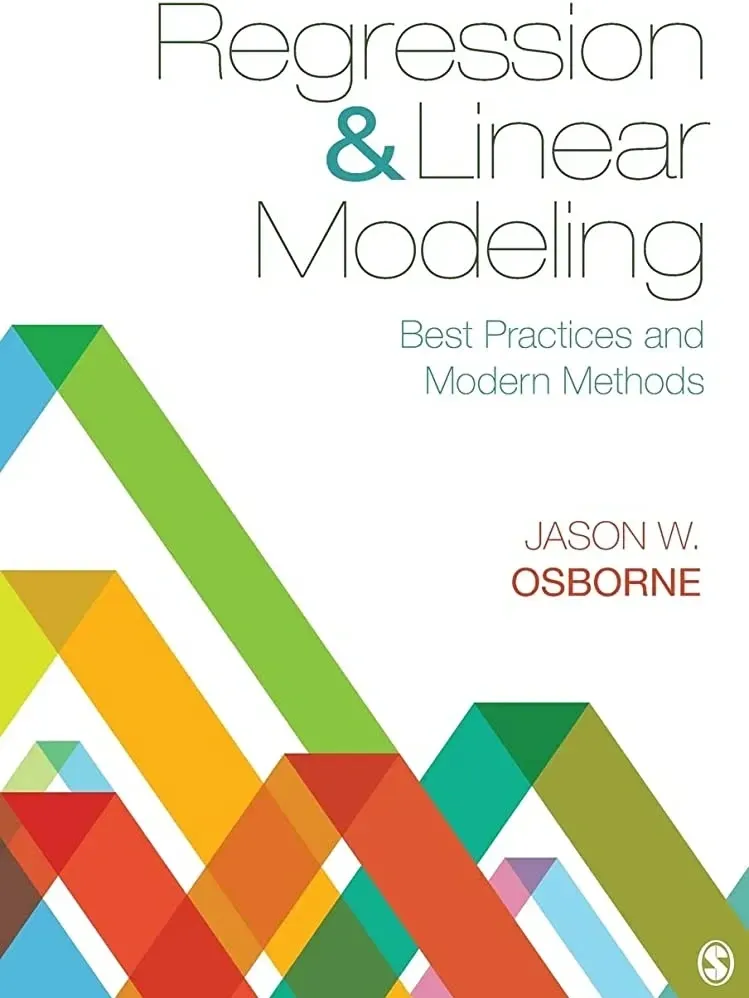
Regression and Linear Modeling provides conceptual, user-friendly coverage of the generalized linear model (GLM). Readers will become familiar with applications of ordinary least squares (OLS) regression, binary and multinomial logistic regression, ordinal regression, Poisson regression, and loglinear models. The author returns to certain themes throughout the text, such as testing assumptions, examining data quality, and, where appropriate, nonlinear and non-additive effects modeled within different types of linear models.
–> Download resources for Regression and Linear Modeling
Best Practices in Exploratory Factor Analysis (EFA) is a practitioner-oriented look at this popular and often-misunderstood statistical technique. We avoid formulas and matrix algebra, instead focusing on evidence-based best practices so you can focus on getting the most from your data.
Each chapter reviews important concepts, uses real-world data to provide authentic examples of analyses, and provides guidance for interpreting the results of these analysis. Not only does this book clarify often-confusing issues like various extraction techniques, what rotation is really rotating, and how to use parallel analysis and MAP criteria to decide how many factors you have, but it also introduces replication statistics and bootstrap analysis so that you can better understand how precisely your data are helping you estimate population parameters. Bootstrap analysis also informs readers of your work as to the likelihood of replication, which can give you more credibility. At the end of each chapter, the author has recommendations as to how to enhance your mastery of the material, including access to the data sets used in the chapter through his web site. Other resources include syntax and macros for easily incorporating these progressive aspects of exploratory factor analysis into your practice. The web site will also include enrichment activities, answer keys to select exercises, and other resources. The fourth “best practices” book by the author, Best Practices in Exploratory Factor Analysis continues the tradition of clearly-written, accessible guides for those just learning quantitative methods or for those who have been researching for decades.
–> Download resources for Best Practices in EFA
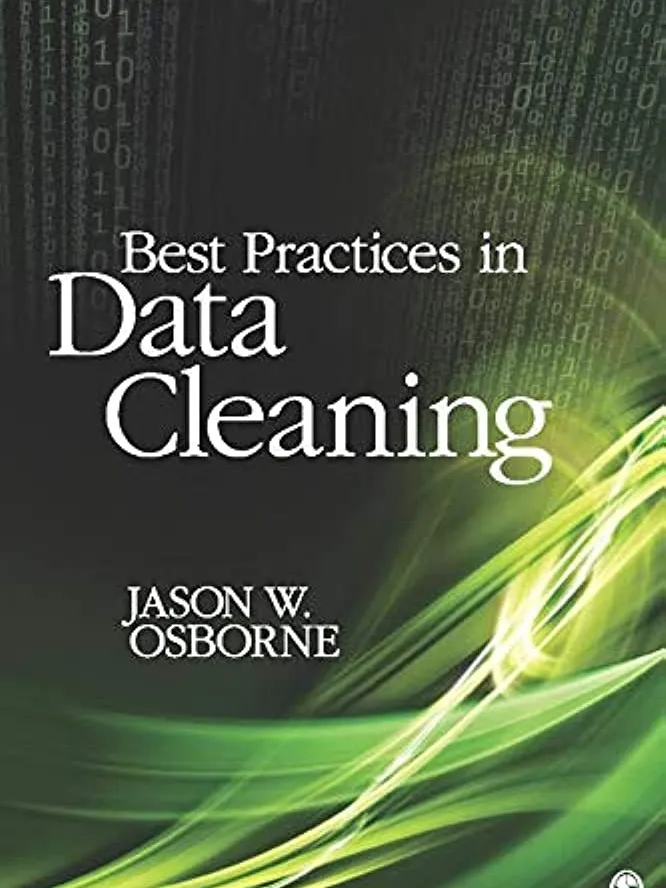
Best Practices in Data Cleaning: Many researchers jump straight from data collection to data analysis without realizing how analyses and hypothesis tests can go profoundly wrong without clean data. This book provides a clear, step-by-step process to examining and cleaning data in order to decrease error rates and increase both the power and replicability of results.
This book provides easily-implemented suggestions that are research-based and will motivate change in practice by empirically demonstrating for each topic the benefits of following best practices and the potential consequences of not following these guidelines. If your goal is to do the best research you can do, draw conclusions that are most likely to be accurate representations of the population(s) you wish to speak about, and report results that are most likely to be replicated by other researchers, then this basic guidebook is indispensable.
–> Download resources for Best Practices in Data Cleaning
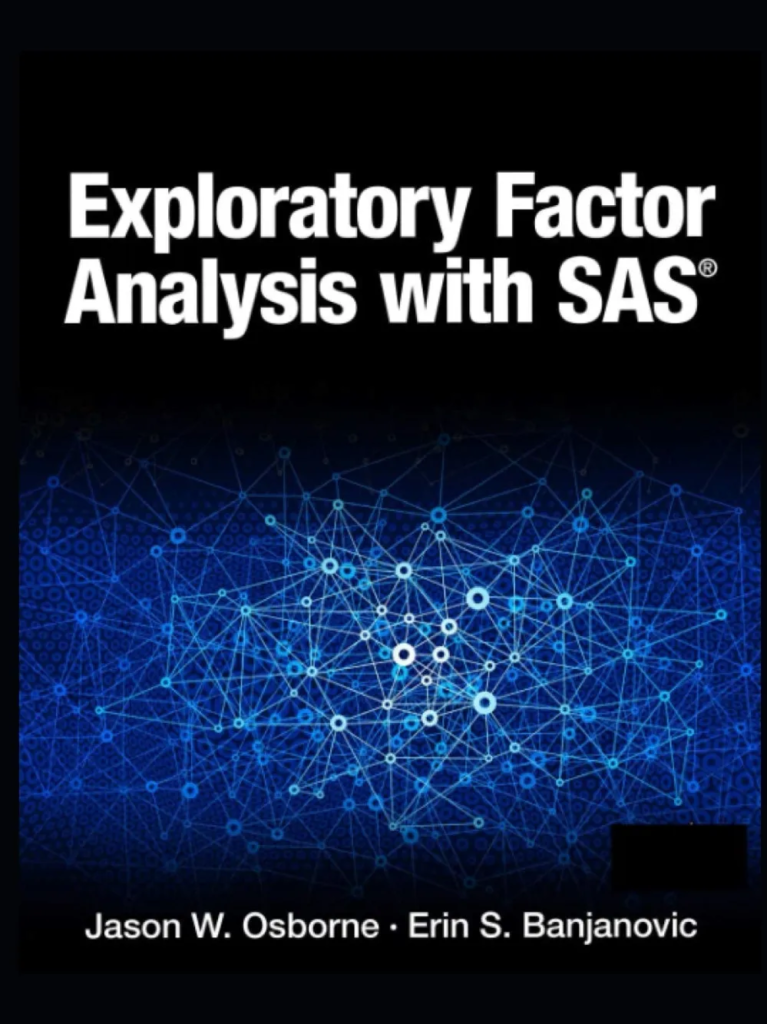
Exploratory factor analysis with SAS focuses solely on EFA, presenting a thorough and modern treatise on the different options, in accessible language targeted to the practicing statistician or researcher. This book provides real-world examples using real data, guidance for implementing best practices in the context of SAS, interpretation of results for end users, and it provides resources on the book’s author page. Faculty teaching with this book can utilize these resources for their classes, and individual users can learn at their own pace, reinforcing their comprehension as they go. Exploratory Factor Analysis with SAS reviews each of the major steps in EFA: data cleaning, extraction, rotation, interpretation, and replication. The last step, replication, is discussed less frequently in the context of EFA but, as we show, the results are of considerable use. Finally, two other practices that are commonly applied in EFA, estimation of factor scores and higher-order factors, are reviewed. Best practices are highlighted throughout the chapters.
A rudimentary working knowledge of SAS is required but no familiarity with EFA or with the SAS routines that are related to EFA is assumed.
–> Download exercise solutions for EFA with SAS
Best Practices in Logistic Regression provides students with an accessible, applied approach that communicates logistic regression in clear and concise terms. The book effectively leverages readers’ basic intuitive understanding of simple and multiple regression to guide them into a sophisticated mastery of logistic regression. Osborne’s applied approach offers students and instructors a clear perspective, elucidated through practical and engaging tools that encourage student comprehension.
–> download resources for Logistic Regression
Best Practices in Quantitative Methods: The contributors to Best Practices in Quantitative Methods envision quantitative methods in the 21st century, identify the best practices, and, where possible, demonstrate the superiority of their recommendations empirically. Editor Jason W. Osborne designed this book with the goal of providing readers with the most effective, evidence-based, modern quantitative methods and quantitative data analysis across the social and behavioral sciences.
The text is divided into five main sections covering select best practices in Measurement, Research Design, Basics of Data Analysis, Quantitative Methods, and Advanced Quantitative Methods. Each chapter contains a current and expansive review of the literature, a case for best practices in terms of method, outcomes, inferences, etc., and broad-ranging examples along with any empirical evidence to show why certain techniques are better.
Key Features:
- Describes important implicit knowledge to readers: The chapters in this volume explain the important details of seemingly mundane aspects of quantitative research, making them accessible to readers and demonstrating why it is important to pay attention to these details.
- Compares and contrasts analytic techniques: The book examines instances where there are multiple options for doing things, and make recommendations as to what is the “best” choice―or choices, as what is best often depends on the circumstances.
- Offers new procedures to update and explicate traditional techniques: The featured scholars present and explain new options for data analysis, discussing the advantages and disadvantages of the new procedures in depth, describing how to perform them, and demonstrating their use.
Intended Audience: Representing the vanguard of research methods for the 21st century, this book is an invaluable resource for graduate students and researchers who want a comprehensive, authoritative resource for practical and sound advice from leading experts in quantitative methods.
–> Download resources for Best Practices in Quantitative Methods