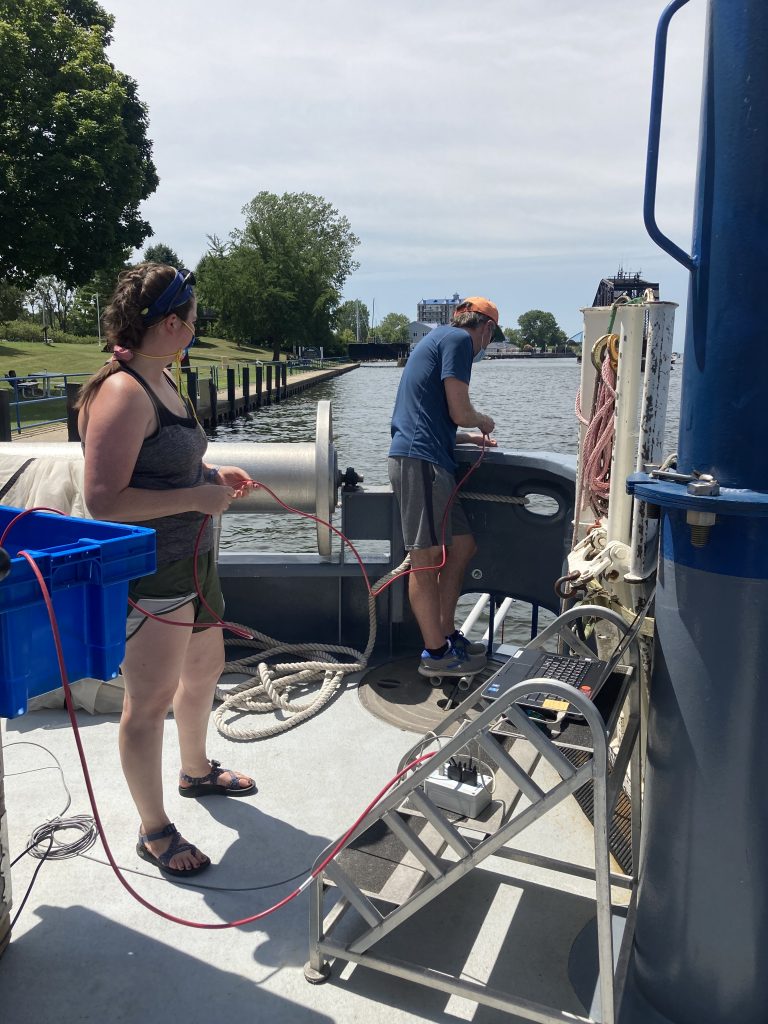
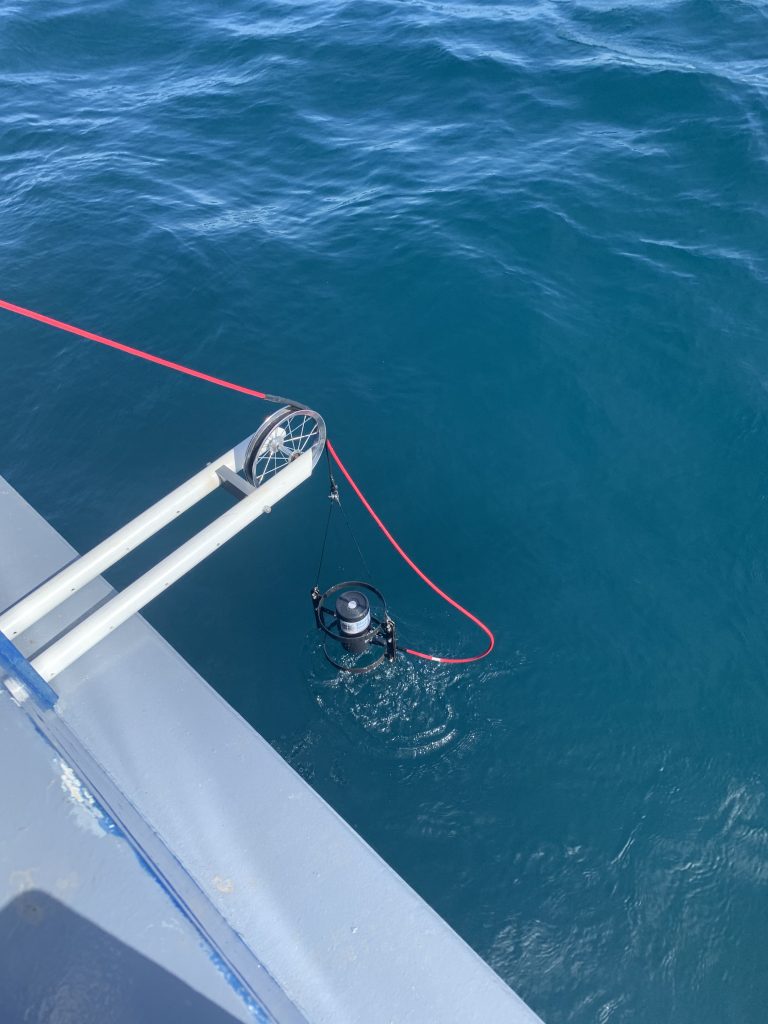
Through a combination of laboratory UV experiments and field sampling of UV and larval fish, we are working to create new insights into the role of UV as a driver of recruitment, and enhance the effectiveness of management and restoration efforts through integration of this important physical habitat variable.

Prior research from our lab and others suggests that UV can be an important regulator of fish recruitment. UV wavelengths can cause mortality in eggs and larvae, which are often highly transparent. Organisms can protect themselves from damaging UV radiation through behavioral avoidance, pigmentation, and DNA repair mechanisms.

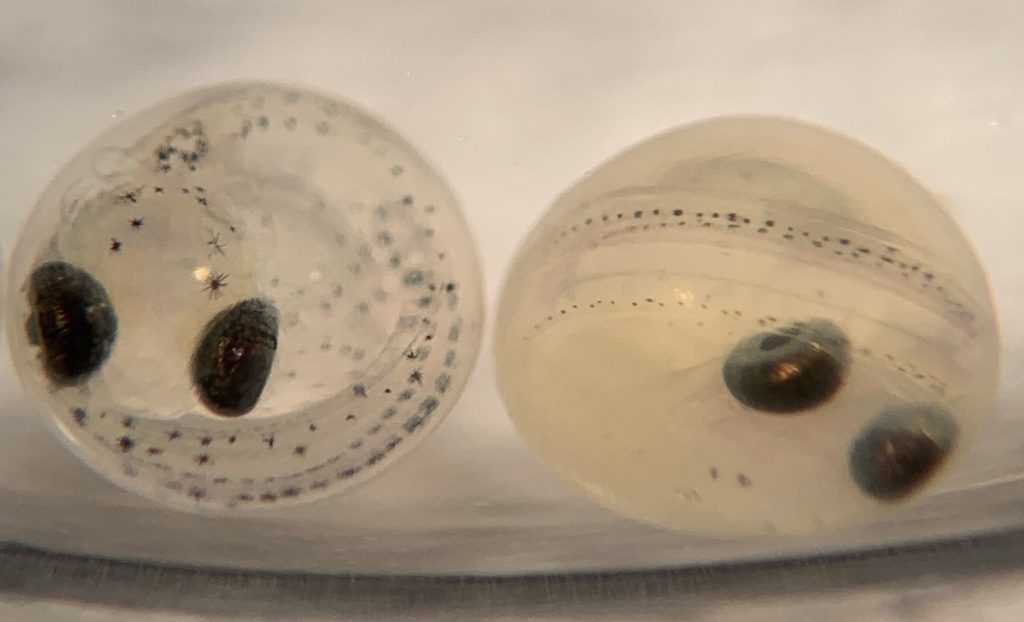
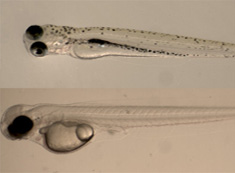
We have observed differences in the transparency of egg chorion (below, left), as well as the density of pigmentation in embryos from the Great Lakes (below, left) and larvae from Lake Tahoe (below, right), which may affect the ability of a population to tolerate UV transparent habitats. In Lake Tahoe, we have found that UV radiation can impede the invasion of less UV tolerant species into highly transparent waters where native species have adapted to UV exposure.
The Great Lakes support many iconic species that are important for subsistence, commercial, and recreational fisheries. In spite of increasing transparency in the Great Lakes, data on the UV transparency of spawning and nursery sites are limited. However, preliminary data suggest that UV exposure levels in nearshore habitats can vary by 5-fold or more. As the Great Lakes experience up to a doubling of water transparency in many regions, coregonine spawning and nursery habitats may expose eggs and larvae to higher levels of UV radiation. Similarly, species such as alewife that have historically spawned in tributaries and embayments where UV transparency is low can be advected offshore and exposed to higher UV. Our collaborative research, funded by the Great Lakes Fishery Trust, seeks to understand the role of UV transparency in alewife recruitment.
You must be logged in to post a comment.