
By: Tate Penny (Vangellow)

Reflections from Earth Expeditions Australia
As I sit here, 9,277 miles away from Townsville, it is easy to feel distant from the novelties in experience and learning that happened this summer during our Earth Expedition. However, this final trip as a part of my Master’s journey with Project Dragonfly helped illuminate a key outcome that I was hoping to achieve through my time in the program. Previous to my time in Project Dragonfly, I felt like I was an “imposter” in almost any career path I chose. Although my undergraduate work was in marine biology, and I did research on marine mammals, I felt a sense of imposter syndrome in my fieldwork. As I transitioned into education, I felt a new sense of imposter syndrome set in with the gap in knowledge I had on effective pedagogy and the realm of inquiry by which I personally did not learn during my youth. By joining Project Dragonfly, I was sure that I would “cure” this imposter syndrome forever, and I would now feel equipped with education theories that would make me stand out in my field. How wrong I was at the time to think that!

During my time in Australia, and often since, I am reminded of the triadic framework detailed by Korach and McConnell (2021). My self concept of my triadic framework has often felt off balance at times, and would only include one or two of the three components: nature, belief systems, and communities. Further, I have often felt that my “professional self concept” could never be framed by these influences. My time in Project Dragonfly has built my skillset as an educator both in pedagogy and inquiry-based theories, however, what is more important is the paradigm shift that occurred during my time to understanding my value as an educator that is molded by my belief systems, my community partnerships, and the natural world. These realizations really started to take form during our time in Australia. From my participation in the Eyes on the Reef survey, to collaborating with the education staff at the GBRMPA, and leading a stakeholder engagement activity with my peers (and of course, the blue marble!), I noticed how these influences of community partnerships, my belief systems, and nature have built my confidence as both an educator and a scientist, without having to recite different educational theories ad nauseam.

Learning through action during my time in Australia has helped solidify my belief in the triadic framework’s power to empower practices of resiliency and sustainability (Korach & McConnell, 2021).

But of course, just because my time in Project Dragonfly is coming to an end, does not mean my growth as an educator is, thus begging the question, of “what’s next?”. Feel free to check out my digital journal entry (via Canva) that makes notes of my thoughts!

Literature Cited: Korach, J., & McConnell, A. R. (2021). The Triadic Framework: Integrating Nature, Communities, and Belief Systems into the Self-Concept for Sustained Conservation Action. Sustainability, 13(15), 8348. https://doi.org/10.3390/su13158348
Author Biography:
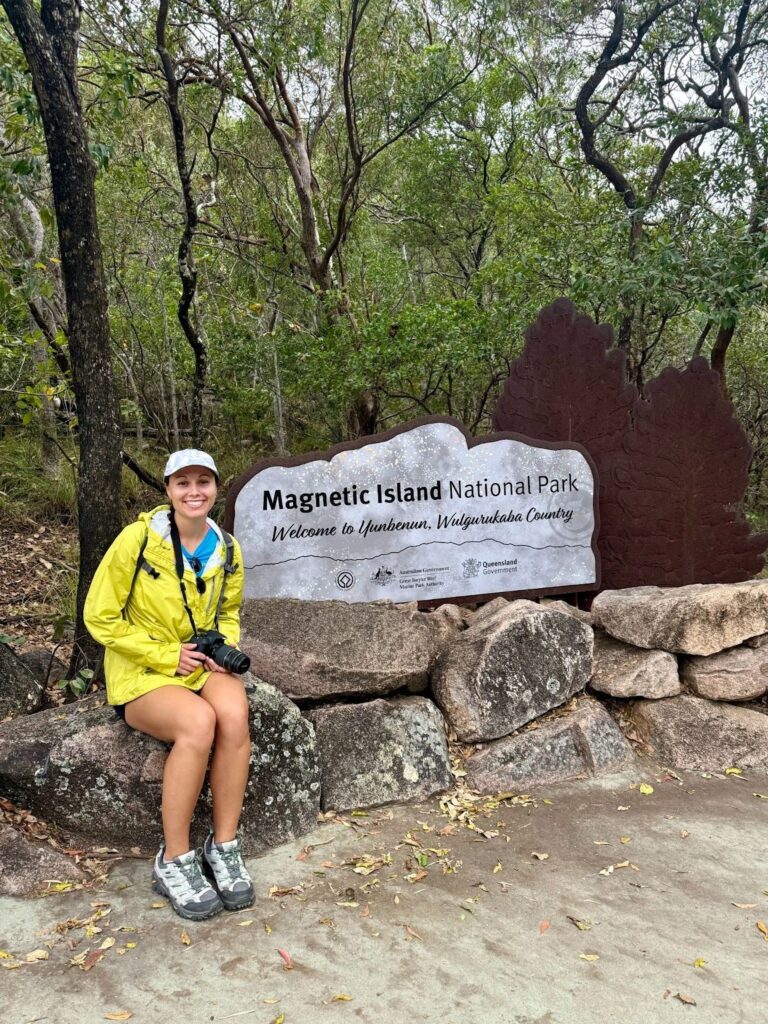
Tate Penny (Vangellow) is the Southwest Florida Everglades Literacy Program Coordinator at The Everglades Foundation. Through her role at The Everglades Foundation, Tate specializes in offering place-based and inquiry-based professional development for educators, both in the classroom and in the field. Additionally, Tate works to support the school partnership and grants program of the Everglades Champion Schools Program that recognizes a culture of environmental stewardship across school campuses and helps fund student experiences in the field. In her free time and to keep her “foot” in the classroom, Tate also serves as the Director of 4th and 5th Grade Ministry at Suncoast Community Church. Tate found Project Dragonfly through recommendations by her colleagues and community partners. Tate’s time in Project Dragonfly (GFP Program 2023) built her skillset as an educator both in pedagogy and inquiry-based theories, however, what is more important is the paradigm shift that occurred during the program to help her understand her value as an educator that is molded by her belief systems, community partnerships, and the natural world.