


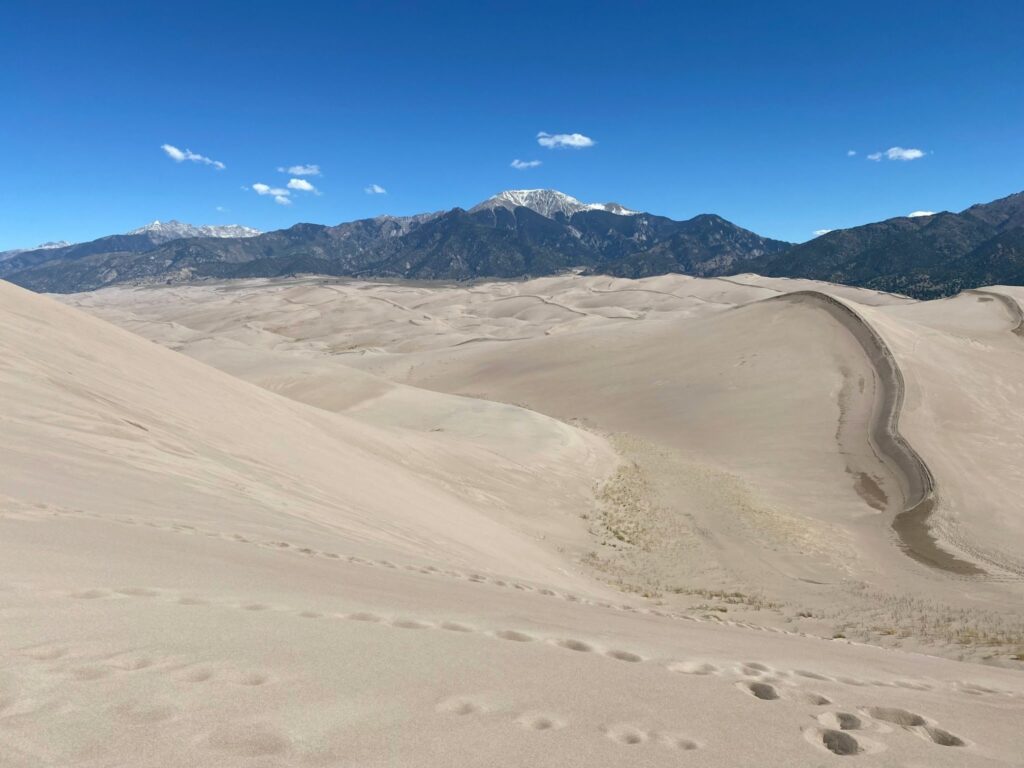
From the Great Sand Dunes of Colorado to the craters of the moon, Barbra Sobhani is proof that conservation leadership knows no atmospheric bounds. In this episode, host Kevin Matteson sits down with Barbra—a Project Dragonfly AIP graduate, State Director for the NASA Colorado Space Grant Consortium, and a Master Birder—to discuss how studying life on Earth prepares us for the stars.


3 Key Takeaways
- Earth as a Space Analog: NASA’s work isn’t just about rockets; a significant portion involves Earth observation. By studying extreme environments and biodiversity on our home planet, scientists gain critical insights into species survivability and climate change that inform the search for life elsewhere.
- The Power of Community Connections: Barbra’s journey from a community college educator to a NASA director was fueled by the local partnerships she forged during her Master’s. Her work with Denver Audubon began as a class project and evolved into a leadership role in the Master Birder program.
Interdisciplinary Inquiry: Whether students are designing autonomous lunar rovers or handheld water-quality sensors, the core of the work is the same: student-driven inquiry. Barbara emphasizes that conservation leadership principles can be infused into any field, from engineering to the geosciences.
The “Hidden Gem” Teaser
Keep an ear out for the segment where Barbra describes the Statewide Robotics Challenge. You’ll hear how undergraduate teams are engineering rovers capable of drilling sand cores in “Mars-like” terrain—and how these high-tech projects are being linked back to ground-truthing satellite data for environmental monitoring.
Listen to the episode on Apple Podcasts, Spotify, YouTube, or on your favorite podcast platform.
Check out the full list of podcasts on our Dragonfly Conversations page.