
By Dr. Kevin Matteson, Associate Director
“They were taught to be technicians, not thinkers, in a culture that is long on know-how and short on know-why.” – David Orr
I often get asked if a Master of Science (MS) is more valuable than a Master of Arts (MA). Sometimes, it feels like there is a perception that the “S” in MS stands for “Superior” (or at least “Scientific Rigor”), while the MA is viewed as softer and less technical.
Ultimately, it all depends on your goals. Below, I share thoughts on the things folks often ask about– the financial implications of the degree and its utility for leading to a promotion or a doctoral degree.
The “Value” Bias: Does an MS Pay More?
Some folks believe that the MS degree is the “serious” degree that leads to a higher paycheck. And if you look at the raw data without context, it looks true. Statistically, MS degrees (which dominate fields like Engineering and Computer Science) do lead to higher starting salaries.
For instance, the National Association of Colleges and Employers (NACE) projects that the Class of 2024 master’s graduates in Computer Science earn salaries averaging $85,403, while their counterparts in Humanities are projected to start significantly lower. But here is the issue: that wage gap is about the discipline (Engineering vs. History), not the letters M-S vs. M-A.

I have previously written about the Return on Investment (ROI) of a Master’s in Biology for educators and conservationists. In addition to salary, it’s important to consider the costs of the degree, the time to earn it, and any potential lost income associated with participating in a full-time program for several years. And, for teachers and others with salary bumps connected to graduate work, it is important to understand the exact pay increases and how to get them.
The Real Divide: Research vs. Consumption vs. Action
Beyond salary, what about academic rigor? I believe that the true indicator of academic weight isn’t “Arts” vs. “Science”—it’s the intent of the program.
- The Research-Intensive Track (The Classic M.S.):
- The Goal: Academic Discovery & Bench Science.
- The Work: These are typically full-time degrees requiring a traditional master’s thesis. You dig a mile deep into a single question to generate new data for the scientific record.
- Best For: Students interested in a specific, research-intensive career (like lab management) or those who want a traditional “bench science” experience. Note: Project Dragonfly does not offer an M.S. degree; we recommend looking at Miami University’s other biology programs for this path.
- The Coursework Track (Generic Non-Thesis):
- The Goal: Knowledge Consumption.
- The Work: You take extra classes, read textbooks, and pass exams.
- Best For: People who want more content knowledge about a given topic.
- The Practitioner Track (The Dragonfly M.A. / M.A.T.):
- The Goal: Applied Action.
- The Work: You aren’t just reading about science; you are implementing it. You are identifying real-world gaps—in your community, your zoo or nature center, or your classroom—and designing projects to fill them.
- Best For: Leaders, educators, and changemakers who want to solve problems, not just study them.
A Note on the Letters (MA vs. MAT): Project Dragonfly offers two degrees, a Master of Arts in Biology and a Master of Arts in Teaching in Biological Science. For most professionals (zoo/aquarium staff, park rangers, informal educators), the M.A. (Master of Arts) is the preferred choice. However, classroom teachers who already hold a teaching license should consider the M.A.T. (Master of Arts in Teaching) in the Biological Sciences. Both are practitioner degrees focused on action.
Earning an MA/MAT as a Prelude to a PhD or EdD
While Project Dragonfly does not offer a PhD or EdD, our graduates have successfully enrolled in doctoral programs across the globe, including at Kansas State University, University of Washington, the University of Wisconsin-Madison, University of Georgia, Texas Tech, University of Rhode Island, the University of KwaZulu-Natal (South Africa), and more.
Why do they get in? Because doctoral programs are looking for more than just test-takers. They are looking for researchers who can work across diverse social and ecological settings.
Our graduates cite their Dragonfly work—specifically co-developing community-relevant issues and leading social change—as critical preparation for their doctoral work.
Pro-Tip for PhD or EdD Aspirants: If you are interested in working towards a doctorate after Dragonfly, use this program to build your CV. Get published, apply for grants, and make academic connections. These skills are relevant to every PhD and EdD program.
The Dragonfly Perspective: The Power of “Science + Context”
The intersection of scientific research and community engagement is where real leadership happens. Project Dragonfly students ask questions, design research projects, and share that knowledge with audiences that need the information. They don’t just make new knowledge, they use that knowledge to make real change. In doing so, it prepares them for careers in diverse sectors.

How We Built Real-World Impact Into the Degree
This emphasis on tangible output is exactly why we designed the Project Dragonfly Master’s curriculum the way we did. We don’t just hope you build real-world skills and connect with your community; we built these requirements into the program.
Our students graduate with a portfolio that proves they can execute:
- Publishing and Communicating to Diverse Audiences: Every student is required to submit a manuscript for publication, ensuring you leave with potential bylines, not just grades. (See our student publication success stories here).
- Networking and Community Organizing: You won’t just study conservation; you will lead a creative community project that mobilizes others to act.
- The Final Portfolio: By the end, you curate a professional portfolio showcasing knowledge, universal skills, and outputs of these skills, giving you physical proof of your ability to bridge the gap between science and society.
The Verdict: It’s About the Impact
Ultimately, the degree is just a starting point. The true value comes from what you did while you were there. Don’t let the degree acronym define the value; let your work do that.
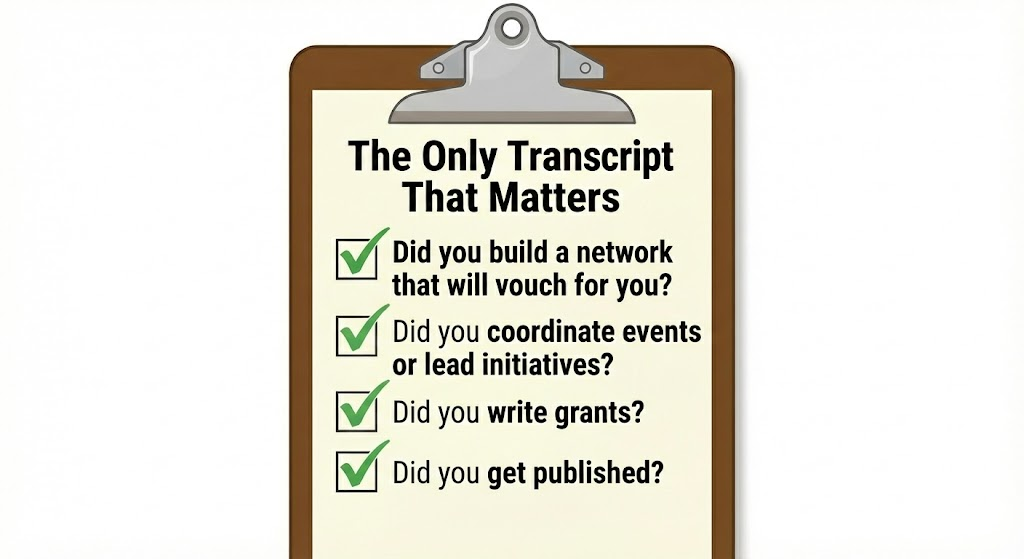
How We Built Real-World Impact Into the Degree
This emphasis on tangible output is exactly why we designed the Project Dragonfly Master’s curriculum the way we did. We don’t just hope you build real-world skills and connect with your community; we require it.
Our students graduate with a portfolio that proves they can execute:
- Publishing and Communicating to Diverse Audiences: Every student is required to submit a manuscript for publication, ensuring you leave with potential bylines, not just grades. (See our student publication success stories here).
- Networking and Community Organizing: You won’t just study conservation; you will lead a creative community project that mobilizes others to act.
- The Final Portfolio: By the end, you curate a professional portfolio showcasing knowledge, universal skills, and outputs these skills, giving you physical proof of your ability to bridge the gap between science and society.
So, MA or MS? It doesn’t matter. What matters is that you have the portfolio to back it up.
Sources
- National Association of Colleges and Employers (NACE). (2024). NACE Salary Survey: Winter 2024.
- Association of American Colleges and Universities (AAC&U). The Career-Ready Graduate: What Employers Say About the Difference College Makes.
- Indeed. (2023). Skills-Based Hiring Report.
- National Association of Colleges and Employers (NACE). (2023). Job Outlook 2024.