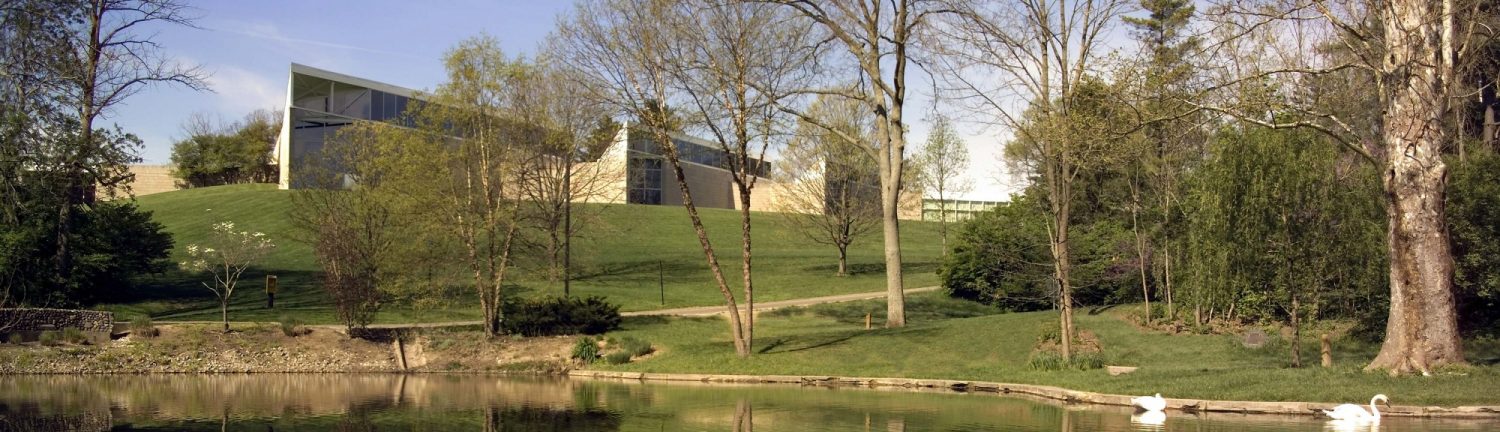
As the Art Museum embarks on its vision for the future, it also explores its past. The RCCAM History Project began as the museum undertook a concept planning process with its original Senior Designer, architect Craig Hartman, and museum staff began to explore the museum’s beginnings. The Miami University Art Museum was founded in 1978, but to date there had been little attempt to research and write its history. How was the museum founded, and what were the motivations and opportunities that influenced its earliest years and into the present day?
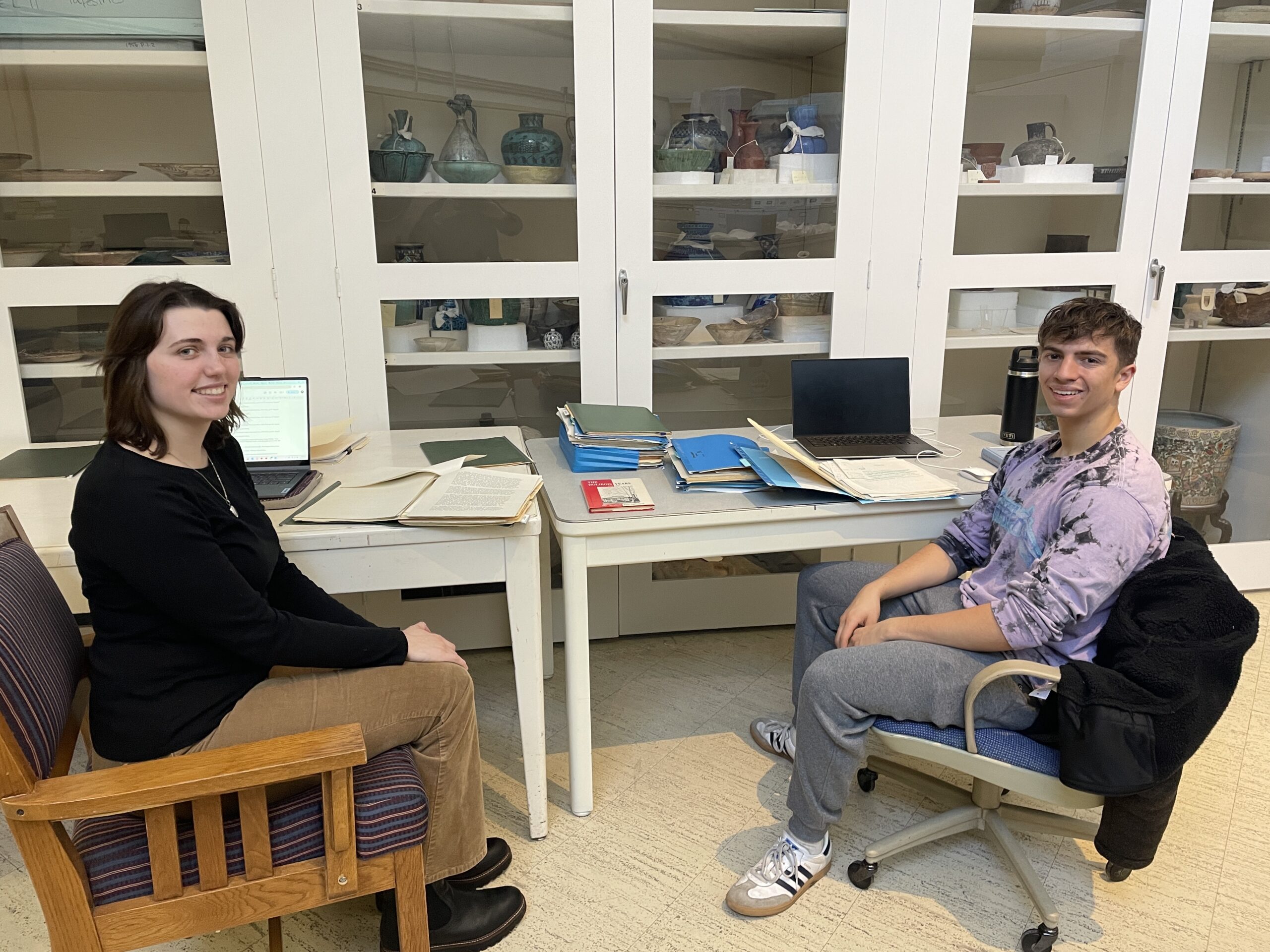
With the help of RCCAM’s student internship program, it’s been possible to take an initial peek into RCCAM’s rich archives, initiating the selection of images, and conducting a series of oral history interviews with individuals who had connections with the Art Museum’s founding over 50 years ago. Two individuals in particular are acknowledged in the Foyer of the Art Museum – a dedication plaque reads: “Founded upon the Inspiration of Orpha M. Webster, Instructor, and Walter I. Farmer ‘35, Patron.”

L-R: Walter Farmer, John Dolibois and Walter Netch at the Art Museum ribbon cutting event, 1978.
This Spring, intern Austin Pawar, a History Major (graduating 2026), explored publications and archives related to “Monuments Man” Walter I. Farmer (Miami University, 1935), tracing a timeline of his time in the US Army while based at Wiesbaden Collecting Point, and his subsequent engagements with Miami University from the 1960s to the 1990s. Farmer stated as a condition of his gift that the museum must be of a contemporary design and stated that the building must not only serve as a museum, but as a center of learning in which students can use to advance their skills and education. Intriguingly, it was possible to trace the partial provenance of one of Walter Farmer’s earliest gifts to the museum, a Greco-Roman head of a goddess, purchased in Germany in 1946 – the only known example of an ancient object acquired around the time of his military service.

Head of a goddess, 1st century BCE, Marble. Findspot unknown. Gift of Walter I. Farmer 1978, purchased in Germany, 1946. 6 ¼ x 4 ¼ x 5 ⅜ inches. 1978.S.2.2.
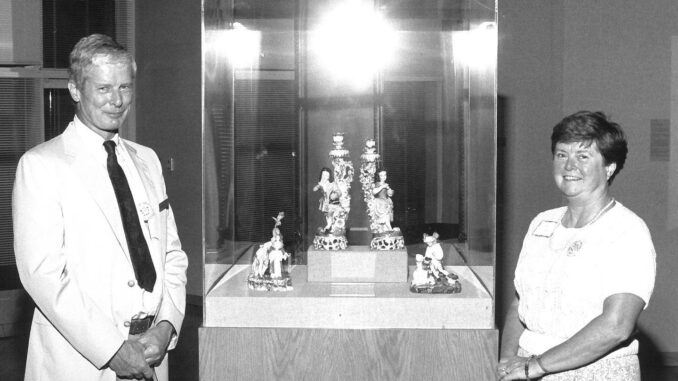
Concurrently, intern Carson Brown, History Major and American Studies Minor (graduating in 2027), studied the lesser known figure of Art Department faculty member Orpha Webster, finding out more about her role and influence in the creation of the Art Museum through her lifelong connection with former student Walter I. Farmer. Insight was gained through oral history interviews, including from Donald Fritz and Robert Wolfe, especially as Webster was a key creative force who helped bring important collections to the university for the Art Museum. Wolfe, who first met Webster in the 1930s while he was a small child, recalled his memory of a lavish dinner party at Walter Farmer’s home in the 1960s, where Farmer’s commitment to support the Art Museum was first announced. It also became possible to better understand the early interconnections of the Art Museum, the Art Center, and the Elma Pratt Collection of International Folk Art, which was initially displayed in Rowan Hall, which was a precursor to today’s Armstrong Student Center.

Orpha Webster with a display likely from the Elma Pratt International Folk Art Collection, probably displayed in Rowan Hall, 1970s.
Other interviews have been carried out with Clive Getty, David Berreth, and Margaret Farmer Planton, among others. Further interviews and archival research will be conducted over the next two years as we get closer to the 50th anniversary of the museum in 2028.
Get in touch with us: [email protected]
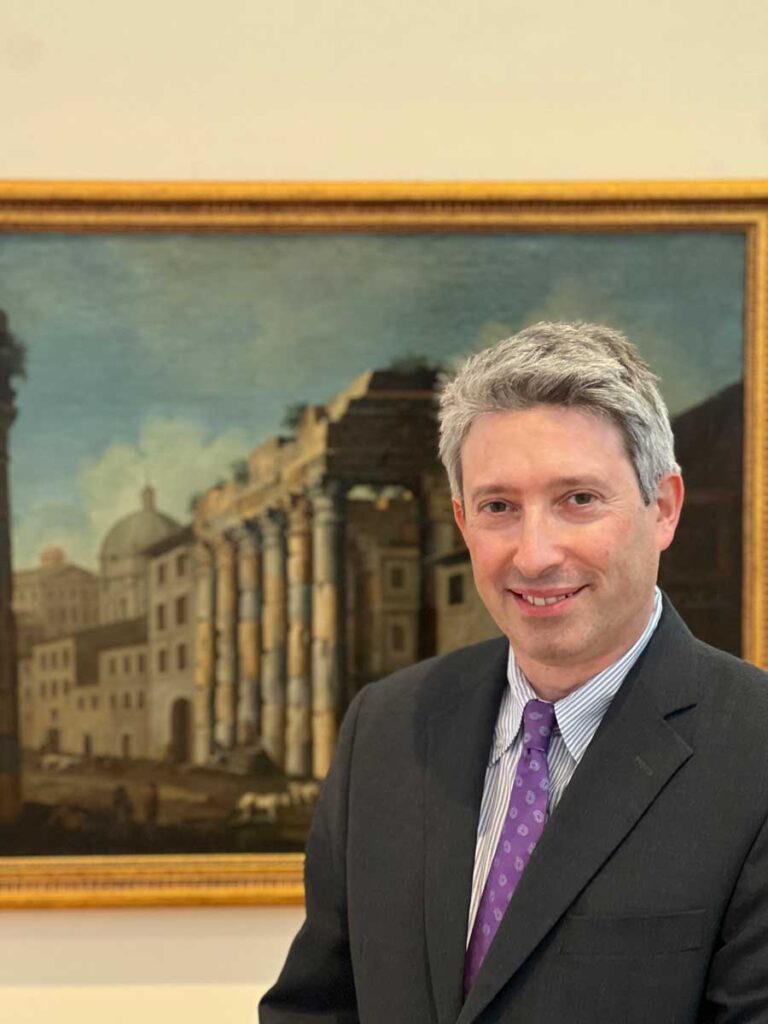
Jack Green, PhD, is the Jeffrey Horrell and Rodney Rose Director and Chief Curator at the Richard and Carole Cocks Art Museum, Miami University. Jack’s interests include museum and cultural heritage studies, the intersection of art and archaeology, and collections provenance research. He is a member of the American Alliance of Museums, American Society of Overseas Research, Archaeological Institute of America, and ICOM.
SUPPORT US
Please visit the Art Museum Giving Page and consider becoming a sustaining member or making a donation to support RCCAM’s exhibitions, programs, and collections.
FOLLOW US ONLINE
Access all of our online social media accounts here.